
Lessors risk insurance by state
Lessors Risk Insurance in North Carolina
North Carolina reaches from barrier islands and sound-side towns, through a piedmont corridor where manufacturing and warehouse shells are being re-leased to commercial tenants, up to the main streets of mountain counties — and a single insurance code covers all of it. That makes the address do more work here than the form does, because the state writes the fire wording itself while drawing its coastal residual territory along statutory lines rather than along the shore. Read both before you read a quote.

What North Carolina law says
The vacancy provision
North Carolina prints a standard fire policy in its own code, and that policy
carries a vacancy condition. The words that matter are these — the
provision suspends coverage
While a described building, whether intended for occupancy by owner or tenant, is vacant or unoccupied beyond a period of 60 consecutive days
.
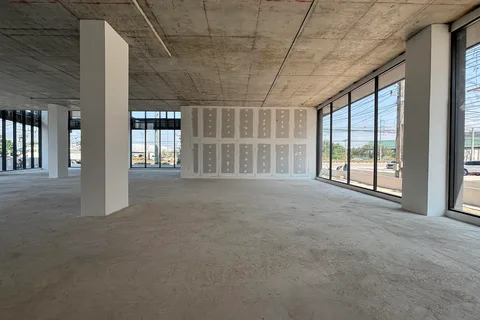
Where this lands hardest in North Carolina is the wait after a named storm. The tenant is gone, the shell is open, and the file sits behind an adjuster, a contractor and an inspection — each of those days is a day the building is standing empty, and the words quoted above are indifferent to the reason for it. The piedmont version is slower and just as easy to miss: an industrial tenant leaves, the space is marketed to commercial ones, and the building stays dark through a re-fit that runs longer than anybody planned. Put occupancy status on the same list as the utilities and the keys, and raise it with your broker while the space is still in use.
If the standard market declines the building
North Carolina maintains a residual-market mechanism for property that cannot be placed conventionally: North Carolina Insurance Underwriting Association, operating the Coastal Property Insurance Pool; a separate FAIR Plan sits in Article 46.
One more thing a North Carolina landlord should know
North Carolina defines a coastal area for residual-market purposes by a closed 18-county list, separate from the statutory beach area — so a commercial landlord’s eligibility turns on which of the two statutory zones the building sits in.
North Carolina’s insurance regulator is the North Carolina Department of Insurance, which is where to verify any producer’s license before you buy.
The panel pairs a North Carolina setting on the left with the question that setting opens on the right. A storefront row inside the statutory beach area pairs with whether the coastal residual market is what writes its wind. A piedmont warehouse re-leased to commercial tenants pairs with whether the building is still rated for what now happens inside it. A brick block on a mountain-county main street pairs with what winter and travel add to a rebuild. Any of them standing empty between tenants pairs with the statutory fire wording quoted higher up this page. A footnote separates storm wind from rising water.
Which North Carolina the building sits in
What that opens before a quote
Rising water is placed apart from the wind, on its own paper.
Where we write in North Carolina
Building stock, development pattern and municipal ordinances vary far more between cities than state law does. The city pages carry that detail.
By property type
What answers each of these in the policy
The exposures above are North Carolina law and North Carolina geography. These are the coverage lines that respond to them, explained without the state attached:
- Business Income & Loss of Rents
- Commercial Property
- General Liability
- Commercial Umbrella
- Tenant Discrimination
What all of that costs in North Carolina, and which of the drivers you control: How Much Does Commercial Property Insurance Cost in North Carolina?
North Carolina lessors risk insurance FAQs
A storm shut my coastal tenant down and the repair has not started. Is the building empty now?
Occupancy is a fact about the building, not about what you intend for it. If the tenant has gone and nobody is using the space, the statutory wording quoted on this page is reading the same situation you are, and the wait on an adjuster, a contractor and an inspection is part of that wait. Tell your carrier in writing as soon as the space empties. It is a routine conversation in advance and a contested one afterward.
Is my building close enough to the water for the coastal pool to write it?
Closeness is not how North Carolina answers that. The state defines its residual coastal territory in statute, and eligibility follows that definition rather than a judgment about the view from the parking lot, so read the address against the statute linked below before assuming it either way. The state also keeps a separate plan alongside the coastal pool, which means the residual market here is not a single door.
We are re-leasing a piedmont warehouse to retail and office tenants. What has to be told?
Tell the carrier before the tenants move in. A shell rated for storage and a shell rated for customers walking through it are underwritten as different risks: the liability exposure changes, the protective systems get judged against the new use, and cooking, service bays or public assembly inside the building will each be asked about. Do the lease work and the insurance work in the same week, because the certificate you require of a tenant is written against the use too.
What does a mountain-county location change about repairing my building?
Mostly it changes how long the building waits. Winter weather closes roads, the trades that would do the work travel farther, and materials arrive over the same roads the weather closed. That shows up in what an underwriter asks about heating, protection and who looks in on the building when nobody is using it, and it is the argument for sizing loss of rents against the repair you would actually face up there rather than a repair somewhere flatter.
Where do I check the company and the agent before I sign anything in North Carolina?
The North Carolina Department of Insurance, linked in the sources block on this page. It is the office that regulates insurers doing business in the state and licenses the producers who sell for them, so both halves of that question are answered in one place. Run the check on us as readily as on anyone else. It costs a minute and it settles a question you would not want to raise later.
The damage is fixed but my tenant has not come back. Does loss of rents keep running?
It runs on the repair, not on the tenant. The coverage answers rent lost while covered damage keeps the space unusable, measured by the time the work reasonably takes, so once the space is fit to occupy again a tenant’s own decision to stay away becomes a leasing problem rather than an insured one. On a coastal file that gap is worth planning for, because repair crews and replacement tenants both get scarce after a bad season.
Sources
Each North Carolina point above traces to a document you can open yourself:
- N.C. Gen. Stat. § 58-44-16, subsection (6)(b) — the vacancy provision quoted above, in North Carolina’s own statutory text
- North Carolina — the state’s own source for the residual-market mechanism — the residual market named above, where the standard market declines a building
- North Carolina Department of Insurance — the state regulator named above, and where to verify any producer’s license
- North Carolina — primary source — the state-specific point noted above
Tell us where in North Carolina the building stands
A North Carolina file turns on the statutory territory the address sits in, the use happening inside the building today, and whether any part of it is dark. Send those and we will show you where the wording above works for you and where it does not.