
Property type
Office Building Insurance
Low hazard, high dependency. Office property carries its value in systems and its risk in what happens when a floor empties.
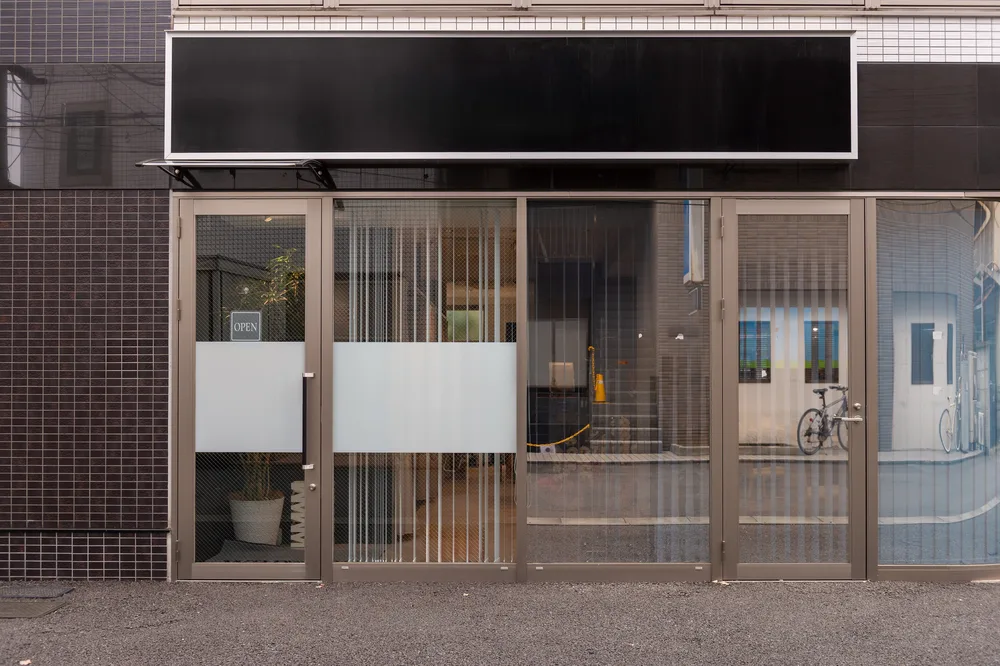

Office is the quietest commercial property type to insure and the one where the policy conditions matter most. There is little to burn, few operational hazards, and tenants whose businesses run on laptops. The risk is not what happens in the space — it is what happens to the building, and what happens when the space empties.
Two things follow from that, and they are the spine of this page: the vacancy condition, and the systems that make an office building an office building.
The vacancy provision: what it does
This is the condition office owners most need to understand, because it is the one most likely to be running without anyone deciding it should.
Once a building has been vacant beyond the period your policy states, two things change. Several causes of loss are suspended outright — the ones associated with an unoccupied building, which is precisely the set most likely to occur in one. And payment on the causes that remain is reduced. It is a condition of the property coverage rather than a separate exclusion, which is why it is easy to miss: nothing about it appears on the declarations page.
The consequence reaches further than the building. Because income coverage follows property coverage, a property loss that is reduced or excluded by the vacancy condition carries the associated rental income loss down with it. One condition, two coverages.
⚠ We are not going to give you the number here. The threshold and its consequences are stated in your own form, and the statutory floors behind them are state law that genuinely differs from state to state. Quoting one state’s figure as though it were a national rule would be worse than useless to an owner in a different one. The cited thresholds sit on the city and state pages, where they can be attached to the law that actually applies to your building.
What generalizes is the mechanism and the timing: the clock starts when the space empties, not when anyone notices. A tenant hands back a floor, the space sits, and nobody files anything. Vacancy is underwritable — it is far easier to arrange the right endorsement while a building is emptying than to explain the gap afterwards.
Why vacancy is the office question specifically
Every commercial property type can go vacant. Office is where it is most likely, most prolonged, and most consequential.
Office leases are long, so turnover arrives infrequently and in large increments — a floor at a time rather than a unit at a time. Re-letting takes longer than in retail because the space usually has to be reconfigured for the next tenant, and that reconfiguration is itself a leasing negotiation. And a single-tenant office building is binary: it is fully occupied or it is empty, with nothing in between.
Partial vacancy is the more common and more ambiguous case. Policy definitions generally turn on whether enough of the building is being used to conduct customary operations rather than on a simple percentage of leased area, and they treat an owner-occupied building differently from one held for tenants. A multi-tenant building with several floors let is normally comfortable. A single-tenant building whose tenant has gone is the case that needs a conversation the week it happens.
The building is the systems
Office property concentrates its value and its failure modes in equipment rather than in structure.
Elevators, chillers and rooftop units, boilers, switchgear, transformers, fire pumps, building automation and controls: these are what an office building is, from an insurance point of view, and they are what breaks. A structure that would shrug off a storm can be made unusable by a failed switchboard.
The standard property form generally does not respond to their mechanical or electrical breakdown. That is what equipment breakdown coverage is for — sudden and accidental failure of pressure, mechanical and electrical equipment, including the damage it causes to surrounding property. Owners of newer, systems-heavy buildings are often surprised to learn it is a separate grant rather than part of the property form.
It has an income dimension too. A chiller failure in summer can make a building untenantable without damaging a single wall. Whether the resulting rent loss is covered depends on whether the income coverage is extended to breakdown, which is a decision made at placement rather than at the loss.
Practically, an underwriter wants the age and update history of the major systems and knows what the answers imply. An owner who has replaced a chiller or upgraded switchgear should say so; it is one of the few pieces of good news on a property submission that is genuinely priced.
Tenant improvements: the largest thing nobody is sure who owns
Office buildouts are substantial — partitions, ceilings, lighting, finishes, cabling, specialized power and cooling. On a fitted floor the improvements can be a meaningful share of what a rebuild would cost, which makes the ownership question a valuation question rather than a technicality.
Two paths lead to two answers. Where the tenant funds the work, the improvements are usually theirs to insure during the term — although many leases assign them to the owner at expiry, at which point they become part of your building. Where the owner funds it through an allowance, typically amortized into the rent, the improvements are generally the owner’s property from the start and belong in the building value immediately.
Either way the failure is the same: the value is insured twice or not at all, and nobody finds out until an adjuster asks who paid for the ceiling. The lease has the answer; the schedule of values usually does not reflect it.
This also feeds the ordinance or law exposure. A code-driven rebuild of a fitted office floor reaches accessibility, egress, sprinkler coverage and energy performance — the parts of a modern code that bear most heavily on exactly this kind of space.
Rentable versus usable, and what the rent roll actually measures
Office is the type where the number in the rent column is furthest from the number an outsider would guess, and it matters because the whole income program is sized against it.
Office rent is generally charged on rentable area rather than the space a tenant can put desks in. Rentable area adds each tenancy’s share of the common areas — lobbies, corridors, restrooms, mechanical rooms — through a load factor applied to the usable space. Two buildings with identical leasable floors can therefore produce materially different rent rolls depending on how much common area they carry and how it is apportioned.
For insurance the consequence is direct. The loss of rents limit is built from contract rent, and contract rent here embeds an allocation convention rather than a measurement of space. An owner reconstructing the limit from square footage and a market rate — which is how it is often sanity-checked — will get a different answer from the leases, and the leases are what would be proved at a claim.
The same convention affects operating expense recoveries, which are the continuing expenses a shutdown does or does not stop. Both belong in the limit, and both come from the leases rather than from the drawings.
The re-letting cycle is the longest in commercial property
Every property type has a gap between a repaired building and an earning one. On office it is the widest, and that makes one extension matter more here than anywhere else.
Office space is rarely re-let as-is. A departing tenant leaves a configuration built for their business, and the next tenant negotiates changes before they sign — which means marketing, negotiation, design, permitting and construction all sit between the end of a repair and the resumption of rent. Long lease terms make that sequence infrequent, and infrequency is exactly why owners underestimate its length.
The extended period of indemnity is the coverage that answers it: it keeps the income coverage running for a stated period after the property is restored, precisely because the building is finished long before it earns again. On office property the standard extension is frequently short against the real cycle, and lengthening it is one of the cheaper meaningful decisions on the placement.
When an office building stops being one
Conversion is now a live question for office owners, and it changes the insurance conversation before it changes the building.
An office property being repositioned — floors taken out of service, construction under way, part of the building still let — is simultaneously an occupied building, a vacant building and a construction project. Each of those is underwritten differently, and a policy written for a fully let office building is not written for that.
Where the repositioning introduces residential occupancy, the building leaves this type altogether and becomes a mixed-use property, with the separation and habitational questions that come with it. That is a different placement, not an endorsement, and it is worth starting the conversation at the planning stage rather than at the certificate of occupancy.
Professional tenancy: lower hazard, higher expectation
Office tenants bring less physical hazard than almost any other commercial occupancy. There is no cooking, no flammable storage, no public thronging through the space, and very little that can start a fire beyond the electrical infrastructure the owner supplies.
What they bring instead is dependence, and lease obligations that reflect it. Office leases commonly commit the owner to maintaining services — climate, power, lift access, sometimes connectivity — to a defined standard, and give the tenant a remedy if the building fails to deliver. That converts a mechanical problem into a rent problem faster than an owner expects.
The liability exposure follows the same shape. It concentrates in lobbies, elevators, stairwells and the controlled-access decisions an owner makes about who gets into the building — the areas developed on the general liability page — rather than in anything happening inside the leased premises.
What an office program is made of
- Commercial property — with equipment breakdown treated as a live question rather than an afterthought, and the buildout ownership settled in the schedule of values.
- Business income and loss of rents — long leases and long re-letting periods make the extended period of indemnity matter more on this type than on any other.
- General liability — lobbies, elevators, stairwells and access control.
- Commercial umbrella — excess limits over the primary lines, on a schedule that matches what is in force.
- Tenant discrimination — leasing decisions and the accessibility of entrances, lifts and shared facilities.
What drives the number on an office building, driver by driver: How Much Does Office Property Insurance Cost?
Compared with the other types we write
Mixed Use Property — HABITATIONAL COMPONENT. Retail Property — PREMISES LIABILITY AND LEASE STRUCTURE.
Authorities worth reading directly
- The Department of Justice on public accommodations covers accessibility obligations reaching lobbies, lifts and shared facilities in buildings open to the public.
- The National Fire Protection Association publishes the standards behind life-safety, elevator-recall and fire-protection expectations in office buildings.
Office by city
Occupancy conditions, re-letting timelines and the building stock differ enough by market — and the vacancy law differs by state — that the specifics belong on the city pages rather than here.
- Philadelphia, PA
- Pittsburgh, PA
- Lubbock, TX
- Miami, FL
- Sioux Falls, SD
- Tacoma, WA
- San Jose, CA
- Chicago, IL
- Houston, TX
- San Antonio, TX
- Memphis, TN
- Milwaukee, WI
- Newark, NJ
- Long Beach, CA
- Cleveland, OH
- San Diego, CA
- Dallas, TX
- Orlando, FL
- Oklahoma City, OK
- Baltimore, MD
- Salt Lake City, UT
- Norfolk, VA
- Augusta, GA
- Winston-Salem, NC
- Tampa, FL
- Des Moines, IA
- Wichita, KS
- Austin, TX
- San Francisco, CA
- Madison, WI
- Seattle, WA
- Port St. Lucie, FL
- St. Louis, MO
- Little Rock, AR
- Lincoln, NE
- Worcester, MA
- Chula Vista, CA
- Raleigh, NC
- Portland, OR
- Las Vegas, NV
- Fresno, CA
- Charlotte, NC
- Jacksonville, FL
- Los Angeles, CA
- Toledo, OH
- Detroit, MI
- Jersey City, NJ
- Reno, NV
- Plano, TX
- Huntsville, AL
Why Lessors Risk Guard Insurance
We ask about occupancy before we ask about anything else on an office building, because the vacancy condition is where this type’s claims quietly get smaller. We ask the age of the systems, because that is where the value is. And we ask who paid for the buildout, because the schedule of values usually cannot tell us.
Nothing here binds coverage or interprets your policy. Your form, your endorsements and your leases govern; a licensed agent confirms coverage directly.
Quote an office building
Vacancy, building systems and the fit-out question, taken in that order.
Common questions about office property
What does the vacancy provision actually do?
Once a building has been vacant beyond the period your policy states, the coverage changes in two ways: several causes of loss are suspended outright, and payment on the remaining ones is reduced. It is a condition of the property coverage rather than a separate policy, and because income coverage follows property coverage, a reduced property loss carries the rental income loss down with it.
How long is the vacancy period on my policy?
Read your policy. The threshold and its consequences are stated in your own form, and the statutory floors behind them are state law that differs by state — which is why we set them out on the city and state pages rather than here. What matters operationally is that the clock starts when the space empties, not when you notice.
Is a partly leased building "vacant"?
Usually not, but the test is not occupancy in the ordinary sense. Policy definitions generally turn on whether enough of the building is being used to conduct customary operations, and they treat a building the owner occupies differently from one held for tenants. A multi-tenant office building with several floors let is normally fine; a single-tenant building whose tenant left is the case to watch.
What is equipment breakdown and why does it matter more on office property?
It responds to sudden mechanical or electrical failure of building systems — a coverage the standard property form generally excludes. It matters here because office value sits disproportionately in systems: elevators, chillers, boilers, switchgear, building automation. A property policy can be intact while the thing that actually failed is uncovered without it.
Who owns tenant improvements in an office building?
It depends on the lease and on who paid, and office property is where this is most consequential because buildouts are large. Many leases assign improvements to the owner on installation or on lease expiry. Once they belong to you they belong in your building value — and until then, insuring them means paying premium on somebody else’s property.
What is a tenant improvement allowance and how does it affect insurance?
It is money the owner contributes to a tenant’s buildout, usually amortized through the rent. Where the owner funds the work, the improvements are typically the owner’s property from the start and should be in the building value. Where the tenant funds it, ownership follows the lease. The insurance question is downstream of a leasing decision that was made without thinking about insurance.
Does professional tenancy change the risk?
It lowers the physical hazard and raises the expectations. Office tenants bring little fire load and few operational hazards compared with retail or industrial use. What they bring instead is dependence on the building working — power, climate, connectivity, elevator service — and lease obligations about maintaining it. The exposure moves from what a tenant does to whether the building performs.
What happens to loss of rents when a floor is already empty?
Vacant space earns no rent, so it contributes nothing to the income loss — but it can still affect the property claim through the vacancy condition, and a building with substantial vacancy is a different underwriting proposition. It is also the moment the loss-of-rents limit most needs revisiting, because a limit set for a full building is no longer the right number in either direction.
Tell us the occupancy first.
What is let, what is empty, how long it has been empty, and the age of the major systems. On an office building those four answers shape the whole placement.