
Property type
Retail Property Insurance
Your tenants run the stores. The public walks across ground you kept — and that is where a retail owner’s claims come from.
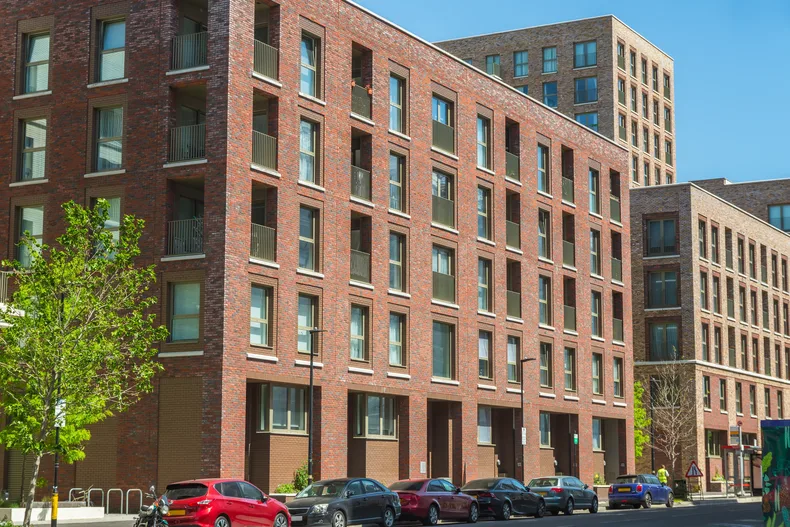

Retail is the property type where the owner’s exposure is least contained by the lease. Every other commercial building has a boundary you can point at: the tenant’s premises end here, yours begin there. On retail, the public crosses your ground to get to theirs — and they arrive by the thousand.
That single structural fact drives most of what follows. The rest is the rent roll: who the tenants are, which of them generates the traffic the others depend on, and what the leases say happens when that changes.
The duty owed to everyone who walks in
A person who enters a retail property to shop is an invitee — on the premises for the commercial benefit of the owner and the occupants. Invitees are owed the highest duty a property owner carries: not merely to warn of known hazards, but to inspect for hazards the owner should reasonably discover, and to address them.
The precise standard is a matter of law where the property sits, and it varies. What does not vary is the direction: an invitee is owed more than a licensee, and a retail property is the purest invitee environment in commercial real estate. Everything about it — signage, parking, opening hours, the way the entry is lit — exists to bring the public in.
The practical consequence is that inspection becomes a live obligation rather than good housekeeping. An owner who can show a routine, documented walk of the parking field, the sidewalks, the lighting and the entries is in a materially different position from one who responded to complaints. The difference shows up in defense rather than in premium, which is why it is under-invested in.
Foot traffic is the exposure unit
Underwriters price retail liability against how many people cross the property, and owners consistently under-describe it.
Traffic is not a proxy for square footage. A modest center anchored by a grocery or a pharmacy moves more people across its parking field in a week than a much larger property let to trade counters and showrooms. A tenant trading late all week generates exposure at hours when the property is least supervised. Drive-through and curbside-pickup operations concentrate vehicle movement at the point where vehicles and pedestrians already conflict.
The parking field is where this lands. It is the largest single surface the owner retains, it is where every visit begins and ends, and it produces the highest volume of owner-side claims on a retail property — surface condition, striping, wheel stops, lighting levels, drainage and the transition from asphalt to sidewalk. None of it is exotic; all of it is inspectable.
Tenant mix is what an underwriter is actually pricing
"Retail" describes a use, not a hazard. Two centers of identical size and construction can be underwritten quite differently on the strength of the rent roll alone.
- Food service brings cooking, grease, hood and duct systems, and a fire load concentrated in one tenancy that shares a roof and often a wall with the rest.
- Fitness and personal service bring occupancy density, extended or unstaffed hours, and equipment the public operates.
- Automotive and trade tenants bring flammables, compressed gases and vehicle movement inside the tenancy.
- Entertainment and assembly uses concentrate people, which changes both the life-safety profile and what a single incident can produce.
None of these is a tenancy to avoid. They are simply what the property is, and an underwriter told the mix accurately can price it. A submission that says "retail strip, ten units" and leaves the underwriter to discover a restaurant and a tire shop is the retail equivalent of an incomplete description — and it produces the same outcome.
The mix also travels: tenancies turn over, and a unit that was a boutique becomes a takeaway without the policy noticing. Material changes in occupancy are worth reporting as they happen rather than at renewal.
Anchor dependency, and why one departure moves everything
The retail rent roll has a structure that other commercial property does not: some of the tenants are there because of the other tenants.
An anchor generates the traffic that makes the surrounding units viable. Its departure does not simply subtract one rent — it changes the commercial premise on which every other lease in the center was signed. Small tenants see counts fall, and the ones with the shortest lease terms are the first to reconsider.
Many retail leases make that explicit through co-tenancy provisions: if the anchor goes dark, or occupancy falls below a stated share, the tenant gets a remedy — reduced rent, or the right to terminate. From an owner’s side this converts a single vacancy into a cascade on a timetable the leases set rather than the market.
It matters for the income coverage as well. A loss of rents limit built from a rent roll that assumes a full center is a limit built on the pre-departure version of the property. Knowing which leases carry co-tenancy clauses, and what triggers them, is part of knowing what the building actually earns.
Going dark: the tenant who pays but does not open
Retail has a failure mode that other commercial property does not: a tenant can be current on rent and still be a problem.
A unit that closes its doors while the lease runs — going dark — keeps paying, so the rent roll looks unchanged. What changes is everything around it. The traffic that unit generated stops, the center reads as failing to the public, and any co-tenancy provisions elsewhere in the rent roll may start counting. An owner reading only the rent column will not see it happen.
Many retail leases address this with continuous-operation covenants requiring the tenant to trade, and with recapture rights letting the owner take the space back if they do not. Whether yours has them is worth knowing before a unit goes quiet, because the remedies are only available if they were negotiated.
For insurance the consequence is a dark unit inside an otherwise operating property: an unoccupied space with services reduced, alarms possibly disabled, and nobody inside it daily. It is a maintenance and security question rather than a rent question, and it is worth telling us about even though nothing about your income has changed.
Percentage rent, and what it does to the limit
Retail is the one commercial type where the rent itself is often variable, and that complicates the number this whole program is sized against.
Where leases include percentage rent — a base rent plus a share of the tenant’s sales above a breakpoint — the building’s actual earnings move with trade. A loss of rents limit set from base rents alone understates what the property produces in a good year; one set from a peak year overstates what it produces in an ordinary one.
Neither error is obvious from the declarations. The defensible approach is to set the limit from the rent roll as it actually performed, documented, and to revisit it when the mix changes — which on retail is more often than owners expect.
The property after the stores close
A retail property spends a substantial part of every day empty of staff but not empty of people.
The parking field, the sidewalks and any covered walkway remain publicly accessible after trading hours on most properties, and the owner is still the party maintaining them. Lighting levels, sightlines, functioning cameras where they exist, and the condition of the surface all matter more in the hours when no tenant is watching. Claims arising from after-hours conditions are structurally the owner’s, because there is nobody else on the property to attribute them to.
This is one of the few retail exposures where a modest, documented control changes the picture materially: a lighting survey, a schedule for replacing failed fixtures, and a record that both happened.
What a triple net lease really moves
Retail is where net leasing is most common and most misunderstood, so it is worth being exact.
A triple net structure allocates expense: the tenant carries taxes, insurance and maintenance costs that a gross lease would leave with the owner. That is a genuine and useful transfer, and it is the reason net leasing exists.
What it does not do is transfer ownership risk. You still hold the insurable interest in the building. You still retain the common areas, the parking and the structure. And a third party injured on the property is not a party to your lease and is not bound by its allocations — the point developed on the general liability page.
Two consequences follow for the property program. First, an owner under a net lease still needs their own property coverage on the structure, whatever the tenant carries. Second, the continuing-expense component of a loss-of-rents limit is genuinely smaller under net leasing than under gross — but only to the extent those obligations survive an untenantable premises, and many leases abate them precisely when the space cannot be used.
Strip versus center: different buildings, different problems
The two dominant retail forms produce different maintenance obligations and different loss scenarios, and the distinction is worth making on a submission.
A strip is a row of tenancies with individual exterior entries and no shared interior. The owner retains the parking, the sidewalk, the roof and the exterior; there is little common area to maintain and little common area exposure. The question that matters is what separates the units: rated demising walls that stop at the ceiling rather than continuing to the deck are a common feature of older strip construction and a recurring reason one tenancy’s fire becomes three tenancies’ fire.
An enclosed center adds interior common area the owner maintains and the public occupies: corridors, seating, restrooms, entries. It usually adds shared mechanical systems, which brings the equipment-breakdown question that otherwise belongs to office property. And it adds a fire and smoke path that runs through space nobody leases, which is the owner’s to protect.
Neither is better. They are different, and describing which one you own — rather than "retail" — is part of getting a sensible answer.
What a retail program is made of
The same coverages, weighted for this type.
- General liability — the heaviest line on this type, because the invitee exposure sits almost entirely in ground you retained.
- Commercial umbrella — excess limits, and the line most often required by leases and lenders on retail property.
- Commercial property — the structure, and the outdoor property that carries real value here: the pylon sign, the lighting, the paving.
- Business income and loss of rents — with co-tenancy consequences considered in the limit rather than after.
- Tenant discrimination — the accessible route to a property open to the public runs through common areas the owner retained.
What drives the number on a retail building, driver by driver: How Much Does Retail Property Insurance Cost?
Compared with the other types we write
Mixed Use Property — HABITATIONAL COMPONENT. Office Property — VACANCY AND BUILDING SYSTEMS.
Authorities worth reading directly
- The Department of Justice on public accommodations sets out the federal obligation on businesses serving the public. It does not resolve how that duty divides between a building owner and an occupying tenant.
- The National Fire Protection Association publishes the life-safety standards behind occupant-load and egress expectations in assembly and mercantile space.
Retail by city
Trade areas, center formats and the condition of the retail stock differ enough by market that the specifics belong on the city pages rather than here.
- Philadelphia, PA
- Pittsburgh, PA
- Lubbock, TX
- Miami, FL
- Sioux Falls, SD
- Tacoma, WA
- San Jose, CA
- Chicago, IL
- Houston, TX
- San Antonio, TX
- Memphis, TN
- Milwaukee, WI
- Newark, NJ
- Long Beach, CA
- Cleveland, OH
- San Diego, CA
- Dallas, TX
- Orlando, FL
- Oklahoma City, OK
- Baltimore, MD
- Salt Lake City, UT
- Norfolk, VA
- Augusta, GA
- Winston-Salem, NC
- Tampa, FL
- Des Moines, IA
- Wichita, KS
- Austin, TX
- San Francisco, CA
- Madison, WI
- Seattle, WA
- Port St. Lucie, FL
- St. Louis, MO
- Little Rock, AR
- Lincoln, NE
- Worcester, MA
- Chula Vista, CA
- Raleigh, NC
- Portland, OR
- Las Vegas, NV
- Fresno, CA
- Charlotte, NC
- Jacksonville, FL
- Los Angeles, CA
- Toledo, OH
- Detroit, MI
- Jersey City, NJ
- Reno, NV
- Plano, TX
- Huntsville, AL
Why Lessors Risk Guard Insurance
We ask for the rent roll with the tenancies described rather than counted, because the mix is what a market is pricing. We ask which leases carry co-tenancy provisions, because they decide what a vacancy actually costs. And we treat the parking field as the main event on a retail liability submission, because it is.
Nothing here binds coverage or interprets your policy or your leases. Your forms and your leases govern; a licensed agent confirms coverage directly.
Quote a retail building
Tenant mix, the lease, and who insures what — the three that decide a retail placement.
Common questions about retail property
Why is retail treated differently from other commercial property?
Because of who is on it. Retail exists to be entered by the public, so the owner’s liability exposure scales with foot traffic in a way that an office or industrial property’s does not. Everyone who walks into the center is an invitee, and the duty owed to invitees is the highest a property owner carries.
My tenants run the stores. Why is the traffic my exposure?
Because the traffic crosses ground you retained. Customers park in your lot, walk your sidewalk, use your entry and your common corridors before they reach anybody’s leased premises. The claims that arise there are yours regardless of whose store they were visiting, which is why retail owner-side liability concentrates almost entirely outside the leased space.
What is anchor dependency and why do underwriters ask?
It is the degree to which the rest of the center depends on one large tenant to generate the traffic that keeps the small tenants viable. Underwriters ask because it describes how fast the property can change: an anchor departure does not only remove that rent, it changes the traffic every other lease was signed against — and it can start a chain of co-tenancy consequences.
What are co-tenancy clauses?
Lease provisions that give a tenant a remedy — reduced rent, or the right to terminate — if the anchor or a stated share of the center goes dark. They matter to an owner because they convert one vacancy into several, on a timetable the lease sets rather than the market. Knowing which of your leases carry them is part of understanding the rent roll.
Does a triple net lease mean my tenants insure everything?
No. It usually means they carry taxes, insurance and maintenance costs, which is an allocation of expense. It does not change what a third party may claim against you as the owner, and it does not remove your insurable interest in the building. A triple net lease is a payment arrangement, not a transfer of ownership risk.
What is the difference between a strip and an enclosed center for insurance?
Mostly what the owner controls and what a fire can reach. A strip is a row of units with individual exterior entries, no shared interior, and separations between tenant spaces that may or may not be rated. An enclosed center has interior common area the owner maintains, shared mechanical systems, and a fire path that runs through space nobody leases. They are different maintenance obligations and different loss scenarios.
How does tenant mix affect the risk?
It changes the hazard inside your building. Restaurants bring cooking exposure and grease. Fitness and personal-service tenants bring occupancy density and after-hours use. Automotive and trade tenants bring flammables. None of those is a problem to be avoided, but the mix is what an underwriter is pricing, and it is worth describing accurately rather than as "retail".
Who is responsible for snow, ice and the parking lot?
Almost always the owner, even under leases that push most other obligations to tenants. The parking field, the sidewalk and the lighting serve the whole property and are retained. Where the work is contracted out, the contract is where that exposure is either transferred or quietly kept — and the certificate is not the contract.
Send the rent roll and the site plan.
Tenancies described, not counted. Which unit anchors the traffic. What the parking field looks like and who maintains it. That is a retail submission a market can price.