
Lessors risk insurance by city
Commercial Property Insurance in Winston-Salem, North Carolina
Ice does not fall on a Winston-Salem building so much as grow outward on everything standing over it, and what comes down afterwards is the limb rather than the storm. That is a particular problem above a downtown built low, where a branch that would glance off a pitched roof lands square on a one-story deck instead. Then the power goes, and the second half of the loss happens indoors, in a cold building nobody can reach.
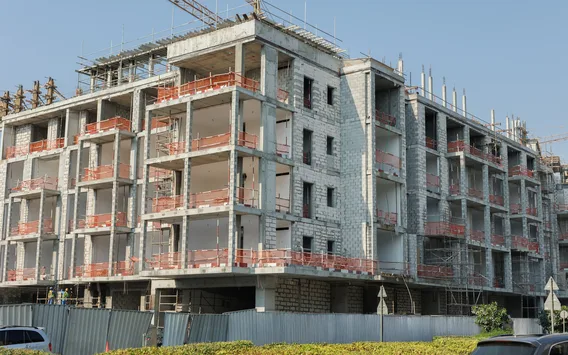

The building stock
Downtown of pre-war masonry office towers and converted tobacco warehouse and factory buildings, with brick commercial blocks on surrounding corridors.
Concentrated downtown core with adaptive-reuse district, ringed by highway-oriented retail corridors and suburban office parks.
What the weather and the ground do here
Inland Piedmont exposure to severe convective storms, hail and winter ice; hurricane remnants bring wind and rain.
Scale is the first thing to settle here, because the same stretch of downtown leases out at two sizes with almost nothing in common. North of the core the blocks are one and two stories of brick, sometimes stuccoed over, raised as a motor showroom, a market hall, a post office, a filling station — buildings whose entire rentable area sits under a single low roof, so the covering, the walls and the frontage are one object and one loss. A short walk east the volumes are industrial: factory and warehouse floors deep enough that a tenant occupies a fraction of the air inside them, with power, water and ventilation reaching through spaces nobody walks in a normal week. The questions divide the same way. On the small end an underwriter wants the roof covering, what stands above it, and what the building was drawn for before it held what it holds now. On the large end it wants what the conversion installed, where the wet systems run, and which parts of the volume somebody is actually watching rather than merely letting.
An ice storm here begins outdoors and finishes indoors, and this panel follows it from the branch to the floor. Ice builds outward on limbs standing over a low roof; the building stays cold long after the branch has fallen; wet systems thread through a volume nobody occupies hour to hour; a storefront block runs with no manager and no service agreement behind it; and a suite empties in the coldest week of the year. Running beside them in the same sequence: falling-object cover with roof age sitting behind the price, freezing loss and what the form expects an owner to have done first, the shell valued against everything running inside it, duties the lease has to carry with no manager to absorb them, and a dated note of when the heat and the tenant both went. A closing line records that owners do not claim for the outage; they claim for what it froze.
What the ice season puts on a Winston-Salem building
What it turns into on the insurance side
Nobody claims for the outage; they claim for what it froze.
What North Carolina law adds on top
An empty suite costs different amounts in different months here, and that is the part owners rarely price into a leasing decision. Given up in June, it costs the rent. Given up in the coldest week of December, with the heat turned down in a space nobody is paying to warm, it is a supply line, a sprinkler main and a rooftop unit sitting through a glaze with nobody inside to hear anything let go. What the state prints about an unused space is indifferent to the calendar. The exposure standing behind it is not, and neither is the value of being able to say precisely when the floor went quiet. An idle stretch reads as a revenue problem on a rent roll. In an ice season it is a property one as well, and both arrive on the same day.
North Carolina prints a vacancy provision in its own code, and it runs on the building’s occupancy rather than on your conduct.
The statute and the exact words where there are any, together with whatever the research recorded, are on the North Carolina page.
What a building costs to insure across the whole state is covered in How Much Does Commercial Property Insurance Cost in North Carolina?
By what you own in Winston-Salem
Retail here is a building rather than a center — one front, one or two floors, an independent tenant, and no operating agreement or on-site manager standing between an owner and the daily running of the property, which pushes everything a center would handle quietly into the lease or into nowhere. Office arrives as two unrelated products wearing one word: masonry floors in the pre-war towers, and plates cut out of former factory volume in the Innovation Quarter, where the ceiling heights and the column grid were set by a manufacturing process rather than by rooms. Mixed use runs to the buildings whose use has moved furthest from the drawing — an office tower now holding overnight guests, a power plant now holding restaurants and an evening crowd, and out in the West End, commercial and institutional buildings standing in a street of houses at a domestic scale.
The coverage lines behind all of this
Follow one split water line through a program and it lands somewhere different on each of these pages: the water itself, the income that stops while the floor dries, the fit-out ruined on the way down, the claim from whoever slipped in it, and the building work needed before a tenant will take the space back. One event, and no single line carries all of it:
Winston-Salem commercial property insurance FAQs
Why does an ice storm here do more damage than the amount of ice suggests?
The ice builds outward on limbs and overhead lines rather than piling up on the ground, so the load goes onto the parts of the landscape least able to carry it. When the major storm came through in early December, the hardwoods still had their leaves, which put a glaze onto a surface that is normally bare by then, and trees that rarely break broke. The utility damage across the state came overwhelmingly from limbs and whole trees coming down onto lines, not from the lines themselves giving way under the weight.
The building came through the storm intact. Why did a claim arrive a week later?
The loss here is usually written by duration rather than by impact. An outage that runs for days in December leaves a tenant space unheated and unvisited, and water standing in a supply line, a sprinkler system or a rooftop unit does not need long below freezing to split something. The break itself is quiet. The thaw is not: the line starts running into a floor nobody has walked since the storm, and it keeps running until somebody does.
My storefront is one story with old street trees over it. What is an underwriter looking at?
A falling limb behaves differently depending on what it meets. On a pitched roof much of the energy glances away; on a low flat deck it arrives square, and that deck sits over the only rentable floor the building has. Small buildings also concentrate the exposure: no second story absorbs anything, no other tenancy keeps earning while repairs run, and the roof that failed is the one keeping weather off the whole property. Tree work and roof age carry more weight on this stock than on anything taller.
What changes when the space is carved out of an old factory or a power plant?
The use travels further than the building does. A floor drawn for machinery now holds offices, restaurants and an evening crowd, and an owner exposure follows what goes on inside rather than what the shell was built to hold. That means cooking and hood systems, assembly-scale occupant loads, late hours and the liability attached to them, and services extended into a volume with far more air in it than a modern floor plate. Expect the conversation to run on occupancy and on what can be shown about the conversion work.
A suite of mine will stand empty through the winter. What actually matters?
There are two separate facts about the same room here, and owners routinely satisfy one while failing the other. What your policy carries about an unused space is interested in whether anybody is using it. The freeze exposure is interested in whether anybody is heating it. In practice the file wants both records: the date the floor genuinely stopped being used, kept as a date rather than reconstructed afterwards from a rent ledger, and a running note of what the heat, the alarm and the sprinkler system were doing while the space sat.
I lease out a commercial building on a residential West End street. What is different about it?
It was drawn as part of a residential street and it still behaves like one. The scale is domestic, the detailing is period work a general contractor does not reproduce from a catalog, and what stands on either side is housing rather than commercial neighbors. That lands on valuation before anything else: what the building would cost to put back is a question about the fabric, not about the area named in the lease. It lands on watchfulness too, because a street of houses has nobody on site after hours.
Sources
If anything above raises a question about the company behind a quote rather than about the building in it, the state insurance department is where that question goes:
- North Carolina Department of Insurance — the North Carolina regulator, and where to verify any producer’s license
A Winston-Salem quote that accounts for the cold
The questions that decide a file here are unglamorous ones. What the shell was drawn to do and what it holds now, where the water and the sprinkler lines run through it, who keeps the heat on when a space is between tenants, and when the trees standing over the roof were last cut back. An owner who has never been asked any of that is usually the one carrying the largest unpriced piece of it.