
Mixed Use Property insurance by city
Mixed Use Property Insurance in Sioux Falls, South Dakota
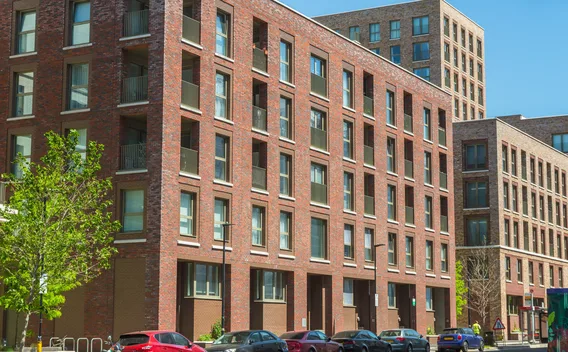
Quartzite and brick historic downtown blocks alongside newer steel-frame retail, medical and light-industrial buildings.

Sioux Falls: conditions a mixed use property building creates, each paired with what answers it. No figures are shown.
What this occupancy creates
What answers it
The conversion, not the cornerstone, is what gets priced here.
What the floor above the shop used to be
Along Phillips Avenue and Main Avenue the blocks went up as commercial buildings with lettable space above the shops, and nobody lived in it. Residence came later and one building at a time, as owners worked out that a room over a downtown storefront was worth more with a kitchen in it. So the useful date on a Sioux Falls mixed-use submission is rarely the date carved into the parapet. It is the date the upper floor changed jobs, and the question of who signed off on the change.
That matters because whatever divides the trade below from the residence above is almost never one assembly built at one moment. A floor deck laid for stock, a ceiling hung underneath it later, a stair boxed in during a remodel, a chase opened for a bathroom stack and closed by whoever happened to be on site. An underwriter reading a building like this wants the sequence rather than a certificate: what is original, what arrived with the conversion, and what was cut through afterwards. An owner holding the drawings and the permits from that work is describing a materially different building from the owner who is describing it from memory.
What a Sioux Falls year does to a building with residents in it
The exposure that reaches this type first is the roof, because on a converted block the roof is no longer over stock — it is directly over the rooms people sleep in. A membrane opened in a summer storm is water in a residence the same night, and a residence that takes on water is not merely damaged. It is unlivable. The shop at street level can usually trade through work that the floor above cannot survive, and that asymmetry is the whole difference between this building and the single-use one beside it.
Winter then finds the parts of the building that belong to nobody. In a converted block the stair, the corridor and the riser serving the upper floor sit outside every leased area, so keeping them above freezing tends to land on somebody by accident rather than by agreement. Read the ground-floor lease and the upstairs tenancy side by side well before the cold sets in, because the pipe that lets go is nearly always in the space neither document mentions.
The two rent streams also fail to restart together. A commercial tenant can trade from another address while the work runs; the people upstairs cannot be moved on your say-so and cannot come back until the building is habitable again. Loss of rents on a mixed-use building therefore runs on the slower half, which is nearly always the residential half — and the limit is often set from a rent roll that quietly assumed both halves recover at the same speed.
What the law asks of a building with people living in it
Sioux Falls keeps a register of buildings that have gone empty, and a building of this type is the awkward case for it: the shop can go dark while the rooms above stay occupied, so it is neither plainly in use nor plainly out of it. Whoever tracks that on your behalf should be holding the municipal duty and your policy’s vacancy condition open at the same time, because the two are not measuring the same thing. What the municipal duty actually says, and where it comes from, is settled on our Sioux Falls page rather than here.
The local picture for this city sits on the Sioux Falls page.
Where to go next
The lines that answer this exposure
Downtown Sioux Falls put trade at street level and working space over it — offices, meeting rooms, storerooms reached by a stair at the side. The people living up there arrived afterwards, into shells raised for something else entirely. An underwriter here reads backwards from that change of use rather than forwards from a floor plan. The coverage below is where that reading keeps landing:
Sioux Falls mixed use property insurance FAQs
The floor above my Phillips Avenue storefront is let as residence. Where does the underwriting actually start?
It starts behind the current use. A downtown block here was built with trade at street level and working space over it, so a residential tenancy upstairs is something the shell acquired rather than something it was designed around. Expect questions about when the conversion happened, who carried it out, whether the stair serving those rooms is enclosed, and whether the assembly between the two uses dates from that work or from long before it.
A restaurant wants the storefront my retail tenant is leaving. Who upstairs is affected by that?
Everyone using the stair, which in a downtown row is usually reached through a door set into the commercial frontage and runs up beside or behind the shop. Putting a cooking occupancy underneath that route changes the fire load on the only way out for the people above it. Raise it while the lease is still in draft rather than after the fit-out, because the answer can move both the separation work you owe and where the building can be placed.
Nobody has rented the shop below for a while, but the floor above is fully occupied. Am I vacant?
Possibly in part, and the wording decides that rather than common sense. Your form measures the described premises and how much of it is actually being used, not whether the building looks busy from the sidewalk. A shop standing dark under occupied rooms can put an owner inside that clause with every light upstairs on. South Dakota leaves the measurement to the form rather than to a statute, so the operative words are the ones in your own policy.
Hail took the roof. Why is my claim different from the shop next door with nobody living above it?
Because your roof is over occupied rooms, and water reaching them makes the space unlivable rather than simply damaged. The repair has to be sequenced around people who need somewhere to be, the work is inspected before they are allowed back, and the rent lost upstairs therefore runs longer than the rent lost at street level. One storm produces two interruptions of different lengths inside a single building.
What is the winter question on a building like this one?
Whether anyone is actually responsible for the parts no lease covers. The riser feeding the floor above, the stair up to it and the corridor it opens onto belong to the owner rather than to either tenant, and those are where a freeze starts. Check what your own form asks of you about maintained heat and protective safeguards once any portion of the building empties, then put that obligation into a document instead of leaving it to habit.
Most of my building is residence with a small shop at street level. Is that still your kind of risk?
Probably not, and it is worth establishing early. The line we work to is a commercial building carrying a habitational component, not a residential building with trade at the bottom of it. As the residential share grows the file moves to a different market, on different forms, answering a different set of questions. If you are unsure which side of that line your Sioux Falls building sits on, describe the floor areas and the tenancies and we will say plainly which it is.
Sources
Verify these directly:
- South Dakota Division of Insurance — the South Dakota regulator, and where to verify any producer’s license
Get a Sioux Falls mixed use property quote
The upper floor is where this starts. Tell us what it was before anyone lived up there, how it is separated from the shop below, and what each part is let as. A straight read of the placement comes back with it, plus the short list of what is still missing.