Lessors risk insurance by city

Commercial Property Insurance in Sioux Falls, South Dakota

Sioux Falls raised its downtown out of stone quarried on the spot, then cut a channel across the loop the river had made around it rather than move the buildings. Both of those decisions are still in the file when somebody underwrites a building here — along with a winter that does steady work on a wall, and a lease that has to say who pays to heat an empty one.

Get a Free Quote Call 317-942-0549

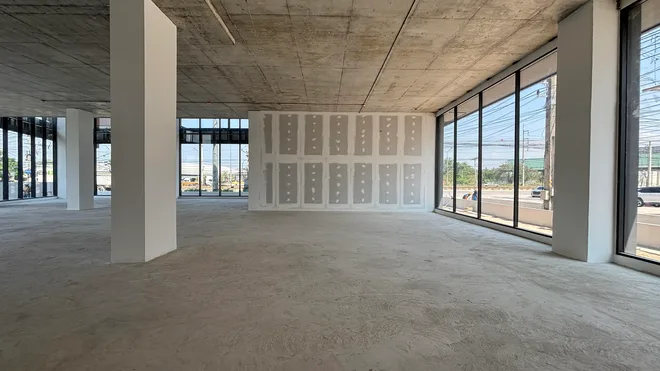
An unfinished open-plan floor with a bare concrete soffit and floor-to-ceiling glazing on two sides.

The building stock

Quartzite and brick historic downtown blocks alongside newer steel-frame retail, medical and light-industrial buildings.

Compact historic downtown core with arterial retail corridors and outlying commercial and industrial parks.

What the weather and the ground do here

Hail, straight-line wind and winter snow-load exposure, with spring flooding along low-lying river ground.

Put those together and the practical result is two maintenance problems under one weather map. On the older stone and brick blocks the wall is an assembly, and the part that gives is almost never the stone — it is the joint, the coping and the parapet, the places where something softer is doing the work. On the newer corridor buildings the wall is barely the question; the roof, the flashing and whatever is bolted on top carry the exposure. Neither of those is harder to insure than the other. They are asked different questions, and an owner holding one of each answers both sets inside the same renewal.

The Sioux Falls panel pairs a local condition with the decision it forces, one pairing to a row. The conditions are a downtown wall of quarried stone held together by mortar; a river taken across its own loop so that flood flow misses the center; a narrow storm track that removes one corridor address while the block behind it keeps trading; freeze and thaw working at joints and roof edges; an unleased suite nobody is obliged to heat; and a public sidewalk that becomes somebody else’s event venue for a day. Set against each is what an owner has to buy, prove or settle beforehand — water-entry history read at the joint, protection inherited against coverage purchased, a rebuild with the whole rent roll stopped, the line between wear and loss, the lease taken before the policy, and who the insured is when the crowd belongs to nobody. A closing note separates engineered protection from purchased coverage.

What the stone, the river and the winter set up

What has to be settled before it happens

Walls of quarried stone, joined by mortar that is not stone
Water-entry history read at the joint, not the wall face
A river cut across its own loop to miss the center
Engineering you inherit, coverage you have to buy
One corridor address gone while the next block opens
A rebuild, demolition, and a rent roll that stops at once
Freeze and thaw working the joint, the coping, the edge
What your form calls wear, and what it calls a loss
An unleased suite with nobody obliged to heat it
The lease first, then the policy — both before the freeze
A sidewalk that becomes a venue for somebody else’s event
Who the insured is when the crowd is nobody’s customer

Engineering protects the building; only a policy pays for it.

Reading a Sioux Falls building outward from its walls.

The local law that binds you

The reason to care that this duty exists is not the paperwork. It is the calendar. The gap between one tenant leaving and the next one signing is rarely a decision an owner makes — it is a search that runs long, a build-out waiting on a contractor, a sale that takes a season. In this climate that gap does not stay abstract, because an unoccupied building is a building where nobody is present to notice the first thing that goes wrong, through months when things go wrong slowly and out of sight. Sioux Falls has taken a position on that gap, and it is set out below in the city’s own words rather than ours.

Vacant Building Registration

(a) The owner shall register with the city not later than 30 days after any building in the city becomes a vacant building, as defined in this subchapter. ... (d) The owner and any subsequent owners shall keep the building secured and safe and the building and grounds properly maintained until the rehabilitation or demolition has been completed. The building shall not be used for storage. (e) Any new owner(s) shall register or re-register the vacant building with the city within 30 days of any transfer of an ownership interest in a vacant building.

Sioux Falls Code of Ordinances § 150.157 (Ch. 150, Building)

What South Dakota law adds on top

South Dakota law reaches a building here through the policy rather than through the building. Nothing about the stone, the corridor or the winter changes what the state has to say; what changes is which of your suites happens to be empty on the day something occurs, and whose wording is deciding that. So treat this part of the page as an instruction to go and read a document you already own — and to read it against one specific space rather than against the property as a whole, because a specific space is the level at which the question actually gets asked.

We did not find a standard fire policy printed in South Dakota’s insurance code. That is a limit on what we searched, not a finding that no such provision exists — so treat your own policy’s vacancy condition as the operative text, and read it before a unit goes dark between tenants.

The statute and the exact words where there are any, together with whatever the research recorded, are on the South Dakota page.

By what you own in Sioux Falls

The pages below cut the city by what a building was raised to do rather than by where it stands. Retail here runs from a stone-fronted storefront in a downtown row to a freestanding pad with its own parking out on a corridor, and those place nothing alike. Office covers a converted upper floor over a shop as readily as a purpose-built suburban building, and a floor leased to clinical tenants is a different conversation from one leased to accountants. Mixed use is the downtown case: commercial space at grade with a habitational component over it, in a shell that has already had at least one other life. Start with whichever you hold the most of.

The coverage lines behind all of this

None of the coverage below is a Sioux Falls product. The lines are the same instruments an owner buys in any state, and the only reason to read them on this page is that everything above decides which of them you are quietly relying on most. Open whichever one you have never actually read:

Sioux Falls commercial property insurance FAQs

Does a quartzite building underwrite differently from a brick one?

The material is genuinely local and unusual, and that is not the same as saying it behaves differently in a storm. What changes is where the wall is vulnerable. Hard stone laid up with mortar means the working parts are the joints, the coping and whatever sits on top of the wall rather than the face. So the maintenance question tends to be about pointing and water paths, and the repair question is whether the stone can be matched at all.

The river was routed around downtown. If water never reaches my building, is a flood event still my problem?

It can be, and the version owners miss has nothing to do with water in the lobby. Protection that works by carrying flow past the center still leaves closed streets, interrupted utilities and tenants who cannot reach the space. Rent stops for reasons that never touched your walls. Ask whether your form responds when access is cut off or when the damage sits on somebody else’s property, and how long you wait before it does. Flood itself is bought on its own terms.

My multi-tenant retail center is on a commercial corridor. What is the realistic worst case?

Not a damaged roof. A storm track here can be short and narrow and arrive in the middle of the night, so one address goes down to the slab while the block behind it opens in the morning. For a multi-tenant building that is every lease stopping on the same night, plus demolition, debris and rebuilding to what is required now rather than what was required then. Ask whether your limit assumes a total loss, and whether the rent coverage runs long enough for a rebuild.

A suite is going to sit empty over the winter. What do I sort out first?

Heat, and who owes it. Under a net lease the utilities usually follow the tenant, so the month a lease ends the obligation lands somewhere nobody has been thinking about. Settle that before the weather settles it for you. Then read what your own policy does once a space passes into vacancy, because freezing is among the first things a form narrows. Keep dated records of the walk-throughs and of the heat you held; that record is the only version of those months that will exist later.

My downtown storefront carries residential floors above it. Who is willing to write that?

Fewer markets than would look at the same shell without them, and the reason is not the residents. A habitational component over commercial space moves the conversation onto fire separation, egress, and what the ground-floor tenant does with heat and grease. In an older shell that has already had another life, none of that is documented by default. What you can show about the separation between the two uses does real work in the file; what you cannot show gets priced as unknown.

Downtown closes streets for events. Does that reach me as a landlord?

On the liability side it does. When the sidewalk in front of your storefront is part of somebody else’s event, the people standing on it are not there as your tenant’s customers, and the lease was almost certainly not drafted with them in mind. Worth knowing before the season starts: whether your general liability responds to an injury on ground you own but do not control that day, whether the organizer names you, and whether a tenant trading outside is an operation your file knows about.

Sources

Below sit the code section the passage above was quoted from and the South Dakota office that licenses anyone offering to sell you a policy. Both are published by somebody other than us, which is rather the point:

What would it take to write your Sioux Falls building?

A form cannot tell the difference between a stone storefront sharing a downtown wall and a steel-frame pad out on a corridor, and that difference is most of the placement. Say which of those you own, whether anything is standing empty going into winter, and what the lease does with repairs and utilities. Nobody needs a full submission to have that conversation.

Get a quote