
Mixed Use Property insurance by city
Mixed Use Property Insurance in Salt Lake City, Utah
Grid-platted downtown of mid-rise office and mixed-use blocks, with older brick and unreinforced masonry commercial buildings along historic main-street corridors.
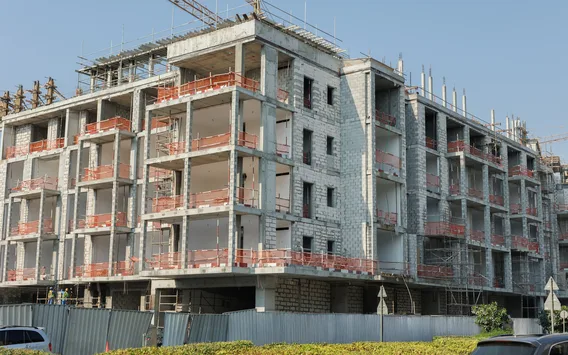

Conditions a Salt Lake City building with homes over a shop actually presents, matched to the coverage question each one raises. No figures appear.
What this occupancy creates
What answers it
The frame is rarely the hard part of a placement here.
The exposure on this stock starts across the street
The habitational half of this type has arrived in Salt Lake City in quantity on the flat ground west of the numbered grid, land that spent a century holding storage and haulage rather than shops. A good deal of that building is new, engineered and documented, which is why a submission on it rarely stalls on the survey. It stalls on the parcel opposite. An owner leasing a commercial ground floor with households living over it is carrying an exposure that is described nowhere on their own title: what is kept in the building across the road, how high the stacking goes, whether that building is protected, and how close its wall stands to rooms people sleep in.
That is not the question a commercial landlord in this city is used to being asked, and the reason is that the answer sits on somebody else’s file. An owner can evidence their own construction, their own separation and their own protection, and none of it says anything about what is standing in the yard opposite. On a block that is commercial the whole way along, an underwriter will usually take a general read of the surroundings. Where the exposed occupancy includes people asleep, the same underwriter starts asking for particulars about buildings the applicant has no right to enter and no way to inspect.
The east side of the city produces the same problem from the opposite cause. Where the streets climb toward the mountains the developed ground simply runs out, and a neighborhood block with homes over its shops can have nothing behind it at all — which is its own kind of neighbor. Wildfire at the bench edge is part of this city’s hazard record, and what it does to a building like this matches the industrial parcel across the road on the west side: the condition that matters sits outside the property line, no work done to the structure removes it, and the residential floors are what turn it from a repair question into a life-safety one.
None of that means a market will walk away, and it is worth saying plainly, because owners tend to hear a question about the neighbors as a verdict on their own building. What it changes is the shape of the file. A submission that names the surrounding occupancies, describes how far they stand from the residential elevation and says openly where nobody has actually looked reads as a complete one. One that describes only the structure itself reads as incomplete, and whoever quotes it will price the part they could not see.
When the shop is the empty half and the homes are not
The vacancy most owners here are braced for is the wrong one. In this stock the space that goes quiet first is usually the commercial tenancy at street level — on the older brick corridors as much as in the newer stock — while the residential floors above carry on being let straight through. What that produces is an address that is fully occupied by any ordinary reading and has an unlet, unlit and sometimes unsecured unit at the sidewalk.
The consequence people miss is who is left inside. When a commercial landlord elsewhere loses a tenant, the building empties and nobody is in it. Here it does not empty: there are households upstairs all winter, using a common entrance and a common stair past a unit below that nobody is now checking or answering for. The exposure that creates is not primarily a property one. It is that the part of the building anybody can get into sits directly beneath people who never agreed to be the ones who notice.
It also inverts the reporting arrangement an owner has probably assumed without ever deciding it. The party who used to say the glass was out was the business occupying the space, and that business has gone. What is left is a residential tenancy whose lease says nothing whatever about the state of a commercial unit, and a valley winter in which the building is harder to reach and easier to leave alone. Settling in advance who walks the ground floor, and how often, is cheaper than any of the things that follow from not settling it.
On the policy side the point is narrower. A vacancy condition takes its reading from the part of the address genuinely out of use rather than from how busy the building looks off the street, so residential floors that are fully let do not settle what a dark unit at grade does to the wording. That is a straightforward conversation while the unit is still boarded and a difficult one after a loss inside it.
A local duty that is not triggered by the building being empty
The local duty that reaches this stock is not switched on by a unit standing empty. As the City describes it, the question is whether the building is secure — glazing, doors, locks that work — and it is a notice that starts the clock rather than a tenant’s departure. On a building with households over a shop that distinction lands unevenly, because the residential floors can be fully let while the ground floor is the part of the address anybody can walk into. What the question turns on is the condition at street level rather than the occupancy overhead, and that reverses the assumption most owners bring to it: that an address with households in it is by definition an address in use.
The local picture for this city sits on the Salt Lake City page.
Where to go next
The lines that answer this exposure
In Salt Lake City the thing that most often decides a mixed-use file is not on the applicant’s own title at all, and answering it takes more than one of these:
Salt Lake City mixed use property insurance FAQs
We bought a converted block on the industrial side of town. What are underwriters asking that we did not expect?
Underwriters ask about the buildings around you rather than only yours, and owners are rarely ready for that. Construction, separation and protection inside your own structure are all things paperwork can answer. What is stored across the street, how it is stacked and whether that building is protected are things you probably cannot answer, and here they carry more weight than they would on a purely commercial block, because the occupancy standing exposed to them includes people asleep.
The building is mostly homes with one small commercial unit underneath. Can you still place that?
It depends on proportion, and the time to establish proportion is well ahead of a renewal, not once one is under way. The buildings this brand places trade at street level and have households in part of them. A redevelopment parcel can quite easily produce the reverse — several stories of housing standing on a lobby and one narrow unit facing the street — and that is a different product, placed by people who do it all day. Give us the areas floor by floor and we will tell you which of the two you are holding.
Our ground-floor unit is boarded up and all the homes over it remain let. Is a building in that state vacant?
The ordinary meaning of the word does not settle it, which is exactly why the wording is worth reading rather than assuming. Your own policy decides this, and it reads the space that is actually out of use rather than the impression the address gives from the sidewalk. We went looking in Utah’s insurance code for a vacancy provision to set beside that wording and did not find one, which says how far our search reached and nothing about what Utah law contains.
Our block backs onto the foothills and we have households on the upper floors. How do underwriters read a building like ours?
It changes what the exposure costs more than how likely it is. The hazard behind the bench is on the record either way; what the people upstairs change is what an event there turns into. On a purely commercial building it is a property and interruption problem. Put households on the upper floors and the same event is a life-safety and displacement problem, which is a different conversation and reaches a narrower set of markets. Expect questions about access, about what stands on the ground behind you, and about who controls it.
Why does the fire-separation question read so differently between our new build and our old brick storefront?
Because on one of them the answer is documented and on the other it is inferred. In new construction whatever divides the shop from the households was drawn, inspected and signed off, and you can put that record in front of an underwriter. On an older corridor building the separation is whatever the last conversion of the upper floor produced, frequently by people nobody can now name, and where no record of it exists that gap is the thing being underwritten. It is what a survey is sent to establish.
A market wants to know what is kept in the building across the street. Where would we even look?
Honestly, and then go and find out. An unanswered question about a neighboring occupancy gets priced as the worst thing it could reasonably be, so a blank costs more than an inconvenient answer does. Most of it is obtainable without any right of entry: what trades there, whether the building is protected, what the elevation facing you is built from, and its distance from the wall with households behind it. Anything you genuinely cannot establish, say so and let it sit in the file as a stated unknown rather than a silence.
Sources
Verify these directly:
- Utah Insurance Department — the Utah regulator, and where to verify any producer’s license
Get a Salt Lake City mixed use property quote
The useful package on a building of this kind is the areas floor by floor, what separates the commercial tenancy from the households over it and who carried out that work, and whatever you can establish about the parcels either side and opposite. We come back with how this is likely to place and what is still open. On a Salt Lake City file the item that stalls things most often is not about your building at all.