
Mixed Use Property insurance by city
Mixed Use Property Insurance in Oklahoma City, Oklahoma
Low-rise masonry and metal commercial buildings across a very large land area, with a modest high-rise downtown and extensive light-industrial stock.
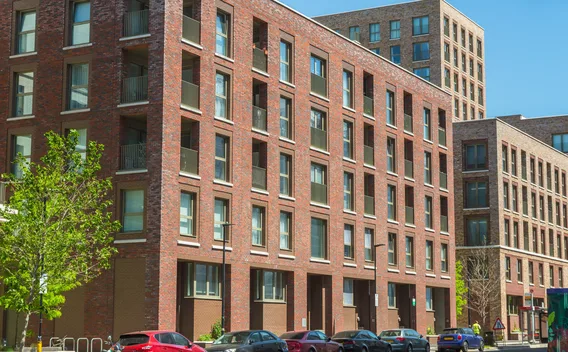

Oklahoma City: conditions a mixed use property building creates, each paired with what answers it. No figures are shown.
What this occupancy creates
What answers it
Occupancy here is a floor-by-floor fact, not one answer per address.
Mixed use here is a second use, added to a building that already had one
Ask where the mixed-use buildings are in this city and the answer comes back as a list of streets rather than a quarter: Broadway through Automobile Alley, Sixteenth in the Plaza District, Twenty-third through Uptown, Capitol Hill on the south side, the blocks off Sheridan the film exchanges built, and Exchange out in Stockyards City. Very little of that stock was drawn to hold residents. It was drawn to sell cars, to store and ship film, to outfit ranch hands, or to trade at street level with stock rooms over the top — and the people living in it now arrived a lifetime later, into shells that were already standing.
That sequence is the whole underwriting question on this type of building here. In a structure raised for mixed occupancy from the start, the floor dividing the trade from the residents was drawn as a separation and signed off as one. In a converted showroom on Broadway it was made afterwards, inside a frame built to carry parts weight and, in more than a few of those buildings, to move vehicles between levels. So what an underwriter is really after is not a wall but a record: who built the separation, under what permit, and what became of the ramp or the freight shaft the original owner relied on. An opening the size of a car does not close itself, and a deck that once took a vehicle load is a different fire problem from a deck that took filing cabinets.
The newer stock asks the opposite question. Purpose-built mixed use around Deep Deuce and through Midtown had its separations drawn, inspected and closed before anyone moved in, and the exposure in those buildings is not in the shell at all — it is in how often the ground floor turns over. A grade tenancy in these districts is usually food, drink or a room where people gather, and each new operator brings a hood, a gas run, a grease line and an opening cut where the last one had no need of it, all of it under rooms let by the month. The instructive history on a newer building is therefore not its construction date but its fit-out log, and how many times the space below the residents has been rebuilt since the building opened.
One address, two occupancies, and they do not empty at the same time
Half of a building like this can go quiet without the other half noticing, and that is the fact Oklahoma’s insurance code makes expensive. The standard fire policy the state publishes is the form your property coverage is built on, and its occupancy language reads the premises the policy describes rather than the address on the declarations page. On a single-occupancy building the distinction is academic. Here it decides things: a shop that closed in the spring under residential floors that have never had a gap is a building most owners would call fully occupied and a policy might not.
The two halves also re-let on entirely different clocks, which is where the loss-of-rents arithmetic on an Oklahoma City building tends to go wrong. A residential tenancy turns over on a schedule an owner can predict and refill from a waiting list. The room underneath it cannot be refilled that way, because it was built for one trade and suits a short list of takers — a bay drawn to show cars behind glass, a strong room built to hold film, a floor with a scale-house past out by the stockyards. Time-element coverage sized against the residential side of the rent roll runs out long before the commercial side is earning again, and nobody discovers the gap until the building is already sitting half-let.
Weather is where the two occupancies stop being separate accounting problems. When a central Oklahoma storm strips the roof covering off one of these buildings the water does not stay on the top floor: it runs down through rooms people sleep in and lands in the stock of the tenant trading at grade. One event then produces a repair, a habitability problem with residents who have to be somewhere else that night, a commercial tenant with a lease and a loss of his own, and a rent roll interrupted on both sides at once. An owner of a single-use building in this metro gets one of those. An owner of this type gets all four, out of the same hailstone.
The half of the building the street can see
Of the two halves of a building like this, only one is visible from the sidewalk, and it is the half most likely to be dark between tenants. Oklahoma City takes a position on buildings that appear to have been given up on, and that position carries a cost attaching to the property rather than a ticket somebody can argue away at a counter. It weighs more on this type than on a single-occupancy building, because a papered-over storefront can put an address into a category the let rooms above it flatly contradict, and nobody upstairs will know it has happened. Keeping the grade level lit, maintained and visibly somebody’s job while it is between tenants protects the whole building, not merely the empty part of it.
The local picture for this city sits on the Oklahoma City page.
Where to go next
The lines that answer this exposure
Put residents over a working ground floor on Broadway or in the Plaza District and each of the lines below stops being a category and turns into an argument about one address:
Oklahoma City mixed use property insurance FAQs
The upper floors of my Broadway building were parts storage before they were let as living space. What will an underwriter want to see about the floor between them?
Who built the separation, when, and under what permit — roughly in that order. A conversion floor is field work performed inside somebody else’s structure, so the assembly is only as sound as the trade that installed it and the inspection that closed it out. Expect questions about the original vertical openings too: stairs, freight shafts, and the ramps some of these buildings used to move vehicles between levels. Those are where a retrofit separation is most often defeated, because closing one properly costs real money and leaving it open costs nothing at all until there is a fire.
My ground floor is between tenants while every room above it is let. Is the building empty?
For your policy that question has an answer you cannot give from the sidewalk. Property forms read occupancy against the premises they describe, and a described premises can include a portion that has stopped being used while the rest of the building trades or houses people as normal. Oklahoma’s standard fire policy is where that language originates for buildings here. The practical move is to put the closed portion on the record in writing while it is still a leasing problem, rather than deciding on your own that a busy building cannot be reached by it.
Hail took the roof and water came down through the let rooms into the shop below. Which parts of the policy answer that?
Three of them at once, usually. The building damage sits on the property side. The rooms nobody can occupy while they dry out sit on time-element coverage, which is where owners find their limit was sized for a storefront and not for a residential floor as well. The tenant at grade has his own stock loss and his own interruption, which is his policy rather than yours, though his lease may still suspend his rent. Sorting out which of those belongs to whom is far cheaper before the spring than in the middle of it.
The restaurant downstairs is on a third operator since I bought the building. Should that history be in the file?
It should, and it is usually the strongest thing an owner of this type can put in front of a market. Every change of food operator in a Plaza District or Deep Deuce ground floor brings a new hood, new gas work and new penetrations through the assembly protecting the people living over it. A market pricing this building prices that ground-floor tenant class first and the shell second. Permits, the hood-cleaning contract and the most recent inspection report answer the question before anyone asks it, which shortens the placement considerably.
More than half my rent comes from the residential floors. Is this still a commercial account?
It usually is, and the way you present the split governs how easily it places. Give the residential share by floor area and by rent separately, because the two rarely agree and a market will ask for both. Say what the residential tenancies actually are: rooms let by the month behave nothing like short-stay lodging, and some markets that will write one will not go near the other. Be clear too that your building coverage stops at the residents’ own belongings, which are theirs to insure, and that the leases ought to say so plainly.
The upper floor of my Capitol Hill building has been closed off for years while the shop below trades. What is that floor, for a policy?
An unknown, which is the most expensive thing a building can hold. A sealed floor is still part of the premises the policy describes, it still sits over a trading tenant, and nobody has walked it since the door was screwed shut. Roof leaks, failed plumbing and rodent damage to old wiring all mature quietly up there and arrive as a loss in the shop below. Have it opened and inspected, put its condition on the submission, and settle deliberately whether the plan is to insure it as it stands or to find it a use.
Sources
The Oklahoma statutory statements on this page are drawn from primary government sources. Verify them directly:
- 36 O.S. § 4803 — the Oklahoma vacancy provision this lens turns on
- Oklahoma Insurance Department — the Oklahoma regulator, and where to verify any producer’s license
Get an Oklahoma City mixed use property quote
Send the occupancy of each floor, the date the ground-floor lease was signed, and whatever permit history came with the conversion — we will read that against the markets writing residential floors over trade in central Oklahoma.