Commercial Property Insurance in Oklahoma City, Oklahoma
Oklahoma City’s oldest leasable brick was laid up for wind, and for most of its standing life wind was the only thing that asked anything of it. What changed came from underneath rather than from the sky, it changed inside the working life of buildings that were already old, and it has since been pushed back down without being switched off. So an underwriter reading a masonry address here is working out less what the building is than what it has been through, and when.
Nate Jones is a CPCU-designated insurance broker and the founder of Wexford Insurance, LLC and Lessors Risk Guard Insurance. He places lessors risk and
commercial property coverage for owners who lease buildings to commercial tenants,
through a specialty panel writing in 48 states.
Reach him through the quote form or call 317-942-0549.
Last updated · Reviewed by Nate Jones, CPCU
The building stock
Low-rise masonry and metal commercial buildings across a very large land area, with a modest high-rise downtown and extensive light-industrial stock.
Low-density, highway-oriented development spread across a large municipal footprint, with a compact revitalized downtown core.
What the weather and the ground do here
Tornado and large-hail exposure define the market; severe convective storms drive both frequency and severity.
The part of a brick building that goes first is the part above the roof. A parapet is a wall with nothing bracing its top, coping sits on it more or less loose, and a veneer holds on by its ties or by friction — so anything that loads a wall sideways reaches those few feet before it reaches a floor a tenant would notice. That is where the questions land here: what has been rebuilt up there, whether the parapet was ever tied back into the structure, whether the veneer is anchored, and, more than any of it, roughly when each of those things was done. A metal-framed building out on a frontage road carries none of that and a different list instead — what is fastened to the frame, what is hung off it, and whether the fastenings were specified for uplift or simply for holding still.
Six conditions found on an Oklahoma City commercial building, each one set beside the placement question it raises and taken in the same order. The conditions are a masonry wall with nothing bracing its top few feet; ground that shook harder in some years than in others; cracking that arrived without a date on it; a deep showroom floor built as one room and standing empty; a storm track that ran wide of the old brick core; and glazing raised to put goods in front of the street. Set against them are the coping and parapet work an owner ought to be able to put a year to, whether the form speaks to earth movement at all, the line between deferred upkeep and a covered loss, rent coverage measured against a slow re-letting, what a loss run proves as against what it merely suggests, and glass valued deliberately rather than swept into a building figure. A closing line records that the wall did not change while what the ground does to it did.
What the ground and the sky have put on the brick
Where it turns into a placement question
A parapet with nothing bracing its top
Coping and parapet work you can put a year to
Ground that shook harder in some years than in others
Whether the form speaks to earth movement at all
Cracking that arrived without a date on it
The line between deferred upkeep and a covered loss
A deep showroom floor, one room, standing empty
Rent coverage measured against a slow re-letting
A storm track that ran wide of the old brick core
What a loss run proves, and what it only suggests
Glazing raised to put goods in front of the street
Glass valued deliberately rather than swept into a total
The wall did not change; what the ground does to it did.
The argument here is about when, not about whether.
The local law that binds you
Ownership does not lapse when attention does. A building keeps a name attached to it through a stalled rehabilitation, a closing that slipped, an estate nobody wanted and a contractor who stopped returning calls — and none of those situations looks like neglect from the inside, while every one of them can look like exactly that from the sidewalk. Oklahoma City has taken a position on buildings in that state, and the reason for an owner to care is that the city’s reading is made from outside, on what is visible, without reference to whatever plan is sitting on your desk.
Abandoned Buildings — nuisance declaration and abatement assessment
Abandoned buildings are hereby declared to constitute a nuisance and detrimental to the public health, safety, or welfare of the inhabitants of and visitors to the City; provided that this article shall not apply to land zoned and used for agricultural purposes. … Abatement of an abandoned building by the City may include any or all of the following: the quarterly assessment against the property on which the abandoned building is located and against the owner of the abandoned building of the actual costs of any municipal regulatory action taken in relation to the abandoned building
This is a nuisance declaration with a cost-assessment mechanism rather than a registration or inspection duty. The financial consequence falls on the owner by assessment.
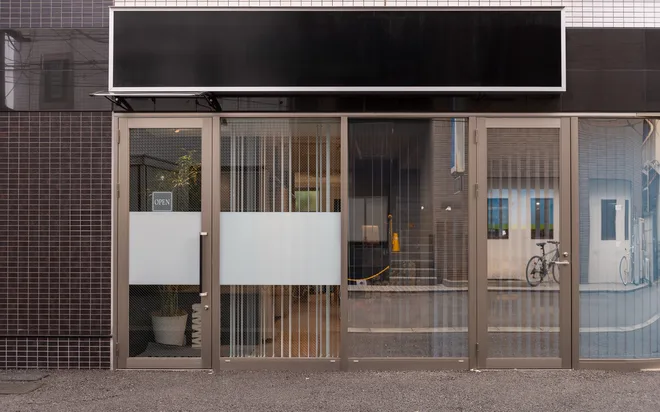
A showroom was built as one room. The buildings raised along the automobile trade here have ground floors with depth and almost nothing dividing them, which means the space and the building are very nearly the same object — and when that floor comes empty it does not come empty in pieces. There is no second tenancy downstairs to blur the picture and no partial reading to fall back on. The Oklahoma rule your policy carries attaches to a condition of the space, and on a building like that the condition arrives all at once and then holds, because re-letting a single deep room behind a glass front takes as long as it takes to find the one tenant it suits.
Oklahoma prints a vacancy provision in its own code, and it runs on the
building’s occupancy rather than on your conduct.
The statute and the exact words where there are any, together with whatever the
research recorded, are on the
Oklahoma page.
Retail in Oklahoma City means a storefront row raised for the automobile trade just north of downtown as readily as it means a pad with its own parking on an arterial, and those share a category and very little else — one has a deep ground floor behind a glass front, the other has a pylon sign and a drive aisle. Office runs from an upper floor over a shop in Midtown, to a plate downtown, to a low-rise out on a frontage road, and a tenant improvement means something different in each. Mixed use is mostly the redeveloped ground around Deep Deuce, where commercial space at grade carries a habitational component over it in a district that was rebuilt rather than preserved. Bricktown cuts across all three, because the brick there did not go up in one campaign — a building at one end of a block and a building at the other are different generations of the same material and do not read alike.
Each line below settles something narrow: which losses it will pay for, what it calls the damage while it is still arguing about the cause, and how long it keeps paying once the building has stopped earning. Those are the three questions the sections above keep running into, and all three get decided in wording rather than on a block:
Do central Oklahoma earthquakes actually reach a commercial building?
Unreinforced masonry is the wall type this shows up in first, and a great deal of the older leasable brick here is exactly that. What makes it awkward is that the shaking was not a constant — it rose sharply, then fell back after the injection practices behind it were changed. So a building of one age has lived through very different decades, and the damage it shows is undramatic: a shifted coping stone, a hairline through a wythe, veneer working loose from its ties.
The tornadoes this metro is known for missed downtown. Is the old core in a safer spot?
A track is a record of where one storm went, not a description of where storms can go, and reading a couple of tracks as a siting advantage is how owners talk themselves out of coverage they should be buying. The events that defined this metro ran through commercial ground away from the pre-war brick. That is a fact about those paths. It is not a property of the block your building stands on, and no underwriter treats it as one.
There is a crack in my parapet and nobody knows when it appeared. What happens to that at a claim?
It becomes an argument about dates, which is an argument you win with paper or lose without it. Property wordings generally pay for damage caused by a covered event and generally do not pay for a wall wearing out, so the whole question is which side of that line the crack falls on. Nothing about the crack itself will settle it. What settles it is a survey, a repointing invoice, a dated photograph, or an inspection report from before the thing you are claiming for.
I own a former showroom with one deep ground-floor room behind a glass front. Who leases that?
Somebody who wants the room and the frontage together, which narrows the list and lengthens the search. The building was drawn to display goods to people walking past, so the glass is a feature rather than an incidental, and it is also the most expensive surface on the elevation and the one most likely to go in a hailstorm. Find out how your policy values that glazing and whether it is scheduled or swept into the building figure, because those are different amounts.
My whole ground floor is about to go empty between tenants. What is the first thing to sort out?
Your own wording, before the tenant hands the keys back. A property policy carries a provision that changes what it does once a space stops being occupied, and it does not ask whether you meant it to happen or how good your leasing prospects are. Then the unglamorous half: who walks the building, whether heat and alarm stay on, who holds keys, and the date the last tenant left. Start that log the day you know the space is going, not the day something goes wrong in it.
I am buying a Bricktown building. What should the inspection actually cover?
The top of the wall, and the history of the top of the wall. Those buildings went up in successive campaigns rather than all at once, so a neighbor two doors down can be a different generation of masonry entirely, and what was done to one is no guide to the other. Ask for repointing and roofing records, anything from a structural engineer, and any repair the seller carried out. What nobody can produce in writing becomes an assumption, and assumptions are not free.
Sources
Each link below belongs to a different office and answers a different kind of question. The municipal chapter is where the quoted passage lives and where any change to it would show up. The state insurance department is the record of who is licensed to sell a policy in Oklahoma:
What has your Oklahoma City building been standing through?
Most of what settles a placement here is physical and datable — what the wall is, what sits on top of it, what has been repointed or rebuilt and roughly when, how much of the ground floor is a single room, and whether anything is standing empty right now. If the honest answer to one of those is that nobody knows, say so; an unknown named up front is cheaper than an unknown found at a claim.