
Mixed Use Property insurance by city
Mixed Use Property Insurance in Long Beach, California
Older masonry and concrete commercial buildings downtown, plus mid-century strip retail, port-related warehouse and distribution space and newer mixed-use construction.

Conditions a Long Beach owner meets in a building where people live above a commercial tenancy, shown alongside what answers each one in a placement, with a note underneath about how the local duty arrives.
What this occupancy creates
What answers it
Nothing about the building announces the duty. A notice does.
The tenancy at grade is not reliably a shop
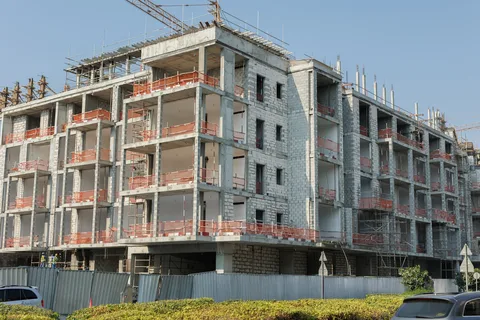
Mixed-use arrives here in more than one generation of building, and the older one sits downtown. Along Pine Avenue, on Broadway and through the East Village Arts District there are masonry and concrete commercial blocks with offices, studios and homes stacked over a trading grade floor. Nearer the water and out along Long Beach Boulevard the same arrangement turns up in construction of a far later vintage, drawn from the start with living space over leasable ground-floor area. The questions those two attract barely overlap, and an owner holding one of each is answering different applications about them.
What separates a Long Beach building of this kind from the general version of it, though, is usually what the grade floor is doing. This is a working harbor city, and the commercial tenancies on the arterials that feed it are not always retail — a freight broker, a customs agent, a marine electrician, a supply counter serving contractors, a small fabrication shop. Trades like those move vehicles in and out through the day, they hold stock at height, several of them cut, charge or weld, and a good many are busiest at hours a storefront would be shut. Put homes over that and the building carries a fire load and a working day its frontage does not advertise.
That is where a submission from this city gets sorted. The expected opening question about a building with homes above it is how much of the structure is residential; here the grade-floor trade is at least as likely to settle the answer, because a gallery on Pine and a fabrication shop off a harbor arterial can look identical on a rent roll and are nothing alike once there are people sleeping over them. The lease is where an owner gets hold of it: permitted use written narrowly rather than by category, hot work named rather than implied, commodity and storage height described, and a right of entry somebody actually exercises. Where the grade floor stops trading commercially altogether and the whole structure becomes homes, the building has left this product and belongs to the brand that writes habitational property.
A duty you cannot read off the building
The City keeps an earthquake-hazard chapter, and what is useful about it to an owner of this type is how narrowly it is aimed. It is written around what a building is made of and how far back it goes, which places a swathe of the older downtown stock inside it and leaves the newer construction near the water outside it entirely. So the opening question on an address here is not what the chapter requires. It is whether the chapter has anything to say about that address at all, and that is a records question rather than a site-visit question.
The part that catches owners out is what comes next. Standing inside the chapter’s reach is not the same as owing anything under it: corrective action becomes due once the City has graded a building and given the owner notice of what needs doing. An owner can therefore hold a qualifying downtown block for a long stretch owing nothing, and the obligation can begin with an envelope rather than with an event. Nothing in the masonry changes on the day it lands. What changes is the file — and on a building of this type, what changes with the file is a construction project inside somebody’s home.
Which is why the insurance side of this belongs in front of the notice rather than behind it. Work of that kind reaches the shell both occupancies sit inside, so it will not confine itself to whichever half of the building is easier to clear, and a residential tenancy cannot be timed to a lease expiry the way a commercial one can. The cost of complying with an order is not physical damage and a property form on its own is not written to answer it; rent interrupted or discounted to hold a tenant through the job is a separate question again. Both are ordinary to arrange in advance and awkward to negotiate with scaffolding already up.
The last of it has nothing to do with the ground under the building and everything to do with what stands beside it. On the streets feeding the harbor a building with homes over a trading floor can sit opposite a container yard, a truck court, a repair shop, or open storage running the length of a lot, and an underwriter reads what is next door as part of the file — a neighbor’s fire load can reach your shell whatever you run inside it. The direction owners forget is the other one. Movement, fumes, light and noise at hours a commercial block absorbs without comment are, to a resident on your upper floors, a habitability matter, and that arrives at the owner of the building rather than at the operation generating it. Across a purely commercial street it is a grumble. Here it is an exposure.
A duty that begins with a notice, not with the building
The earthquake-hazard chapter here is aimed at an older generation of downtown construction, and for an owner of this type what it does not do matters as much as what it does: the obligation is not standing in the structure waiting to be discovered. Corrective action becomes due after the City has graded a building and said so, which means an owner can hold a qualifying property for years owing nothing under it and then hold the same property owing a great deal, without a brick having moved. That timing is the whole difficulty on a building with residents over a trading floor. The work reaches the shell both occupancies sit inside, it arrives on a calendar belonging to neither lease, and what an order would cost to satisfy — along with what the rent does while it is being satisfied — is far cheaper to answer before a notice exists than after one has landed.
The local picture for this city sits on the Long Beach page.
Where to go next
The lines that answer this exposure
On a downtown Long Beach block the tenancy at grade might be selling coffee or dispatching freight, and which of those it is reorders every line below it:
Long Beach mixed use property insurance FAQs
Our grade-floor tenant is a freight broker with a roll-up door rather than a storefront. How does a market read that?
As a fire-load and working-hours question well before it is a rent question, and the frontage gives an underwriter almost nothing to work with. What is stored inside, how high it is stacked, whether anything is cut, charged or welded, and when the place is actually busy are the facts in play, and a harbor trade is frequently at its busiest when a shop would be shut. All of it is being asked about a building somebody lives in, which is why the answers travel further here than they would on a freestanding unit.
How would I find out whether my building has ever been graded under the earthquake-hazard chapter?
Not by looking at it. The chapter reaches an older generation of construction on the strength of what it is built from and how far back it goes, and the duty to do anything about it begins only once the City has graded the structure and given the owner notice of what is needed. An owner who has never received one is not exempt — they are ungraded, which is a different position and a better one to understand before a market asks. City building records and whatever came across at closing are where that history sits.
If corrective work is ordered on a building where people live upstairs, what actually happens?
Everyone in the building moves, on different timetables. An order lands on the structure, so no version of the job works around whichever occupancy is easiest to empty: the trade at grade can be relocated on notice, the people living above it cannot. Two costs then sit outside the repair bill. One is what the code now asks for that the original construction did not — not damage, so the plain property section looks past it. The other is the rent you forgo to keep a household in place. Both are cheap beforehand, expensive with a contractor on site.
We are across the street from a truck yard on a road that feeds the port. Whose problem is that?
It runs both ways, which is why it belongs in the submission rather than the survey. One direction: what is stacked, parked or repaired across the road is read as part of your file, because a fire does not check the property line before crossing it. The other: what a working street takes without complaint — the movement, the fumes, the noise at odd hours — is a habitability matter to somebody living over your ground floor, and it arrives at the building’s owner rather than at whoever generates it. On this type the second direction is the surprise.
The street-level unit is full of a tenant’s stock and somebody looks in about once a week. Is it in use?
That is the case the wording handles worst, and it turns up constantly in a port city where affordable ground-floor space ends up as staging. A space holding goods with nobody working in it is neither trading nor standing empty, and the form being applied to it is not one your insurer chose — California settles its fire-policy language in the Insurance Code, at section 2071. So the argument runs on how the premises were described, not on whose paper it is. Say what the space is really doing when the policy is written.
If the City orders work, can any of that cost sit with our tenants?
It depends on documents written long before the order, and the answer is rarely the same on both sides of the building. A commercial lease may allow compliance or capital work to be recovered, on terms negotiated when nobody expected to use them. The residential tenancies above it almost never will, and the attempt there is governed by an entirely different set of rules. An order on this kind of building therefore lands unevenly on the owner, which is an argument for pricing it rather than assuming a lease absorbs it.
Sources
The California statutory statements on this page are drawn from primary government sources. Verify them directly:
- Cal. Ins. Code § 2071, with § 2070 mandating its use — the California vacancy provision this lens turns on
- California Department of Insurance — the California regulator, and where to verify any producer’s license
Get a Long Beach mixed use property quote
Owners here frequently cannot say whether their building has ever been graded, and that single unknown moves a Long Beach file further than the rent roll does. Say what the tenancy at grade really does once the counter closes, how the homes above are reached and how they are let, and whether anything has ever arrived from the City about the structure. We will read that back as a placement, with the parts that are still guesses marked as guesses.