Commercial Property Insurance in Long Beach, California
Most of what decides a placement in this city happened slowly, and a good deal of it happened underground. The land along the harbor sank across a wide region with no earthquake in it at all — drawn down by what was being pumped out from beneath it, and held steady since by water put back in its place. That sets the terms for the rest of this page. What threatens an owner here tends to arrive as a long quiet process rather than as a single bad afternoon, and slow trouble is the kind a property policy handles worst.
Nate Jones is a CPCU-designated insurance broker and the founder of Wexford Insurance, LLC and Lessors Risk Guard Insurance. He places lessors risk and
commercial property coverage for owners who lease buildings to commercial tenants,
through a specialty panel writing in 48 states.
Reach him through the quote form or call 317-942-0549.
Last updated · Reviewed by Nate Jones, CPCU
The building stock
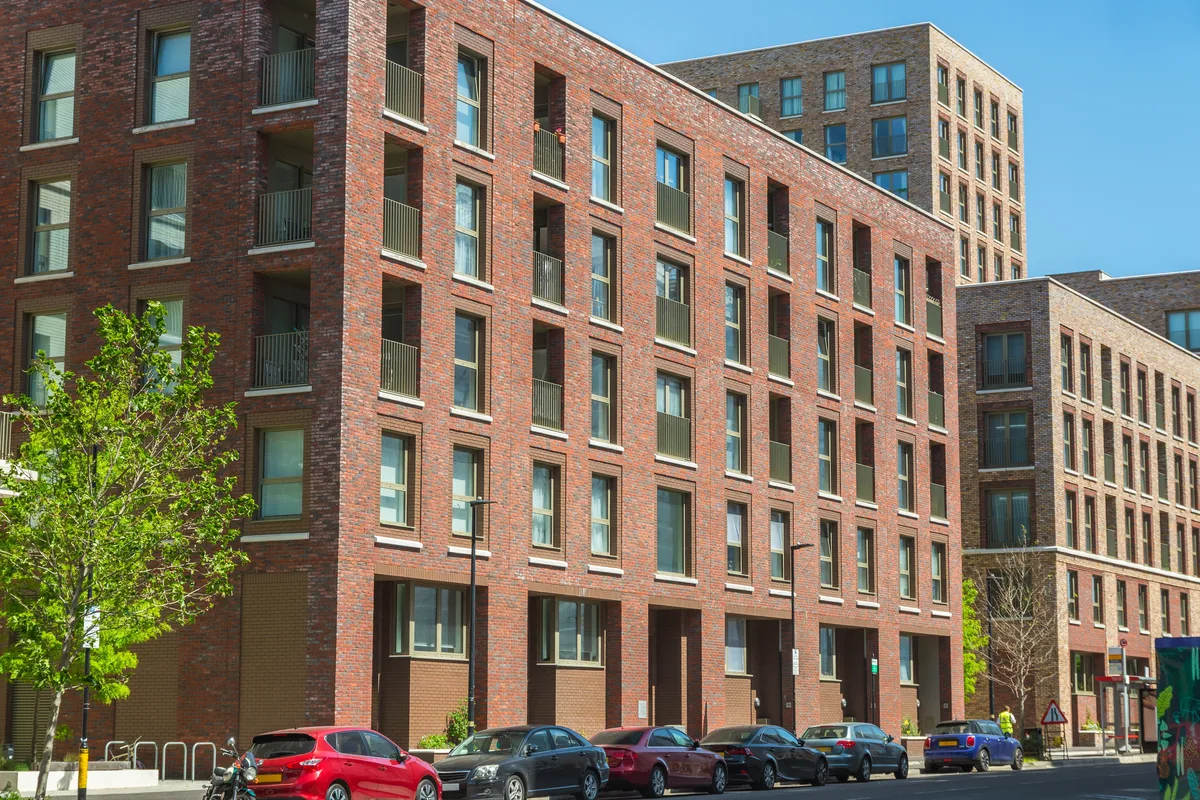
Older masonry and concrete commercial buildings downtown, plus mid-century strip retail, port-related warehouse and distribution space and newer mixed-use construction.
Waterfront downtown core, long arterial commercial corridors, and extensive port and industrial development along the harbor.
What the weather and the ground do here
Active seismic exposure on nearby fault systems, with coastal storm and marine-environment corrosion concerns around the port.
What that mix does not tell you is what the ground under each part of it has already been through. The oldest commercial buildings here were standing before the land began to sink. The working belt along the water sits over the part that dropped furthest, where the damage showed up first in the things that span between properties — rails, pipes, wharf decks, the street itself — rather than in any one structure. A great deal of the newest construction went up only after the movement had been stopped and the ground, in places, had come partly back. So a crack in a wall in this city carries more than one plausible history, and an owner who can date it stands somewhere quite different from an owner who cannot. That is the shape of a slow hazard. It never hands you an event, so the evidence has to be something you kept.
Six paired rows, each setting something already true of a Long Beach building beside the question it puts to whoever is asked to write it. Ground with a documented history of sinking is paired with settlement argued against a baseline nobody thought to record. A duty whose reach was fixed at construction is paired with the drawings and the permit file rather than the current tenant. A retrofit program the City leaves elective is paired with a lender asking what the City does not. Work done to the building by an owner before you is paired with the standard of its day and whatever paper survives it. A distribution box that goes dark on one lease expiry is paired with a vacancy condition arriving whole rather than by degrees. Racking a tenant can change without a permit is paired with a sprinkler system designed for something else. A closing note observes that an elective upgrade is still an underwriting question.
Conditions already true of the building
Where each one shows up in the placement
Ground with a documented history of sinking
Settlement argued against a baseline nobody recorded
A duty whose reach was fixed at construction
The drawings and the permit file, not the tenant
A retrofit program the City leaves elective
A lender asking what the City does not
Work done to the building by an owner before you
The standard of its day, and whatever paper survives
A distribution box that goes dark on one lease expiry
A vacancy condition arriving whole, not by degrees
Racking a tenant can change without a permit
A sprinkler system designed for something else
An elective upgrade is still an underwriting question.
What is already true of a Long Beach building, row by row.
The local law that binds you
Read what follows for its REACH rather than for its requirement. What brings a building inside it was settled when the building was put up — how it was framed, and when — and neither of those moves afterward. A change of tenant does not move it. A change of use does not move it. Nothing you do as an owner moves it either way. That is unusual among the obligations that come with commercial property, and it is useful rather than merely restrictive: the most consequential fact about an older building here can be established before you own it, from paper, by someone you hire to look. It is also why a broker who knows this city asks what the building is made of before asking what it earns.
Earthquake Hazard Regulations
This chapter shall apply to all Type I, Type II and Type III buildings located within the City and built prior to January 9, 1934. … Owners of structures that have been graded Excessive Hazard - Grade I will be given notice of the need for corrective action as soon as such grading has been accomplished.
Type I, II and III buildings built before January 9, 1934. The corrective-action duty attaches on notice after a hazard grading, not automatically.
The chapter above concerns whether a building stands up. California’s contribution concerns what your own policy does once a building stops being used, and it meets a peculiar inventory here. Much of what is leased in this city is held by one tenant at a time — a distribution building, a single-user box on an arterial, a whole floor of a business park. Property like that has no partly-occupied middle to sit in. It is fully let, and then it is not, on one expiry that everybody involved saw coming. And what fills it again answers to freight and trade rather than to the foot traffic outside the door, so the interval is not really yours to shorten.
California prints a vacancy provision in its own code, and it runs on the
building’s occupancy rather than on your conduct.
The statute and the exact words where there are any, together with whatever the
research recorded, are on the
California page.
The port is the common denominator here, and it is also where the resemblance ends. A shop under residential units on Retro Row lives or dies on who walks past it. A multi-tenant strip along Bixby Knolls or through Cambodia Town turns over one unit at a time, on its own schedule, whatever the rest of the run is doing. A leased suite near the airport business district or a distribution building on the harbor-side industrial belt answers to contracts signed a long way from this city. Same owner, same policy year, and three completely different rhythms of risk.
Take the harbor back out and these turn into general questions with general answers. That is deliberate. The lines below are the same instruments everywhere, and knowing what each one is actually built to do is what stops an owner buying the wrong reassurance:
Nobody mentions an earthquake when they talk about the ground sinking here. What am I exposed to?
With an exposure a property form handles poorly. Movement of the land is treated as a cause set apart from the ordinary perils, and slow settlement sits at the far end of that: no event, nothing sudden, nothing to point at. What was beneath this city was drawn out by an industry and the ground later held still by putting water back, so the stability under your building is a maintained condition rather than a natural one, and it is maintained by somebody who is not you. The useful move is unglamorous: photograph and date your walls now.
Am I on a clock to strengthen a commercial building in Long Beach?
Two programs sit behind that question and only one is voluntary. The chapter quoted above is mandatory, and its reach was fixed when the building went up: the listed construction types, of the vintage the chapter names above, are inside it. What it lacks is a published deadline — corrective work falls due when the City grades a structure at the highest hazard level and serves notice. The separate modern retrofit program is the voluntary one, scoped to wood-frame property containing residential units. An insurer and a lender both ask about work the City has not required.
My building was strengthened long before I bought it. Is that good enough?
It is good, and it is not self-evident. Work of that vintage was done to the standard in force at the time, which is not the standard a market applies today, so the question is never whether something was done but what was done and to what specification. Permits, an engineer’s letters, the scope of work, any inspection sign-offs — those are what turn a general reassurance into a rateable fact. If none of it came across at closing, the City’s own building records are where some of it will still be sitting.
An older building of mine is badly damaged. Will the policy pay to rebuild it to current requirements?
Only if you bought that separately. A property form is written to restore what was there, and the distance between what was there and what a building department will now permit is a different purchase — the value of the undamaged portion you are ordered to take down, the cost of taking it down, and the increased cost of building back to what is required now. On an older commercial building in a city that keeps a strengthening chapter on its books, that distance is not a rounding error. It is the line owners most often find they declined.
My distribution tenant is leaving and the whole building goes empty at once. What comes first?
A call to your broker before the last day rather than after it. A building with one tenant has no partial state — it is occupied, and then it is not, and a policy notices that in a way it never notices a strip losing one unit out of six. What California prints about a building nobody is using belongs on the state page with its wording. What is local is the interval: re-letting a large single-user building here follows freight and trade cycles rather than street-level demand, and it can run well past what an owner budgeted.
My tenant stacked the warehouse to the roof. Is that my problem?
It becomes one. A sprinkler system is designed against what is stored and how high it is stacked, and a tenant can change both over a weekend without touching the structure or pulling a permit. Once the design and the storage no longer match, the thing that underperforms in a fire is the building, and the building is yours. The protection sits in the lease and in the right to inspect — a clause on permitted commodities and storage height, and the habit of actually walking the space, are worth more here than any endorsement.
Sources
The links below are the sources behind the quoted passage and the licensing detail — the City’s own code chapter, and the state authority that maintains the producer’s license record:
What settles this fastest is a picture of the building rather than a description of the business: how it is framed, when it went up, what has been done to it and by whom, who is in it and on what lease, and whether any part of it is standing empty. Send that over and we come back with which markets fit and what each of them will want proved.