
Mixed Use Property insurance by city
Mixed Use Property Insurance in Austin, Texas
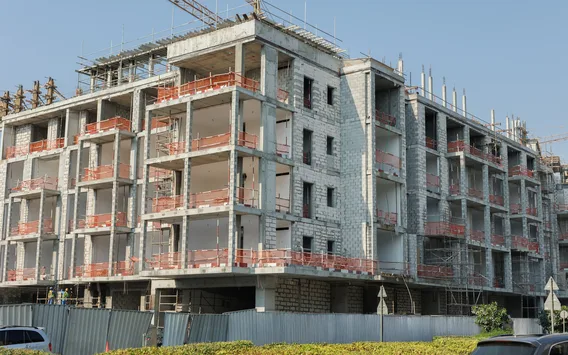
Recently added glass-and-concrete downtown towers alongside older masonry storefronts, with tilt-wall office, flex and industrial buildings in outlying corridors.

Conditions an Austin building with residents above commercial bays creates, each shown beside what a placement uses to answer it. No figures are shown.
What this occupancy creates
What answers it
In Austin the residential half sets the clock the rest runs on.
What separates the halves, and what has been cut through it
Most of the mixed-use stock an Austin owner is buying today was put up the same way: a concrete lower structure carrying a light-frame residential building on top of it. The separation between your commercial bay and the people above it is therefore an engineered horizontal assembly — drawn on a plan set that still exists, inspected while it was going in, and punctured steadily ever since. Every operator who took a bay after the building opened ran a grease duct, a make-up air line and a gas line up through that assembly. An underwriter looking at a downtown or Rainey Street building is not asking whether the separation was rated. It was. They are asking who signed off on the most recent penetration through it, and whether that paperwork sits in your file or with a contractor who finished the job and moved on.
The older side of the same market behaves nothing like that. A masonry storefront on East Sixth, or on the stretches of South Congress that were there long before the district had a name, carries an upper floor that has been offices, storage and living space in turn — and each of those changes was somebody’s remodel rather than somebody’s plan set. What divides the ground floor from the floor above is whatever the last carpenter left behind a ceiling: usually a wood-joist floor with gypsum under it, sometimes an old light well or a stair that was framed around instead of enclosed. None of that is visible from the sidewalk, and opening a ceiling in a spot or two is the only thing that settles it. Where the file cannot answer the question, the pricing answers it instead.
That split is also where the product line runs, and in Austin it is genuinely hard to read from the curb. A building whose commercial bays are the reason it exists, with residents living above them, is what this brand places. A building whose residential program is the reason it exists, with a coffee shop at grade because the ground floor had to be something, is a different placement in a different market. The newest towers here are residential buildings wearing a retail podium; the older buildings are commercial buildings that acquired residents. Say which one you own — by area and by income, in the submission itself — because an owner who leaves that to be inferred from a rent roll gets the conservative reading of it every time.
When one event reaches both halves at once
Downtown Austin is threaded by creeks: Shoal Creek down the west side of it, Waller Creek down the east. The buildings nearest them put their most expensive equipment at the bottom, because that is where a podium garage goes. Switchgear, elevator machinery, the domestic booster pump and the fire pump are usually all down there together, and none of that equipment belongs to the commercial floor or to the residential floors — it serves both. Water in that garage does not produce a commercial loss and a separate residential loss. It produces one loss that stops the elevators the residents depend on, kills the ventilation the ground-floor kitchen depends on, and takes every bay in the building out of trade in the same hour.
That is where a mixed-use rent roll stops behaving like a commercial one. A commercial tenant’s obligation to keep paying through an unusable stretch is whatever the abatement clause in that lease says it is, and it is readable in advance. The residents upstairs sit under a different body of obligation entirely: a building with no power and no working elevator becomes a habitability problem long before it becomes an insurance one, and the duty attaches to a household rather than to a unit. So the loss-of-rents exposure an Austin owner actually carries is not one figure reached by adding the floors together. It is a calculation for space that abates by contract, and a second, longer-running one for occupancy that may have to be housed somewhere else while the work is done.
Hail is the other event that arrives through a single surface and lands on both halves. The podium roof in these buildings is not a roof in the sense an owner of a single-story shell means it — it is a deck, with a pool, planters, screening around the mechanical plant and a membrane running underneath all of it, and that membrane is the ceiling of your commercial space. Hail that opens it turns up in the bay below, and the repair is a landscape and amenity job before it is ever a roofing job. Out where the built edge runs up into the hills west of town the same podium form takes a different question again: identical construction, identical residents overhead, and a fire-exposure conversation a building on Congress Avenue never has.
Where the vacancy wording lives, and what it measures
Texas keeps the operative wording inside the policy form rather than printing it somewhere an owner can hold it up against the insurer, and how far our own search of the state’s code reached is disclosed as a limit rather than glossed over. What follows from that for a building like this one is narrower than it sounds. The form measures a described space, not a street address — so the condition can attach to one shuttered ground-floor bay while the residential floors above it stay fully occupied and the whole building reads as alive from the sidewalk. An owner who can name the week a bay stopped trading, and point to the sentence in their own form that decides what follows from it, has done the preparation that is actually available here.
The local picture for this city sits on the Austin page.
Where to go next
The lines that answer this exposure
In an Austin building where the ground floor is still trading late and people are asleep above it, one bad night reaches the structure, the rent and the owner’s liability at the same time, which is why the placement runs across all of these rather than any one of them:
Austin mixed use property insurance FAQs
My ground-floor tenant is a kitchen and the residents upstairs have started complaining about smells. Is that mine to deal with or theirs?
Odor complaints in a podium building are usually the first visible sign of a penetration that was made badly, and that makes it yours before it is anyone else’s. A duct leaking cooking smells into a residential corridor is a duct that is not sealed to the rating of the assembly it passes through, and the same gap that carries the smell carries fire and smoke. Have the run inspected end to end rather than only at the hood, and treat the complaint as a construction finding instead of a tenant dispute.
The commercial bays in my building are fully leased, but the floors above empty out for a stretch every year. Which half is the underwriter worried about?
The floors above, and not mainly because of the lost rent. A residential population that thins out on an academic calendar is a population that is not walking corridors, hearing a running supply line or noticing a stair door propped open — and water losses in a light-frame residential structure are found by people, not by systems. In the blocks west of the university that rhythm is the norm rather than the exception, so the questions run to who is on site during the gap and what actually gets checked while it lasts.
My space is at street level and the flooding everyone talks about happens in the garage below me. Why is that my exposure?
Because what sits in that garage runs your space. Switchgear, the fire pump and the elevator equipment are normally on the lowest level of a podium building, and they serve the commercial bays and the residential floors out of one room. Water down there takes your tenant off line without touching a square foot of their finish. What follows is whether flood was placed at all, and whether the business income wording responds when the damaged equipment belongs to neither of you.
Most of the income in my building comes from the residents. Will a commercial market still write it?
That balance is the first thing a lessors risk market reads, and the answer moves with it. This product is built for a commercial building that carries residents; a residential building that carries a shop at grade belongs somewhere else, and the newest Austin towers sit uncomfortably close to that line. State the split by area and by income rather than letting a rent roll imply it, and say which part of the building the ownership exists to lease. An honest split keeps the file in front of markets that can hold it.
I own a masonry storefront on the east side with residential use above it that predates me by decades. What will an underwriter want to see?
The vertical openings, mostly. In a building added to over that long the walls are rarely the risk — the stair that was never enclosed is, along with the old light well somebody framed around and the plumbing chase running to the roof with no stop in it. Ask for a walk of the floor above with the ceiling opened in a place or two, and get whatever the last remodel produced in writing. A building this age is priced on what its file can show.
My ground floor is leased to a bar and people live directly above it. Where does my liability start?
At the sidewalk and the shared stair, usually. A licensed premises trading late underneath residential floors puts both populations into the same entry, the same lobby and the same block of street, and an incident that begins inside the tenant’s space frequently finishes in yours. Your general liability answers for the premises you control; the tenant’s answers for the operation, and only where the lease made them buy it and name you on it. Read the certificate against the lease before renewal — the space between those documents is where these claims land.
Sources
Verify these directly:
- Texas Department of Insurance — the Texas regulator, and where to verify any producer’s license
Get an Austin mixed use property quote
Send the rent roll with the residential and commercial floors separated, whatever exists on the separation between them, and a line on which bays trade late; the response names the structure we would place, the posture it sits in, and the questions still unresolved.