
Lessors risk insurance by city
Commercial Property Insurance in Austin, Texas
The first thing a placement in Austin has to settle is where your building stops. Ownership here runs from a whole masonry shell holding its own lot east of the interstate to a commercial unit at the base of a newer structure whose roof, outer walls and frame belong to an association — and the deed, the lease and the policy each draw that edge in a slightly different place. Until those three agree, nothing further about the risk can be priced.
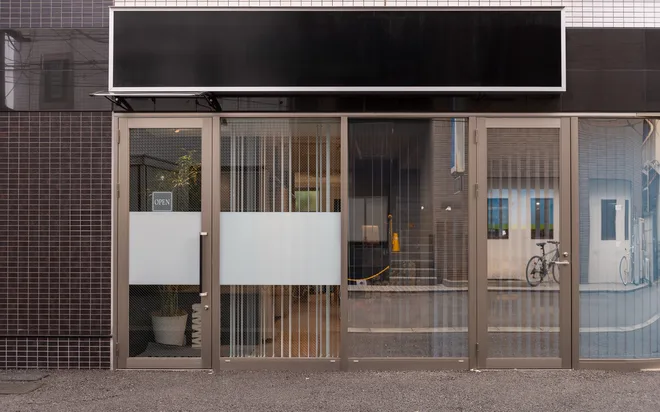

The building stock
Recently added glass-and-concrete downtown towers alongside older masonry storefronts, with tilt-wall office, flex and industrial buildings in outlying corridors.
High-rise downtown core with suburban office and technology campuses and highway-oriented retail corridors.
What the weather and the ground do here
Flash flooding along creeks and the Balcones escarpment, plus hail and severe convective wind; wildfire at the urban edge.
A roof deck is the fastest way to find out what you actually bought here. On a converted single-story shell east of the interstate it is yours, along with the walls holding it up and the drainage running off it. On a ground-floor unit beneath a newer podium it belongs to an association, and so do the outer walls, the frame, and often the service runs that keep your tenant trading at all. Both descriptions arrive on a rent roll as commercial rental property in Austin, and no underwriter can price either until the edge is drawn. So the questions run to boundaries rather than to construction: what an association’s policy is written to include and where it stops, whether your own form overlaps that one or leaves a seam between them, who owns the fit-out inside your demising walls once it is installed, who is responsible for the storefront glazing and the grade-level entry, and where the finished floor sits relative to the street that water will come down.
Every condition named on the risk side of this graphic is one an Austin owner meets without having chosen it. In order: a creek that reaches the shop floor before it reaches the roof; ground that changes character from one side of town to the other; a roof and outer wall belonging to an association rather than to the unit owner; fit-out the lease has already assigned to somebody; and a leased space standing empty inside a busy structure. Set opposite each of those, in the same order, is what the placement is left holding — flood bought separately and valued at the finish, one schedule carrying two unlike foundations, two policies read together for the seam between them, a valuation basis settled while the finish is still intact, and the week a space stopped being used written down at the time. A closing line puts the deed and the policy on opposite sides of the same boundary.
What an Austin owner does not entirely own
What the placement is left holding
The deed draws one boundary and the policy draws another.
What Texas law adds on top
A leased space can be out of use inside a building that is plainly still trading, and in Austin that is the ordinary shape of the problem rather than the exception. A bay under a podium shuts while the floors above it stay full and the association keeps the plant running; a flex suite on the north corridors closes when the occupier it was fitted out for moves on, and the drive aisle outside it stays as busy as it ever was. Nothing about the property looks different from the street, so nobody outside your own file is marking the moment. What decides a claim afterwards is the wording your insurer put in front of you, and that wording is interested in whether a space is in use — not in how the building around it reads, and not in what the rent ledger still shows. Which makes this a record-keeping problem long before it is ever an insurance one.
We did not find a standard fire policy printed in Texas’s insurance code. That is a limit on what we searched, not a finding that no such provision exists — so treat your own policy’s vacancy condition as the operative text, and read it before a unit goes dark between tenants.
The statute and the exact words where there are any, together with whatever the research recorded, are on the Texas page.
What a building costs to insure across the whole state is covered in How Much Does Commercial Property Insurance Cost in Texas?
By what you own in Austin
Retail in Austin arrives in two ownership forms wearing one label: a storefront run on South Congress or South Lamar where the owner holds the whole building, and a ground-floor unit at The Domain or on Rainey Street where the owner holds a suite inside somebody else’s structure. Office splits much the same way, between downtown floors in concrete towers and the small-tenant flex product along Braker Lane and the Kramer corridor, which began as research-and-development space and still has the bay depths to prove it. Mixed use is where the two forms meet — commercial space at grade under offices and a habitational component, stacked in a structure no single owner controls end to end.
The coverage lines behind all of this
Each of the lines below draws a boundary of its own: what it will pay for, whose property it treats as yours, and the point at which it stops and hands the rest to another document. Those boundaries are what decide whether a seam in an ownership arrangement is covered or merely noticed:
Austin commercial property insurance FAQs
I own the ground-floor retail unit in a newer Austin building. What am I actually insuring?
Less structure than the deed makes it sound, and more finish than owners expect. In a podium building the roof, the outer walls and the frame usually sit with an association carrying its own master policy, while what you hold is the space inside your demising walls and whatever the fit-out amounts to. The placement then turns on the seam: what that master policy is written to include, what it stops at, and whether your form picks the difference up or leaves it lying between the two documents.
A creek runs behind my building and it has never reached the door. Why is flood still the first thing raised?
The way water arrives here is the reason. Rain falls hard onto steep ground with thin soil over rock, so runoff reaches a creek channel instead of soaking away, and the channel can crest within hours of a storm that was still forming that morning. What that produces is not a roof loss. It is water at threshold height moving through grade-level tenant space, taking finish, contents and the rent that space was carrying — which is exactly the layer a property form leaves to a separate flood placement.
My two Austin buildings sit a short drive apart. Why is only one of them asked about foundations?
The ground under this city is not one material. West of the middle of town buildings bear on shallow fractured limestone, which barely moves with the season and sheds water rather than holding it. East of that line the soil is deep prairie clay that takes on water and gives it back with the season, so a slab or a shallow footing on it rides the year rather than sitting still. Owners think of an Austin schedule as one risk because it carries one city name. Underwriting reads the side of town.
My building east of the interstate is an old single-story masonry shell with a roll-up door. Who is left holding the roof?
You are, and there is nobody else in the chain to share it with. No association carries the roof, no master policy answers for the envelope, and the wood deck over those brick walls is yours down to the last fastener. Expect questions about when the roof covering was last replaced, what the conversion work touched and what it only concealed, how the electrical and any suppression were brought up when the use changed, and who repairs the roll-up door. Anything you can document about that work is worth more here than in a building with a manager.
Water got into the ground-floor space and the finish is ruined. Whose loss is that?
The lease is where this starts, not the claim form. It says who paid for the fit-out and who owns it once installed, and your policy says whether improvements and betterments sit on your schedule or on the tenant’s. Then there is the water itself: if it came off a creek rather than through the roof, whether anyone bought flood at all decides whether the ownership question is even reached. Settle all of that in writing while the space is dry, because afterwards each party reads the lease the way the loss suggests.
My unit has been shut for months and the building around it is full. Does the policy notice?
Your own wording is reading your space, not the address it shares. That is the trap in a stacked building: the association is documenting the structure, the manager is documenting the common areas, and both of those records will look healthy while the bay behind your roll-down grille has been closed since spring. Nobody in that chain has any reason to note the day yours went quiet. If you cannot say which week it happened, the file ends up settling it from a rent ledger, which was never built to answer the question.
Sources
The state half of this page sits with the department that regulates insurers writing in Texas, and the same office is where a producer’s license is a matter of public record:
- Texas Department of Insurance — the Texas regulator, and where to verify any producer’s license
Where does your Austin building stop?
The useful starting point is the boundary — whether you hold the whole structure or a unit inside one, what an association covers where there is one, and what the leases move between you and your tenants. With that much settled the placement stops being guesswork, and the seam that is going to set the price is usually obvious inside one call.