
Lessors risk insurance by city
Commercial Property Insurance in Memphis, Tennessee
Count the properties in downtown Memphis and most of them turn out to be places people live, and most of those belong to the people living in them. A commercial building here is the minority land use on its own block, standing beside households rather than beside other owners’ investments, and carrying a ground-floor tenant whose trade comes from the people living around it rather than from a weekday office peak. Most of what is awkward about owning one follows from that single fact.

The building stock
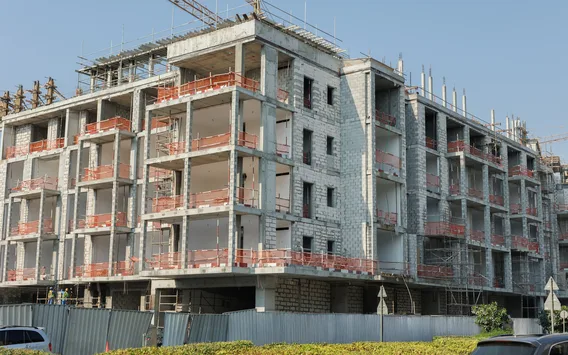
Low-rise brick commercial blocks and warehouse-district loft conversions near the river, with sprawling single-story retail and light-industrial buildings across the outer city.
Compact downtown and riverfront core surrounded by highway-oriented commercial corridors and suburban-style retail and distribution development.
What the weather and the ground do here
New Madrid seismic exposure combined with severe convective storms; hail, straight-line wind and winter ice drive the underwriting conversation.
Masonry is not one answer in this city. The changeover from unreinforced to reinforced masonry happened here as a documented shift in practice, and it falls inside the working life of buildings still being leased today — so an older commercial building near the river sits on one side of that shift rather than somewhere along a gradient, and which side it sits on is an answerable question rather than an impression formed from the elevation. The stock further out is not a later version of the same thing. Warehouse and retail buildings in this market run heavily to concrete tilt-up where many markets would have used masonry for the same occupancies, and a tilt-up panel is the enclosure and the structure in one element. That carries a lease consequence owners are slow to see. A clause letting a tenant carry out non-structural alterations without consent does far less work in a building whose outside walls are holding it up: a new dock opening, a knock-through into the suite next door, a bracket taking rack loading off a panel — none of those looks structural to the person proposing it, and all of them are.
A commercial building whose immediate neighbors are households pushes the fire and liability read outward, onto property nobody in the lease controls. Masonry raised before reinforcement became the practice here is not the same building as masonry raised after it, and which one an owner holds is answerable rather than a matter of impression. An outside panel that is also holding the building up turns a tenant’s routine alteration into a structural decision. An empty lot next door that no permit is moving is permanent in every sense that matters to a policy. A building handed back finished and entirely unlet still needs somebody walking through it, precisely because nobody is renting it. And ground that stands upright in a cut until it is soaked and loaded raises a question about which peril caused a loss before any question about how large the loss was. Each of those is set against the question it turns into, and a closing line records that a heading in a code is not a statement of whom it binds.
Conditions that come with the block, not the lease
The question it turns into
A heading in a code is not a statement of whom it binds.
What we checked locally
A Memphis owner searching the code about an empty building would land on one chapter before any other, because its heading is about vacant and abandoned property — a fair description of what they believe their problem to be. Every section of that chapter was read before this page said anything about it. Its operative sections put their duty on the mortgage holder of single family residential real property: a lender’s obligation, attached to houses, reaching neither a commercial building nor the person who owns one. A heading is not a scope. An owner who searched the code, found that title and stopped there would come away holding a belief the text underneath does not support, and that cuts both ways — it is as costly to assume you are bound as to assume you are free. That finding belongs to that chapter and travels no further with us. It is not a finding that this city puts nothing on the owner of an empty commercial building; that was never established here, and no sentence on this page should be read as establishing it. Where an empty building of yours is the live question, put it to the city and to your own attorney rather than to a heading.
What Tennessee law adds on top
Buildings empty out here for two reasons that have almost nothing in common. One is slow. Downtown carries a standing inventory of unoccupied buildings and vacant lots that very little is moving, and an owner holding one of those is holding a condition of the block rather than a gap between tenants: nothing is scheduled to end it, and it did not begin on a day anybody wrote down. The other is fast and looks like the opposite of a problem. Conversion work in this city is grant-assisted and runs long — a building goes off the market to be rebuilt and comes back re-serviced, finished and completely unlet, then leases up on a timetable that has nothing to do with how good it now is. On paper the two are the same thing. The second one catches owners out because a building has never been in better condition than on the morning nobody is using it, and condition is not what the question turns on.
What Tennessee law prints about an empty building is not settled here — our research did not reach a verified answer, which is a limit on the search and not a finding that no provision exists. Your own policy’s vacancy condition is the text to read.
The statute and the exact words where there are any, together with whatever the research recorded, are on the Tennessee page.
What a building costs to insure across the whole state is covered in How Much Does Commercial Property Insurance Cost in Tennessee?
By what you own in Memphis
Mixed use in Memphis is nearly always inserted rather than designed. The South Main district is historic low-rise industrial fabric, and the work running through it has put live/work space, galleries and residential units into volumes drawn for storage — so the separation between a habitational floor and a commercial one arrived with the conversion, and the paperwork proving it was done properly is the owner’s to hold rather than the builder’s to remember. Retail divides into two structurally unrelated animals: the narrow party-wall storefront in the Front Street row that grew up around the cotton trade, and the freestanding building that carries its own walls, its own parking and no shared exposure at all. Office in the core is frequently an old frame with new services threaded through it, which makes it a maintenance-boundary question before it is anything else — the structure belongs to one era, the mechanical plant to another, and the lease has to say who owns which.
The coverage lines behind all of this
These lines do not all arrive at the same moment, which is why owners meet them one at a time and usually in the wrong order. One is working on the day of the loss. One starts the month after, when the rent that used to arrive does not. One surfaces much later, when somebody hurt on ground you control finally brings it. And one is waiting at the permit counter on the day you go to put the building back:
Memphis commercial property insurance FAQs
My building is commercial but the block around it is housing. What changes?
The exposures that matter stop being things inside your lease. Most property downtown is residential and most of that is owner-occupied, so the structure on the other side of your wall is occupied at hours no shop is, maintained on a household budget, and insured — or not insured — by somebody you will never meet. Fire spread, water from next door, and a liability claim brought by a resident all reach you from property nobody in your lease controls.
A tenant wants to cut a new dock opening. Is that mine to approve?
Almost certainly, and what you want back is a definition rather than a permission. Three questions settle it before the saw arrives. What is that wall actually carrying, which is a drawing-and-engineer answer and not a judgment anyone should be taking from the lease. Who pays for the engineer, and for making good if the answer comes back badly. And what happens to the opening at the end of the term. Write the agreed meaning of a structural alteration into the consent itself, so the next tenant inherits an answer instead of the same argument.
The building next door has been empty for years. Whose problem is it?
Yours, practically. The scale of the standing vacancy downtown is set out above, and very few of those sites sit under any permit, so the empty shell beside you is not a leasing gap that is going to close. It is a feature of the block. What travels across a shared wall is entry, fire and water. What you can actually control is that wall, the roof junction where the two buildings meet, and a dated record of the condition next door.
We have just finished a conversion and the building is unlet while it leases. Is that a problem?
It is the version of the problem owners least expect. A conversion here goes off the market for a long stretch and comes back re-serviced, re-roofed and completely empty, and the building has never been in better shape than on the morning nobody is using it. Your own wording does not grade on condition. It asks whether the space is in use, which a finished building waiting on a first tenant is not, and the lease-up runs on its own timetable regardless.
There is a chapter in the city code about vacant and abandoned property. Am I inside it?
The chapter binds a lender, not you. Read in full, the duty in it runs to whoever holds the mortgage on a single family residence — an obligation attached to houses. The heading describes your situation and the text underneath it does not. That is a statement about that chapter alone: what else the city may publish is not something this page has established, so treat the city and your own attorney as the last word rather than a line in a table of contents.
If we rebuild after a loss, is it to what the building was or to what is required now?
Generally to what is required now, and in this city the gap is real rather than theoretical. Local structural requirements, the seismic ones in particular, were moved onto a newer national standard at a point that falls inside the working life of the stock now being leased. Nothing about that changes a building already standing. It changes what a substantial repair has to satisfy, and the distance between replacing what stood and satisfying what is asked for now is the gap an ordinance-or-law section exists to close.
Sources
The listing below is the state licensing register, and the single question it settles is whether the company or the individual putting a number on your building is currently authorized to do it in Tennessee:
- Tennessee Department of Commerce and Insurance — the Tennessee regulator, and where to verify any producer’s license
Memphis, from the party wall outward
The hard part of a Memphis placement is rarely the building itself. It is what is standing beside it, what a previous set of works quietly changed inside it, and whether the wall a tenant wants to open is carrying load. Each of those is answerable in a conversation and costly to establish only once a claim is open — and the ones that can still be changed are raised while a tenant is in the space rather than after it clears.