Commercial Property Insurance in St. Louis, Missouri
Ask what unsettles an underwriter about a St. Louis file and it is not the storm season. It is the distance between what a building is doing today and what it is being kept for — a warehouse floor held in exactly the condition its next use will require, a storefront that has changed trade so often the rating no longer describes it, a shell everyone involved intends to convert and nobody has started. Those are market facts rather than coverage facts, and here they settle which carriers will look at the building at all.
Nate Jones is a CPCU-designated insurance broker and the founder of Wexford Insurance, LLC and Lessors Risk Guard Insurance. He places lessors risk and
commercial property coverage for owners who lease buildings to commercial tenants,
through a specialty panel writing in 48 states.
Reach him through the quote form or call 317-942-0549.
Last updated · Reviewed by Nate Jones, CPCU
The building stock
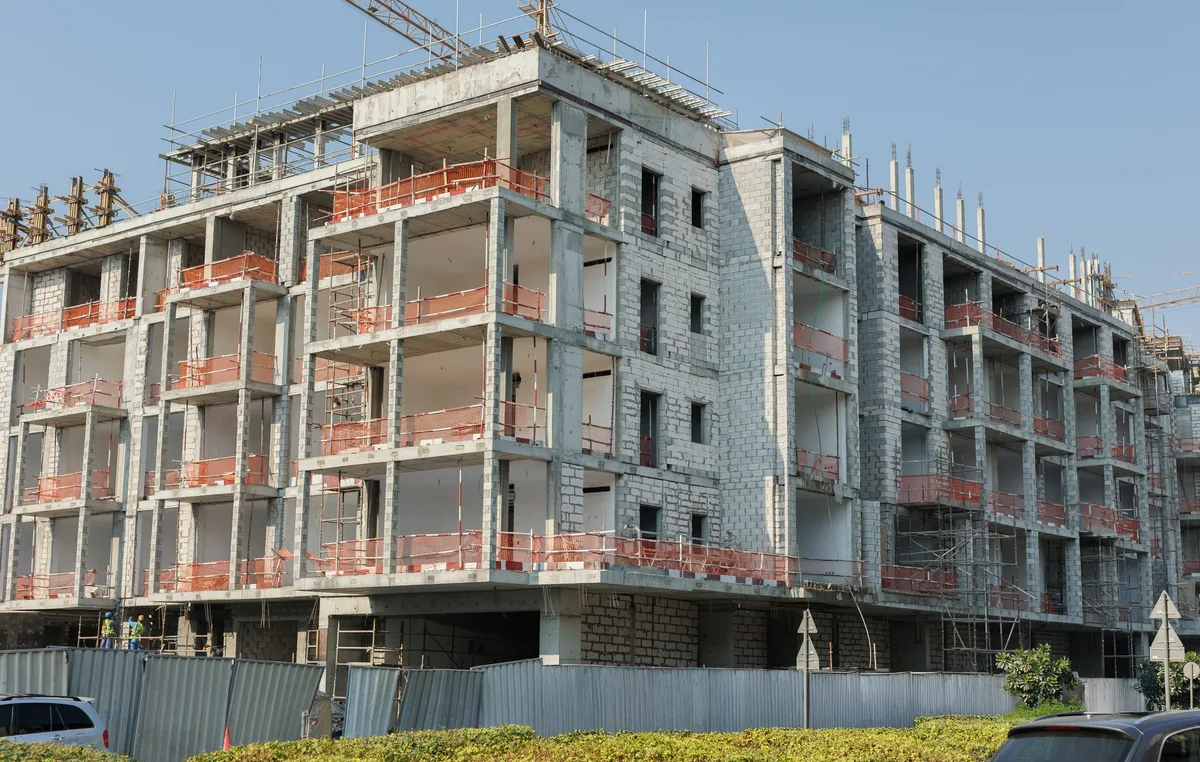
Aging brick and masonry commercial and industrial stock, much of it load-bearing, with a large inventory of vacant and deteriorating buildings.
Historic downtown core, streetcar-era commercial corridors and older industrial districts, with suburban-style development toward the city edges.
What the weather and the ground do here
New Madrid seismic exposure, severe convective storms and hail; vacancy-driven fire, water and vandalism losses.
Protecting one of these buildings and preserving it are not the same project, and in this city they pull against each other. The large floors came back into use because a state rehabilitation incentive made converting them pencil, and what that incentive turns on is the fabric: the openings, the face, the details somebody eventually has to certify as intact. The cheap and sensible way to secure an empty masonry building is to change precisely those things — board the openings, take down whatever is working loose at the top, patch the face with whatever a supplier can actually deliver. So an owner sits between two correct instincts and tends to resolve it by doing nothing, which is the worst of the three. Underwriting arrives at that from a narrower direction: what has been done to the building since the last tenant left, who did it, and whether the account you would give an insurer is the account you would give the city.
An accessible rendering of the panel as five matched statements. First in each pair, what an owner here takes on: a floor held in the condition its next use will require; a storefront whose trade changes faster than the paperwork recording it; shaking that arrives from too far away for anything nearby to warn about it; an upper floor promised to people who will eventually sleep in it; and a building standing empty deliberately rather than accidentally. Second in each pair, the insurance half of the same fact: protective work an underwriter can verify rather than be told about, a rated occupancy checked before renewal instead of after a loss, a peril standard property wording does not carry, a narrower set of carriers from the day the plan is real, and terms settled while the building is still occupied.
What owning here actually commits you to
The insurance half of the same fact
A floor kept in the condition its next use will require
Protective work an underwriter can verify, not be told about
A storefront changing trade faster than the paperwork
A rated occupancy checked before renewal, not after a loss
Shaking that arrives with nothing local to announce it
A peril standard property wording does not carry
An upper floor promised to people who will sleep there
A narrower set of carriers, from the day the plan is real
A building standing empty deliberately, not accidentally
Terms settled while the building is still occupied
What makes it worth converting is what makes it hard to secure.
Here the empty building is usually the one with a plan behind it.
The local law that binds you
Most of the leasable brick in this city has a future that requires somebody at City Hall to agree to it. A change of use, a rehabilitation, a certificate that lets a floor be occupied again — none of that happens without the city, and the owner who turns up for that conversation is the same owner the city has been dealing with all along. That is the working weight of what is set out below. It is not a coverage requirement, no insurer is going to ask you for proof of it, and being in order is not expensive. What it buys is speed later, and speed is the whole argument on an empty building: every further month unoccupied is a month your own policy is quietly doing less than you assume it is.
Registration fee for certain buildings (Registration of Vacant Buildings)
semiannual registration fee of two hundred dollars to be charged to the owner of any parcel of residential property improved by a residential structure, or commercial property improved by a structure containing multiple dwelling units, which is vacant and has been vacant for at least six months
The commercial reach is narrower than the name suggests. As quoted, commercial property is captured only where the structure contains multiple dwelling units. This is not a general commercial vacant-building registration duty, and an owner outside that description does not owe the fee.
A building in the middle of a conversion is busier than it has ever been. Crews on site, an engineer in and out, somebody there every day — and owners read all of that as the opposite of empty. The wording does not. It counts occupancy, not effort, and a floor being worked on is not a floor in use. What decides the point in Missouri is the document rather than anything the legislature wrote, which is better news than it sounds: a term that comes out of a form can be argued about before the form is signed, endorsed around, or answered by moving to a different form entirely. A term nobody looked at until an adjuster raised it cannot be. That conversation belongs in the season the building is still earning.
We did not find a standard fire policy printed in Missouri’s insurance
code. That is a limit on what we searched, not a finding that no such
provision exists — so treat your own policy’s vacancy condition as the
operative text, and read it before a unit goes dark between tenants.
The statute and the exact words where there are any, together with whatever the
research recorded, are on the
Missouri page.
The three types below do not sit in the same buildings here and they do not re-let the same way. Office in St. Louis is disproportionately converted floor — large-format warehouse and loft space carrying professional tenants — competing for those tenants against space that was built for the purpose and has the parking to prove it. Retail is the neighborhood drag: Cherokee Street, the Grove, Soulard, Lafayette Square, Benton Park, where the live exposure is how often the trade in a unit changes and what the incoming operator brings in with them. Mixed use is what the conversions produce almost by default, because residential floors over a commercial ground floor are a large part of what made the arithmetic work in the first place.
Owners buy the first of the lines below carefully and the second more or less by default, and it is the second that decides whether a bad year is survivable. Each page takes one line on its own terms — what it was written to pay for, where it stops, and the argument that follows when a loss lands on the boundary between two of them:
Securing my empty building properly would change the front of it. Where does that leave me?
It matters more here than it would in most cities, for a reason that has nothing to do with taste. A large empty brick building in St. Louis usually has a buyer because of the conversion, and the conversion depends on the original fabric surviving. Board the openings badly, strip the ornament, patch the face with a modern product, and you have protected the asset by devaluing it. The workable answer is reversible: closures fixed to frames rather than into masonry, a dated record of every one, and an engineer’s note on anything that had to come off.
Nobody has ever raised earthquake on a Missouri building. Should they have?
It is the least expected question on a Midwest submission and it is a real one. The sources that would shake this city are a long way off, and the crust across the middle of the country carries that energy far better than western ground does, so distance does less work than owners assume. What it reaches is a wall that is holding the building up. Damage of that kind starts at the top and at the joins, and standard property wording is not written to pay for any of it.
My Cherokee Street tenant is leaving and the next one is a different kind of business entirely.
That is the ordinary event on a neighborhood retail run here, and it is where owners quietly lose control of their own rating. A unit priced as a shop and re-let to a kitchen, a taproom or a late-hours venue is a different fire risk, a different liability risk and sometimes a different market altogether. The lever is the lease rather than the policy: a permitted-use clause written as any lawful retail purpose hands that decision to the tenant, while a clause naming the use keeps it with you.
The plan for my warehouse floor is residential above and commercial below. When does the insurance change?
Earlier than owners expect — not when the first resident moves in, but when the plan becomes real enough to build to. The set of carriers willing to look at a building narrows once it carries a habitational component, and it narrows on the intention rather than on the certificate, because the work itself creates most of the exposure the narrowing is about. Fire separation between the two halves is then the question everything else hangs off, and it is far cheaper to answer on the drawings than in a finished building.
The building is empty, secure, and I have kept it in order. Why is it still hard to place?
Because the market is reading duration and intended use, not tidiness. Coverage on an unoccupied commercial building comes from a narrower set of markets on different terms, and an assurance that it is being looked after does not move that by itself. What moves it is specificity: a named next use, a credible date, somebody who walks the building, and the true state of the roof. In St. Louis the reuse plan is genuinely underwriting information, which is unusual — in most cities it is a business detail nobody thinks to ask for.
What does my own policy do differently once the space is standing empty?
It narrows, and it narrows in an unhelpfully precise way: the perils it steps back from are the ones an empty building actually suffers. Water getting in at the top and running for weeks with nobody inside to hear it, damage done deliberately by people who know the place is unused, broken glass — those are the losses of the empty interval and they are the ones the wording reaches for first. That is the real price of the interval, which is why its length is a placement question and not only a leasing one.
Sources
Two different kinds of authority sit below: the city’s own published ordinances, which is where the passage above is set out in full, and the Missouri insurance regulator, which is where anything about a carrier or a licensed producer is settled:
City of St. Louis Ordinance 68610 — the Registration fee for certain buildings (Registration of Vacant Buildings) duty quoted above, in the municipality’s own words
The useful conversation about a building here starts with its intended future, because that is what decides which markets can look at it: the state it is in now, whether anyone is occupying it, what the plan is, and how much of the original fabric that plan depends on. The rest is arithmetic.