
Lessors risk insurance by state
Lessors Risk Insurance in Missouri
Commercial tenancy in Missouri is bookended by metropolitan markets at opposite corners of the state, with small-town main streets running between them and a great deal of older masonry storefront and brick warehouse stock inside all of it. Buildings standing near the rivers carry a question the property form does not answer, because water there is insured on a contract of a different kind. Severe convective wind and hail reach the rest, and what this page carries is the Missouri law we could actually verify.

What Missouri law says
The vacancy provision
We did not find a standard fire policy printed in Missouri’s insurance code. That is a limit on what we searched, not a finding that no such provision exists — so treat your own policy’s vacancy condition as the operative text and read it before a building sits empty.
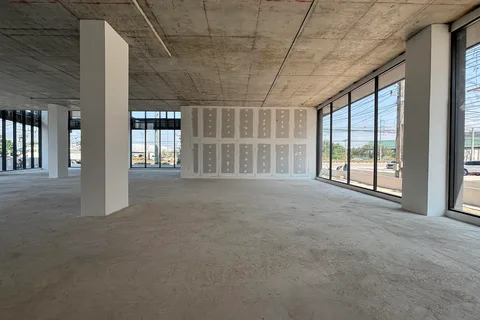
There is an easier sentence to write here and it would not be true — that Missouri’s code has nothing to say about a building standing empty. What is honest is narrower: a search of the state’s insurance statutes did not turn up a policy form printed by the state, and an empty search describes the people who ran it. Which leaves the sentence that governs your building where it already was, on the form your carrier issued you, and this state is not short of ways to arrive at it. A main-street storefront re-lets slowly. A brick warehouse floor gets kept on for storage and walked through by nobody. A suite goes dark over a winter while the roof and the pipes above it carry on unwatched. Open your own conditions section while a tenant is still paying rent, work out what it counts as occupancy, and put the situations your buildings actually produce to your broker in writing rather than over the phone.
If the standard market declines the building
Missouri maintains a residual-market mechanism for property that cannot be placed conventionally: Missouri Basic Property Insurance Inspection and Placement Program, Mo. Rev. Stat. § 379.810.
Missouri’s insurance regulator is the Missouri Department of Commerce and Insurance, which is where to verify any producer’s license before you buy.
A matching panel whose rows read across in pairs. The left column holds the things an owner says first when describing a Missouri building: that the storefront row is brick and older than the code enforced today, that hail came through in the spring, that a suite has been dark since the lease ended, that the back lot goes under when the river comes up, that rebuilding the place would cost more than the building is worth, and that quotes have stopped coming back at all. The right column holds, in the same order, the document we go and read before answering any of it: what a lawful rebuild of that shell would actually involve, what the policy calls that roof covering and what it would pay for it, the occupancy condition printed on the owner’s own form, whether a flood contract exists for the property and what it names, how Missouri settles a total loss against the limit that was bought, and the residual-market program named further up this page. A closing note records that the right column is all paper an owner can ask for and read.
What you tell us about the Missouri building
The document we go and read before answering
The right column is paper you can ask for and read this week.
Where we write in Missouri
Building stock, development pattern and municipal ordinances vary far more between cities than state law does. The city pages carry that detail.
By property type
What answers each of these in the policy
The exposures above are Missouri law and Missouri geography. These are the coverage lines that respond to them, explained without the state attached:
- Business Income & Loss of Rents
- Commercial Property
- General Liability
- Commercial Umbrella
- Tenant Discrimination
What all of that costs in Missouri, and which of the drivers you control: How Much Does Commercial Property Insurance Cost in Missouri?
Missouri lessors risk insurance FAQs
Missouri has a rule about total losses. Does that make my building limit safe?
A total-loss rule and an adequate limit are separate things, and the limit is the half you control. Missouri’s provision is cited in the sources at the foot of this page, and what it governs is how a settlement is reached rather than what the policy covers or how much insurance you chose to buy. It cannot repair an amount set at a past renewal and never revisited since. Get a current rebuild figure from somebody who builds, hold it against the limit on your declarations page, and treat the gap as the part you can still act on.
When the river comes up it reaches the back lot. Is that on my property policy?
Almost certainly not. Water that arrives by rising off the ground is excluded by the commercial property form and has to be insured somewhere else entirely, which comes up often here, because leased storefront and industrial space in Missouri sits on bottom land the rivers have always claimed. Find out whether the building is insured for it at all, what property that insurance actually names, and whether tenant improvements and your rents sit inside or outside it. That is a winter question, not a spring one.
My tenant bolted its own equipment to my roof. After a hailstorm, whose loss is that?
It turns on what the lease says about improvements and on how the policy describes the insured property, which is why it wants settling before a storm rather than after one. Missouri takes severe convective wind and hail through the warm months, and rooftop equipment is among the first things a storm marks. Put the lease language and the property description on the same desk, decide in advance who insures the units and who insures the deck they are fastened to, and keep the answer somewhere you can find it.
This page never tells me what Missouri says about an empty building. What am I meant to work from instead?
Holding the document that decides it either way. We looked through the state’s insurance statutes for a policy form printed by the state and did not find one, and reporting that plainly beats dressing it up as a conclusion about Missouri law. Your own policy carries an occupancy condition regardless, and that is the text a carrier reads after a loss. Pull the declarations and the conditions out while everything is quiet, read the clause slowly, and ask your broker what it treats as a building in use.
The last-resort program here has the word inspection in its title. What does that mean in practice?
That somebody looks at the building. The Missouri Basic Property Insurance Inspection and Placement Program is named higher up this page with a link to the act behind it, and it exists so property the standard market declines does not end up carrying nothing at all. Expect a narrower form than the open market would write and pricing that answers to why the risk arrived there. Keep working on whatever made the building hard to place, because that is what gets it back out again.
The regulator here is a combined commerce and insurance department. Is that still where I check a license?
Yes. The Missouri Department of Commerce and Insurance holds the insurance half of that remit, and it is where you confirm that a producer, and the company standing behind a quote, are licensed to do this work in the state. The link sits in the sources below. Run the check on us as readily as on anyone else asking you to sign something, and slow down over a quote whose entity does not appear where you would expect to find it.
Sources
Nothing above is Missouri law because we say so. These are the state’s own documents, and they read the same whoever opens them:
- Missouri — the state’s own source for the residual-market mechanism — the residual market named above, where the standard market declines a building
- Missouri Department of Commerce and Insurance — the state regulator named above, and where to verify any producer’s license
- Mo. Rev. Stat. § 379.140 — Missouri’s valued policy law, which governs how a total loss settles rather than what is covered
Get the reading on a Missouri building before you need it
What moves a Missouri submission fastest is dated proof of what has been done to the roof and an honest account of which space is empty and since when. Bring both and we come back with where the building places, how the wind and hail terms are likely to read, and what still has to be produced before anybody can quote it.