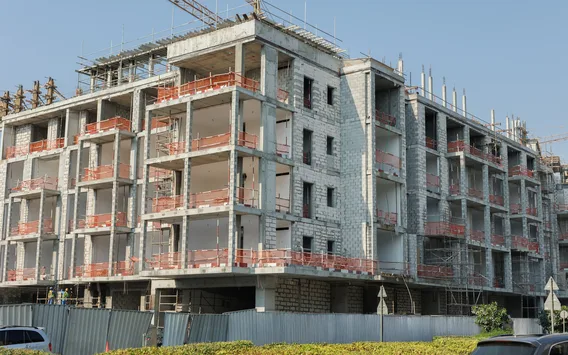
Commercial Property Insurance in Detroit, Michigan
In most cities an empty commercial building is an interval between leases. In Detroit it is often a phase of ownership — a shell bought on a reuse thesis and held while the financing catches up. That changes what an underwriter asks about first, and it is why the two mechanisms that do the most damage to a file here are a pipe running under the street and a length of copper inside the wall.
Nate Jones is a CPCU-designated insurance broker and the founder of Wexford Insurance, LLC and Lessors Risk Guard Insurance. He places lessors risk and
commercial property coverage for owners who lease buildings to commercial tenants,
through a specialty panel writing in 48 states.
Reach him through the quote form or call 317-942-0549.
Last updated · Reviewed by Nate Jones, CPCU
The building stock
Large stock of pre-war masonry commercial and industrial buildings, much of it aging or vacant, alongside newer downtown and Midtown mixed-use construction.
Dense historic downtown and Midtown core surrounded by long commercial corridors and extensive former industrial districts.
What the weather and the ground do here
Freeze, winter storm and hail exposure, with vacancy-driven arson, theft and water-damage risk.
Taken together, what that stock says is that emptiness here compounds rather than waits. An opened roof takes rain and snowmelt continuously, the freeze works the water down through the masonry, and by the time a tenant is signed the building has lost more to the hold than to whatever event began it. So an underwriter reading a Detroit submission is really pricing custody: who walks the building, whether it is heated, whether the last breach was closed or merely noticed, and how long the plan for the property runs. A shell with a watchman and a working boiler is a different risk from the identical shell without either.
A paired two-column panel for Detroit, read across in rows. The left column lists the ways a building here starts losing money: storm flow and sanitary flow arriving back up a shared pipe, a floor drain sitting in a tenant’s below-grade space, copper stripped out of a building nobody occupies, a concrete plant floor held through the winters while its reuse is arranged, and storefront brick standing over an open market street. The right column names, in the same order, what has to be standing behind the owner when each of those arrives.
Where a Detroit loss starts
What is standing behind it, or is not
Storm and sanitary flow arriving back up one pipe
A backup endorsement the base form does not include
A floor drain in the tenant’s below-grade space
Business income while contaminated water is remediated
Copper stripped out of a building nobody occupies
Theft coverage that survives the vacancy condition
A concrete plant floor held through the winters
Heat, a drained system, and a record of the watch
Storefront brick standing over an open market street
Owner liability for whatever leaves the facade
The theft is the small loss; the roof it opens is the large one.
Detroit: how a shared pipe and a long hold turn into a claim.
The local law that binds you
The duty quoted below is addressed to whoever owns the building, and what makes it matter to a placement is not the cost of complying. It turns a private holding position into a dated public record with your name against it — the condition of the property, and how long it has been in that condition, becomes something a broker, a buyer, an inspector or an adjuster can look up without asking you first. On a long hold that record is the timeline of the building, and it gets read back against the owner whenever a loss looks like neglect. Keep your own version alongside it: dated photographs, invoices for closure work, and a note of who holds keys on which date.
Requirement to register vacant buildings and structures; enforcement authority; establishment of annual fee
Within 30 days of a building or structure becoming vacant or after receiving notice from the City that the building or structure is vacant, the owner of the vacant building or structure shall register the property with the Buildings, Safety Engineering, and Environmental Department, and obtain a Certificate of Registration of Vacant Property from the Department.
Michigan asks a different question, and it has nothing to do with how you maintain the property. Your own form contains a point past which it stops responding the way you assume it does, and on a Detroit hold that point can arrive while everything is going to plan — the roof sound, the securing done, the reuse financed and moving. Nothing you do to the building holds it off, because it is measured against the calendar rather than against your conduct, and it arrives without notifying anyone. The practical move is to raise it with your broker before the space empties rather than after.
We did not find a standard fire policy printed in Michigan’s insurance
code. That is a limit on what we searched, not a finding that no such
provision exists — so treat your own policy’s vacancy condition as the
operative text, and read it before a unit goes dark between tenants.
The statute and the exact words where there are any, together with whatever the
research recorded, are on the
Michigan page.
Detroit sorts these three by district more cleanly than most places do. Retail runs along the commercial spines and clusters around Eastern Market; office concentrates downtown, at Capitol Park and out at New Center; mixed-use is what Midtown, Corktown and Woodbridge produce whenever an upper floor takes a habitational component above a commercial ground floor. Each page below follows one of them through an actual placement.
Detroit stops here. What follows is the machinery, described on its own terms with no address attached — so you can see which part of the exposure above each line was built to absorb, and which part it quietly leaves sitting with the owner:
Water came up through the floor drain in my tenant’s basement. Is that flood?
Almost certainly not, and the distinction decides who pays. Much of Detroit is served by a system in which storm flow and sanitary flow share one pipe, so a hard convective rain surcharges it and the water finds the lowest opening in your building — which in a leased property is a tenant’s below-grade space. That is a backup traveling upward, not a rising body of water outside. Neither the base property form nor a flood placement is written for it. A sewer and drain backup endorsement is, and it is bought separately.
Someone stripped the copper out of a building I am holding. How bad is that claim?
The theft is the smaller half of it. Wiring, plumbing and roof flashing all get taken, and taking the flashing opens the envelope at precisely the place that keeps water out of the structure. From that morning on the building takes rain and snowmelt continuously, and the deterioration bill overtakes the metal bill quickly. Two things decide the outcome: whether your form still grants theft and water damage on a building in that condition, and whether you can show the breach was closed rather than merely observed.
I want to buy a vacant commercial building here. Where does the insurance start?
Earlier than the tenant does, which catches buyers out. A shell bought without an occupant is not yet a lessors risk exposure — it is an unoccupied building, and it places differently and far more narrowly until there is a lease. Settle that before closing rather than after. Worth knowing on the acquisition side too: vacant commercial land and buildings in Detroit are held by the city itself through its planning and development function, while the land bank holds vacant residential property. A commercial shell means a different counterparty entirely.
What does an underwriter do with a former auto plant in Milwaukee Junction?
Reads it as a purpose-built industrial structure first and as leasable floor second. Those buildings went up in reinforced concrete and brick for a manufacturing process nobody runs in them now, which is good news for floor loading and bad news for nearly everything mechanical. Expect questions about whether the sprinkler system is live, charged or long since drained, what the electrical service actually is today, how the working rail edge of the district is fenced, and which floors are conditioned rather than merely roofed.
My storefront is on the market blocks. Does the crowd change my liability?
It changes the volume of it and the geometry of it. Around Eastern Market the trading spills out of the sheds onto the sidewalk and into the street, so on a market morning the people passing under your front are not your tenant’s customers in any sense the lease recognizes — they are the public, arriving in force, on ground you control. Late Victorian storefront brick carries ornament at the parapet directly over them. Liability answers the injury; an inspection and repair record is what makes the answer defensible.
The building will sit empty through the winter. What breaks first?
A wet sprinkler system, usually, and it does more damage than the fire it was installed against would have. An unheated building lets the standing water in the pipes freeze and split them, and the discharge runs until somebody happens to walk in. An insurer asking whether a held building is heated is not being awkward: many forms carry a protective safeguards or heat maintenance condition, and unheated with a charged system is the combination that loses the argument. Drain it down or heat it, and keep the fuel invoices.
Sources
The Detroit duty above carries a link to the published code it was quoted from. Check it there rather than take our word for it:
Occupied, half-let, or a shell waiting on a reuse plan — send the address, the condition it is in today, and where the hold is going. You get back a straight read on what will write it and what will not.