
Lessors risk insurance by state
Lessors Risk Insurance in Michigan
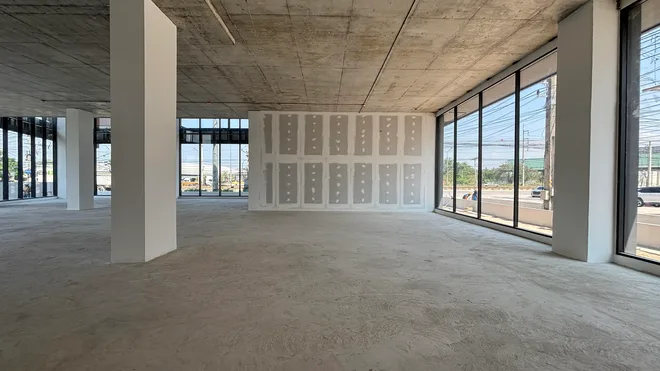
A Michigan schedule tends to hold two different animals: downstate buildings raised for industrial work and now leased to tenants who have nothing to do with what the floors were poured for, and lakeshore commercial property that takes its trade in the warm season and stands mostly shut through the cold one. Those occupancy patterns pull a placement in opposite directions, and the winter that runs over both of them — hard freezing and thawing, lake-effect snow standing on flat roofs — is what turns up in the claim file afterward. This page carries the Michigan law we could actually verify, and is straight about where our reading of the code stopped.

What Michigan law says
The vacancy provision
We did not find a standard fire policy printed in Michigan’s insurance code. That is a limit on what we searched, not a finding that no such provision exists — so treat your own policy’s vacancy condition as the operative text and read it before a building sits empty.
Because the operative words are your carrier’s rather than the state’s, two Michigan buildings can go quiet in exactly the same way and be treated differently by their policies — the language arrived with a filed form, not out of a code section we were able to locate. That matters more when the buildings on one schedule do not keep the same calendar: a lakeshore storefront that shuts once the season turns and a converted industrial floor sitting between tenants both read, to a form, as an empty building. So ask for the vacancy and unoccupancy wording out of the actual form before the quiet stretch starts, and ask what an endorsement would do to it. That conversation is a negotiation beforehand and an argument afterward.
Michigan’s insurance regulator is the Department of Insurance and Financial Services, which is where to verify any producer’s license before you buy.
A two-column matching panel about leased commercial property in Michigan. The left column lists what this state does to a building: an industrial plant floor now let to shops and studios, strip retail set back from a wide arterial road, a lakeshore storefront that closes once the season ends, lake-effect snow standing on a low flat roof, and repeated freezing and thawing opening up old masonry. The right column pairs each of those with what the owner needs to have in writing: an occupancy description that matches the real use, premises liability reaching the parking lot and the walkways, whatever the filed form itself calls an empty building, property coverage that reaches collapse and the water that follows a melt, and ordinance or law coverage for a repair that gets pulled up to current code.
What Michigan does to a leased building
What the owner needs in writing for it
Where we write in Michigan
Building stock, development pattern and municipal ordinances vary far more between cities than state law does. The city pages carry that detail.
By property type
What answers each of these in the policy
The exposures above are Michigan law and Michigan geography. These are the coverage lines that respond to them, explained without the state attached:
- Business Income & Loss of Rents
- Commercial Property
- General Liability
- Commercial Umbrella
- Tenant Discrimination
What all of that costs in Michigan, and which of the drivers you control: How Much Does Commercial Property Insurance Cost in Michigan?
Michigan lessors risk insurance FAQs
Two of my Michigan buildings sit with different companies, and one closes for the season. Can their vacancy clauses differ?
They can. We did not find a standard fire policy printed in Michigan’s insurance code, so the vacancy and unoccupancy language on each building came in with the form its carrier filed rather than out of a statute section. Put the two declarations pages side by side and read both conditions before the seasonal building locks up for the winter. Where the code search stopped is our limit, not Michigan’s answer — so the form in your hand is the text that governs.
I bought a plant building and lease it to shops and a studio. How does that get described on a policy?
Not by what it was built for. The submission is read on what happens inside it now — what each tenant actually does, how the spaces are separated from one another, what the heating and electrical service looks like after the conversion, and whether the building is sprinklered. Old industrial shells are common enough on Michigan schedules that none of this is exotic, but the description has to match the use. A classification carried over from the building’s first life is the kind of error that surfaces at a claim.
A tenant wants me to pay for stock a roof leak soaked. Where does that land?
On two different policies, potentially. Your property coverage answers for the roof and the structure; the tenant’s own coverage answers for their goods. What decides whether you owe them anything is liability — whether the leak traces to something you were responsible for maintaining — and that is a general liability question, not a property one. Michigan roofs take a long, loaded winter, so document the inspections and repairs you do. A maintenance record is the difference between a leak and a neglected roof.
My tenants share a lot off a busy arterial road. What does that add for me as the owner?
The lot, the walkways and the lighting are usually yours to keep, and they are where an owner’s liability claims actually come from. Traffic in and out of an arterial site raises the count of people crossing ground you control, and a Michigan winter puts ice on that ground repeatedly rather than once. Get the snow and ice contract in writing, keep the service records, and read what the leases say about who clears what. Vague lease language leaves the exposure with you.
Michigan’s regulator is not called a department of insurance. Am I looking in the right place?
You are. Michigan regulates insurance alongside banks, credit unions and other financial services in a single agency, the Department of Insurance and Financial Services, so there is no separate insurance department to find. Its link sits in the Sources block on this page. That is where a producer’s license is verified before money changes hands, and where a complaint about the company writing your building would be heard. The name is the only confusing part of it.
Frost has worked a wall loose and the fix would have to meet today’s code. Who pays the difference?
Ordinance or law coverage does, if you bought it. A standard property policy pays to put back what was there; it does not automatically pay the extra cost of building to a rule that came in after the wall did. Michigan’s freeze-and-thaw cycle works steadily on older masonry, so this comes up on buildings that have never had a fire. Check whether the coverage is on the schedule and at what limit, because on an old building the gap is usually the expensive part.
Sources
Michigan’s regulator publishes its own record, and that record — rather than this page — is the thing to check:
- Department of Insurance and Financial Services — the state regulator named above, and where to verify any producer’s license
Send us a Michigan building and its calendar
Tell us what the space was built for, what occupies it now, and when it goes quiet. We read it against the wording that would have to answer for it.