
Lessors risk insurance by city
Commercial Property Insurance in Port St. Lucie, Florida
The barrier island east of Port St. Lucie took two hurricane landfalls at the same recorded position inside one season, weeks apart, and the second arrived while roofs were still under temporary covering from the first. What an underwriter reads into an address here is that sequence rather than either storm on its own — because a commercial layer delivered in whole planned districts is damaged as a district and repaired in one queue, and the queue decides how long a building stays in the state the last storm left it in.

The building stock
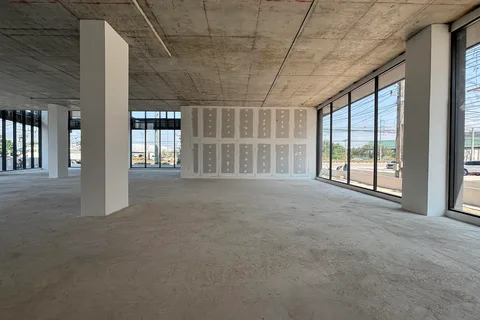
Newer low-rise stucco and concrete-block retail, office and medical buildings, with little older masonry commercial stock.
Sprawling planned-suburban layout; commercial concentrated in strip centers and nodes along major arterials rather than a traditional downtown.
What the weather and the ground do here
Atlantic hurricane wind and flood exposure; roof covering and opening protection drive the underwriting conversation.
Nothing standing here is old enough to be the thing a building gets compared against. The commercial layer never accumulated; it was drawn first and delivered in whole districts, generations after a land company platted the ground and cut the canals that still govern where rainfall goes. One district was built out around an interstate exit; a later one grew from a town square with a hospital at its middle and ran on into a corridor of leased buildings beside the highway; a newer one again is going up on the old federal highway through town, and it is the first fabric here where trade at grade and a habitational component above are raised as one project. What that removes from a survey is the comparison set. With no older half of town, a building is read against its own district’s cohort, and a cohort shares one era of practice, one site design and one generation of everything fixed to the outside of a shell. The earliest commercial district sits a full generation of practice behind the newest, so an owner who takes a young city to mean a new building has skipped the only question that sorts this inventory.
A second storm reaching a building before the first repair is finished — decided by whether each event carries a retention of its own. A roof under temporary covering when the next wind comes — decided by what a form treats as an emergency measure, and for how long it treats it as one. Damage from one storm lying under damage from another — decided by which occurrence an adjuster allocates it to. A district raised all at once and damaged all at once — decided by one contractor list with the whole district already on it. A leased building fitted around one tenant’s process — decided by who owns the fit-out and what the space is worth to whoever comes next. And space going dark while new developments keep opening — decided by the rent stream and the record of the day use actually stopped. A closing line records that a season with two landfalls is two claims and one queue.
Conditions an owner here is planning around
What has to be settled before the next one
A season with two landfalls is two claims and one repair queue.
What Florida law adds on top
What a policy measures once space stops being used is elapsed time, and in this city elapsed time is the variable an owner controls least. After a season of the kind this coast has already had, the contractor your building needs is the contractor every other building in the district needs, in the same weeks, for the same work, and the queue is indifferent to how urgent your job is. A second pressure runs the other way. Space is still being added here in whole developments rather than a building at a time, so a tenant leaving a plaza from an earlier build-out is choosing between your unit and a unit nobody has ever occupied. Neither of those is a lease problem and neither sits inside your control, yet both lengthen the same clock. The reading that settles a claim is not a reading about your intentions, then. It is arithmetic on dates somebody else set.
We did not find a standard fire policy printed in Florida’s insurance code. That is a limit on what we searched, not a finding that no such provision exists — so treat your own policy’s vacancy condition as the operative text, and read it before a unit goes dark between tenants.
The statute and the exact words where there are any, together with whatever the research recorded, are on the Florida page.
What a building costs to insure across the whole state is covered in How Much Does Commercial Property Insurance Cost in Florida?
By what you own in Port St. Lucie
All three types arrive here attached to a district rather than to a street. Retail is largely plaza space raised as part of the development it serves and let to the households inside it, which makes a tenant roster a function of one build-out rather than of a trade area drawn on a map. Office is small-floor and suburban in shape, clustered wherever a district put its center, and a suite there is let on covenants that look nothing like a tower lease. Mixed-use is the newest of the three in this city and the least settled, because a development on the old federal highway is putting trade, lodging and a habitational component on one site — the first time an owner here has had to work out where one occupancy stops and the next begins.
The coverage lines behind all of this
Below are the coverage lines on their own terms: what each one is for, where its edge sits, and which of them is a separate purchase rather than something a property form can be persuaded to include:
Port St. Lucie commercial property insurance FAQs
Why does one bad season count for more here than one bad storm?
The barrier island east of the city took two landfalls at the same recorded position inside a single season, weeks apart. The second storm met roofs under temporary covering, openings not yet reglazed and interiors already opened up. That is a different loss from one severe event: two occurrences, each with its own retention, each argued against damage that was already there. What gets underwritten here is repeat exposure and repair backlog rather than peak severity on its own.
My roof has been under temporary covering for weeks while I wait on a contractor. What is exposed meanwhile?
Two questions live in that gap and owners usually meet only the first. One is whether the emergency work counts as a protective measure under your own form; most forms expect it and most of them limit it, to reasonable expense over a reasonable period on property a covered cause already damaged. The other is what happens if that covering fails or is overtaken. Dated photographs, the invoice and whatever the contractor wrote down are what the argument afterward runs on, because that argument is about condition and timing.
A second storm hit what the first one already damaged. Whose loss is that?
Whichever occurrence it gets allocated to, and the allocation is where the money sits. A property form pays per occurrence and takes its retention per occurrence, so a season carrying two events can put a windstorm retention against your values twice while the first repair is still unfinished. Adjusters then divide the damage between the two out of whatever evidence exists, and that evidence is very largely the file you kept in between — scope of work, photographs, dates, and what had actually been put right.
There is no old building stock here. Does a young inventory quote itself?
A young city removes the questions an aging inventory attracts and puts a different one in their place. The commercial layer did not accumulate — it arrived as whole planned districts, each delivered over a short run of years, so a building’s working vintage is the district it belongs to rather than the age of the city. The spread between the oldest and newest of those districts is wide enough to matter, as the body above sets out, and an owner reading the whole place as uniformly new is reading their own building generously.
My building on the interstate corridor was fitted around one tenant’s process. What changes?
Everything about the placement narrows to that tenant. Buildings along this corridor were let to relocating manufacturers — wire drawing, precision optical work, lighting assembly — and each of those brings its own fire load, its own services and its own fit-out. Settle under the lease which part of that fit-out is yours to insure, make sure your file describes what actually happens inside rather than what the lease calls it, and price what the shell is worth to a successor if the process it was drawn around leaves.
A unit of mine has been dark for months while new developments keep opening. What is running against me?
In the position this city produces more often than owners expect. Your form measures elapsed time on space that is not in use, and here that time is set by things outside your reach: a repair queue shared with every other owner in the district, and replacement tenants weighing your unit against space in a development that opened last year. Find out what your own wording does at that point, and treat the day use actually stopped as a documented fact rather than something to be recalled later.
Sources
Florida’s insurance regulator is the authority sitting under the policy half of everything above, and its public search will say whether the person quoting your building is licensed to do it:
- Florida Office of Insurance Regulation — the Florida regulator, and where to verify any producer’s license
Price a Port St. Lucie building on what has been done to it
The useful facts about a building here are mostly repair facts: what has been replaced since it went up and when, whether any part of it is still under temporary covering, which season the last claim came out of, and how a lease splits the work. With those in hand the conversation starts at the placement instead of at the paperwork.