
Mixed Use Property insurance by city
Mixed Use Property Insurance in San Antonio, Texas
Historic limestone and brick downtown blocks with extensive newer stucco, masonry and metal-frame suburban commercial buildings.

San Antonio: conditions a mixed use property building creates, each paired with what answers it. No figures are shown.
What this occupancy creates
What answers it
The floors above the storefront decide this file, not the storefront.
Living floors inside a limestone block
The blocks between the old core and King William were raised for commerce and acquired their residential use a long while afterwards, which is why the interesting questions here are all about work that happened after the building did. A stair added inside an existing shell. An exit from the upper floors that runs past the back of the tenant’s space. Service risers pulled through the assembly somebody built to hold the two occupancies apart. Every one of those is a detail an underwriter takes for granted in purpose-built stock and cannot take for granted in a converted one, so the questions land on what the separation is made of, whether it is continuous, and who last looked at it after a fit-out.
That inheritance also decides what a loss costs. A fire that starts behind a counter at grade does not stop being a commercial claim when it puts residents on the street, and the rent that stops is a mixture of a commercial lease and a residential one that behave nothing alike on notice, abatement or re-letting. Repair on a protected elevation is slower again — stone and matching brick are trades with a queue, and where a district designation applies the review of the work sits ahead of the crew. The loss-of-rents period on a building like this is set against the whole stack, not against the shop.
The wrapped centers on the north side and the loops
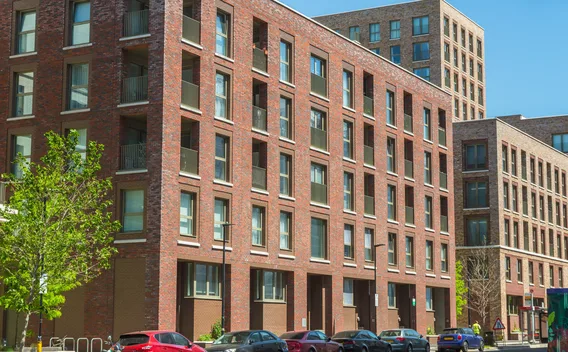
Out past the inner loop and up the north arterials the same label sits on a much newer product: retail and food at grade, living floors above in a light frame behind stucco, parking under or beside it, and one roof over all of that. Hail is the event that finds this building, and it finds it as a single loss rather than as two. A deck opened by a storm is at the same moment the ceiling of the occupied floors, so the questions run to the roof covering and its age band, how the wall system drains once water gets in behind it, and whether anyone can stay in the building while the roof is being replaced.
Water arrives the other way here as well, and it arrives quickly. Storms on the escarpment side of town run down the creek beds rather than pooling on flat ground, so what is exposed at these buildings is the lowest occupied level and whatever sits beneath it: the tenant stock, the elevator pit, the fire pump, the cars. The floors above stay dry and lose only their access, which sounds like the mild outcome until you notice that the shops have stopped trading, the residents have not stopped paying, and flood is not in the property form that answers everything else on the site.
What the law asks of a building with people living in it
San Antonio does hold a registration duty over empty commercial buildings, and a stacked building meets it awkwardly. A storefront can be dark for a stretch while the floors above it stay fully occupied, so the building is neither plainly empty nor plainly in use, and the residents upstairs do not settle the question in either direction. Whether the duty reaches your particular address, and on what terms, is a matter the San Antonio city page carries in the city’s own words and cited, scope included. Read it against the address itself before deciding that a partly used building sits outside it.
The local picture for this city sits on the San Antonio page.
Where to go next
The lines that answer this exposure
A limestone or brick block in the old core, off South Alamo or along lower Broadway, took its living floors long after it was built, and most of what an underwriter wants to know about it concerns that later work — what the separation between the tenant at grade and the people above is made of, where the added stair lands, what the risers were pulled through. Drive out to the north side or the loops and the label is unchanged while the building is not: retail and food at grade, residential floors wrapped over them in a light frame behind stucco, one roof across the whole of it, and a hail season that reaches the occupants through that roof. San Antonio hands an owner one or the other, and the lines below get read differently depending on which:
San Antonio mixed use property insurance FAQs
What does an underwriter look at first in a converted South Alamo block with living floors over the storefronts?
An underwriter starts at the assembly between your ground-floor tenant and the people living above it and works out toward the rent roll from there. That assembly was built after the building was, so the useful answers are about the conversion itself: what the separation is made of, whether anything has been cut through it since, how the upper floors get out, and whether the trade at grade uses heat, oil or late hours. Where those are vague the file slows, and the delay costs you marketing time rather than a decline.
Does a river-level floor sitting below the street door change how the building is underwritten?
It changes where the expensive parts of your building are sitting. On a lot that steps down toward the water, the switchgear, the boiler room and a tenant’s back stock all tend to end up at the lowest level, which is also the level that takes water first — from the river in a bad hour, and rather more often from a failed riser overhead. Telling us which level each of those is on, and what could be raised, changes the shape of a water claim long before anybody argues about its cause.
A late-night bar has taken the space under my residents on the St. Mary’s Strip. What changes?
The building did not change but its hours did, and the hours are most of the risk. A licensed tenant trading late under occupied floors brings a crowd outside the door, cooking heat, noise complaints and a class of liability claim that reaches an owner as readily as an operator. Expect questions about the insurance clause in that lease, whether you are named on the tenant’s liquor coverage, what the hood and suppression arrangement is, and how your residents reach their own door without crossing the line waiting at his.
Which parts of my policy answer when hail opens the roof over both the shops and the floors above them?
Start with the roof, which answers to your valuation basis and to whatever roof-surfacing or cosmetic wording the market attached when it bound the risk. Below it the shops lose trade while the deck is open, and that is business income. Above it the living floors stop producing rent for as long as nobody can occupy them, which is loss of rents, running on leases with their own notice and abatement terms. A single storm, and the recovery is assembled from parts of the policy that were never sized against each other.
Is my building vacant if the retail bay under my occupied floors has been empty since the last tenant walked out?
A building with people living over an empty bay is rarely vacant as a whole, and that is not quite what your form is asking anyway. Vacancy and unoccupancy conditions in commercial property wordings tend to reach the described space rather than the street address, so a dark bay can sit beneath fully let floors and still bring the condition to bear over the part that is empty. Settle the reading in the policy while the bay is still being marketed; the alternative is settling it during a claim.
Why does a limestone front in a designated district come up in a property quote at all?
Because it governs how long the building takes to come back, and time is what your rent is exposed to. A protected elevation is repaired in stone, by trades who work in stone, with material that has to match rather than merely perform, and where the designation applies the review of that work sits ahead of the crew. For a building with people living in it, the same stretch decides how long the residential leases produce nothing, which is why the ordinance-or-law and extended-period questions belong in the conversation early.
Sources
Verify these directly:
- Texas Department of Insurance — the Texas regulator, and where to verify any producer’s license
Get a San Antonio mixed use property quote
Start at the ground floor and work up: who trades at grade, which floors above are lived in and which are not, and where the switchgear and the boiler sit. What comes back is a read on how the building places and what the separation question is likely to cost you in time. The leases answer more of that than an appraisal will, so send those as well.