
Mixed Use Property insurance by city
Mixed Use Property Insurance in Plano, Texas
Predominantly newer suburban stock: corporate office campuses, tilt-up and masonry retail centers, and large-scale residential development alongside them.
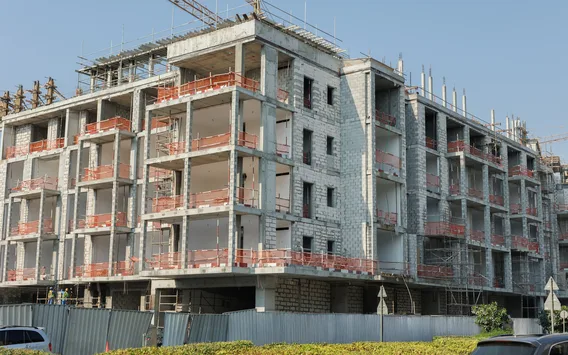

What a Plano building with homes above commercial space shows an underwriter, matched to what an insurance program does about each of those things. Nothing here is expressed as a figure.
What this occupancy creates
What answers it
The one building on this schedule with nothing to compare it to.
Shops, offices and homes in the same stack
The mixed-use product in Plano is the newest thing the city has built, and it is not a converted anything. Where an owner in an older Texas downtown inherits a shell raised for one purpose that later had living space cut into it, the building this page is written for was drawn as several occupancies from the start: service and food trade at street level, office space above that, and homes on top. All of it was permitted at once, inspected as one project, and finished to one plan set. That sounds like the easy version of this risk, and in one respect it is — the separations between the uses exist, they were engineered, and somebody has the drawings. What it removes is the archaeology. What it does not remove is anything that happens to the building afterward.
The consequence is that this building has two boundaries to prove rather than one, and the two are unalike. Where the trade at grade meets the office space above it the question is commercial on both sides — hours, cooking, the route a delivery takes — and an underwriter reads it much as they would read any tenant stack. Where the office space meets the homes over it, the question changes character entirely, because the population on the upper side is asleep and did not sign a commercial lease. A file that says the building has a rated separation has answered for one of those and left the other untouched. Each wants its own answer: what each assembly consists of, what passes through it, and who signed for the last thing that passed through it.
That middle band is also what holds the building on the commercial side of a line this brand actually keeps. A structure whose residential portion is the reason it exists is somebody else’s risk to write, on another product entirely, and the newest inventory in this city is large enough that the question is real rather than rhetorical. The office space is frequently what tips the reading: it is commercial, it is leased on commercial terms, and it sits between the two uses that would otherwise be talking past each other. An owner who describes the building band by band — what each level does, who holds each lease, and how the areas fall out between them — has made that determination visible instead of leaving it to be worked out from a schedule of tenants. In a purpose-built stack the information genuinely exists, which is more than owners of this type in most cities can say.
A building with no local precedent, in weather that finds people
Almost nothing else a Plano owner holds is like this building. The rest of the inventory here runs to single-occupancy structures raised inside master-planned business parks to one repeating specification, and an owner holding several of them has developed instincts that are accurate for those and misleading for this one. All of those instincts concern buildings that are empty at night. The after-hours number rings a security company. The manager comes by on a route. A supply line that lets go over a weekend is found when somebody next opens the door, and what it costs is a repair figure. Add a resident population overhead and every one of those arrangements is under-specified, in the direction that matters, because what the ownership becomes responsible for once the sun is down has stopped being a building.
The weather reaches that difference directly. Hail is the routine event here, and the narrow-track wind event that takes one structure while the one beside it stands is the uncommon one; on the rest of a Plano schedule both are property losses with a repair sequence attached. On this building the same storm produces an obligation that starts that evening. A breach in the envelope over occupied floors leaves households with nowhere to be, and somebody has to decide whether the structure can be re-entered, where those people go, and who carries the interval. None of that is decided by an adjuster and none of it is decided by the policy. It is decided by whoever the ownership has appointed, and the honest question for an owner here is whether anybody has been appointed at all — because on every other asset in the portfolio, nobody needed to be.
A new building also complicates the emptiness question in a way an older one does not. Space in a recently completed structure can be finished, permitted and connected and still have never had an occupier in it — not emptied, never yet filled. The suites at grade let up on one curve and the homes above them on quite another, so the building can be substantially occupied while carrying a band of trade space nobody has ever traded from. Whether that reads the same way as space somebody walked out of is settled by the wording in the owner’s own policy. On the state’s side there is less to hold than owners expect: the operative words on this subject sit in the policy form rather than in anything Texas publishes as a provision we can cite, and how far we were able to look inside this state’s statutes is recorded here as the edge of what we checked rather than as a finding. In a building already governed by a stack of private documents, the one that decides this is another private document.
The standard follows the ground as well as the structure
Plano holds a standing expectation about the condition of property that is not in use, and it does not confine itself to things with walls. On a stacked building that matters more than it first sounds, because the parts of a holding like this one that go unused are frequently not rooms at all — ground kept back for a later phase, the service yard behind the commercial frontage, a strip left over beside the parking structure. Those are also the parts the households in the building cross on foot every day, often in the dark, on the way to somewhere else. So the same neglected ground presents twice: once as a question about the condition the city expects, and once as the ownership’s own liability to the people it houses. Both are answered by the same walk around the site, and an owner whose maintenance routine was written for buildings has nothing in it scheduled for the space between them.
The local picture for this city sits on the Plano page.
Where to go next
The lines that answer this exposure
A Plano owner whose other buildings each hold one tenant doing one thing has, in this one, an asset that resembles none of them, and every line beneath this sentence is doing work the others never asked for:
Plano mixed use property insurance FAQs
Our building has shops at grade, offices in the middle of it and homes on the top floors. Is the separation question one question or several?
It is two questions, and they behave differently. The boundary from the shops at grade up to the offices over them is commercial on both sides, and it prices much the way any tenant stack does. The one between those offices and the households on top is not: the people up there are asleep and hold a residential tenancy. A submission saying the building has rated separations, without saying which of the two, has answered one of them and gone quiet about the other. Describe each assembly, and say what has been run through each of them since handover.
The building is new and we still have the original drawings. Does that settle the fire separation?
It settles where the building started, and that is a real advantage. What it does not settle is what comes next. The first food operator to take a bay at grade wants a grease duct and make-up air; the first office tenant to reconfigure wants cabling and cooling; each of those crosses an assembly somebody engineered. The move worth making while the building is young is to put sign-off on any penetration into the tenant works as a written condition, so the drawings stay a description of the building rather than a record of it.
Some of our ground-floor suites have never been leased since the building opened. Is that the same thing as vacancy?
Not obviously, and the difference is the difficulty. A condition written around premises being unoccupied was drafted with a tenant who left in mind, and space that has never held anyone at all sits awkwardly against that. Meanwhile the homes above are filling on their own schedule, so the property can look thoroughly busy while a whole band of it has never traded. The wording in your own policy is what decides it, so the sensible moment to put the question is now, while the answer changes nothing except the file.
A storm opens the envelope over our residential floors overnight. What actually happens in the first few hours?
It falls to whoever the ownership has named in advance, and on this building type that person has to exist. The evening of the storm produces decisions no policy makes: whether anyone may go back inside, where the households sleep, who pays for the interval. Nobody needs appointing on a single-occupancy building in one of this city’s planned parks, so a Plano owner has often never named anyone. Underwriters ask because the answer predicts how long the disruption runs. A name, a number and a standing arrangement, agreed before the season that needs them, is the whole of the preparation.
We own several buildings in Plano and this is the only one with homes in it. Can it go on the same program?
It can sit on the same program, and it should not be assumed to behave like the rest. Most of a schedule here is one specification repeated, which makes those buildings easy to describe together and easy to price together. This one shares almost nothing with them but an owner: a different construction, a different occupancy mix, a different obligation when something goes wrong, and a different market appetite. Describe it separately inside the submission even where it is scheduled alongside the others, or it inherits assumptions built for buildings nothing like it.
The parking structure serves the shops, the office tenants and the residents. Whose exposure is that?
Yours, under almost any arrangement, and it is where the three populations in this building actually overlap. Shoppers use it through the afternoon, office tenants across the working day and residents overnight, so it is in use around the clock by people who have no relationship to one another and no reason to expect each other. Structured parking is also unusual on a Plano schedule, where the rest of the inventory parks on open ground beside the building. Lighting, sightlines, access control and who may reach which level belong in the submission.
Sources
Verify these directly:
- Texas Department of Insurance — the Texas regulator, and where to verify any producer’s license
Get a Plano mixed use property quote
Owners here usually have a stacking plan somewhere in the file, and it does more work in this conversation than anything else in it: which band of the building each use occupies, where one stops and the next begins, and what the leases on either side of those boundaries oblige each occupier to carry. Bring it early, together with whatever exists on the two separation assemblies, and the negotiation runs off the building as it actually is rather than off whatever a market assumes a building in this city looks like.