
Mixed Use Property insurance by city
Mixed Use Property Insurance in Des Moines, Iowa
Downtown masonry and mid-rise office stock linked by skywalks, with brick warehouse buildings in the East Village and river districts.
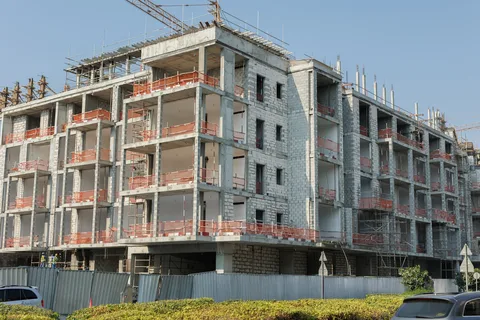

Conditions a Des Moines building takes on once people live above its commercial floor, and what a policy actually does about them. No figures appear.
What this occupancy creates
What answers it
What the shop can trade through, the homes above cannot.
When the way in is a level above the sidewalk
A downtown building on the skywalk network is entered twice. There is the door on the sidewalk, and there is the connection into the network a level up, and for a commercial tenant the second one is frequently where the customers actually come from. That rearranges the building an underwriter thinks they are reading. The space at grade may be a lobby, a service corridor, a stair and a row of meters rather than the trading floor, while the business paying the commercial rent sits on the level the bridge lands on. Frontage, entrances, hours and who is inside after dark all have to be asked about that level, because asking them about the sidewalk describes a floor nobody uses.
The connection is also an opening in an exterior wall that lands inside property another owner controls, at a height where a residential stair and a residential entry can be sitting one floor away. That raises a separation question and an access question in the same breath: what stands between a corridor the public walks through and the part of the building where people live, and who can reach that part without passing anything anybody controls. Whatever agreement governs the link also decides when it is open, so a connected building has a stretch of every day when its upper face is shut and the sidewalk door is the whole way in and out, residents included. An underwriter reading a downtown submission is placing the residential tenancy inside that arrangement rather than inside the building alone.
The arrangement splits the building financially as well. A loss that closes the bridge level, or closes the neighbor the bridge lands in, can take the commercial traffic away while every home above stays occupied and every residential lease keeps running. It runs the other way as well: the trade at the connected level keeps going while the floors over it are unusable. Neither case is the whole building being out, which is what a rent-loss figure set against one number quietly assumes, and knowing which portion of the income a policy would actually answer for is better done now than in the middle of a claim.
A brick shell in the East Village, with homes put inside it
Away from the core, the Des Moines version of this building is a masonry warehouse in the East Village or down by the river, put up as one volume to hold goods and now carrying a business at street level with homes on the floors above. Nothing in the original construction drew a line between one floor and the next, because nothing needed one — the building was built to move things vertically, and the freight shaft, the hoistway and the open stair tower were the point of it. A conversion inserts a separation into a structure whose most permanent features are the holes running through it. So the thing worth establishing is not whether the floors read as separated now, but what became of those vertical openings: sealed, kept as an elevator, kept as a stair, or quietly built around.
By the river the exposure arrives at the bottom of that stack. Water reaches street level, which is where the entry, the stair, the meters and the commercial tenant all are, and the homes above can take nothing at all and still be uninhabitable, because the way in and the way up went under. Rent from the residential floors stops for a reason that never touched them. Repair runs the same direction: a business can trade behind a barrier while work goes on around it, and a home cannot be lived in while its only stair is being rebuilt, so the residential portion is emptied first and comes back last. Loss-of-rents wording on this stock is worth reading against that sequence rather than against the damage.
The weather reaches this stock from the other end. A single storm line crossing central Iowa loads every low-slope roof on a block in one pass, and on a converted warehouse the roof is no longer over storage — it is over people, their possessions and their tenancies. Water getting in at the top runs down through the residential floors and reaches the business at grade last, the reverse of the river, and it produces the same split: one occupancy displaced, the other still trading. There is a point past which the building stops being ours to write. When a conversion gives street level over to living space as well, the property is habitational from the sidewalk up and belongs with the brand that writes that product. What we write still has a business at grade.
What the city asks of a building that is only half empty
Des Moines keeps a register of empty structures and, in the same ordinance, sets what an empty structure has to be kept like — the record and the physical condition are parts of one obligation rather than alternatives to each other. On a building with homes over a business that lands awkwardly, because what goes quiet here is usually one occupancy and not the structure: a storefront closes while the floors above it are still lived in, or the homes empty out while the shop keeps its lights on. Which of those a municipal duty and a policy condition each read as an empty building is a question about wording rather than about how busy the ground floor looks, and it is a cheaper question to settle while nothing turns on it.
The local picture for this city sits on the Des Moines page.
Where to go next
The lines that answer this exposure
Once homes sit over the trading floor of a Des Moines building, an underwriter stops asking what the building is and starts asking which level the public arrives on, what the space at grade is really doing, and what was put in between a business downstairs and a bedroom above it:
Des Moines mixed use property insurance FAQs
Our commercial tenant’s customers come in off the skywalk rather than the sidewalk. Is the ground floor still the ground floor for insurance?
For underwriting purposes the floor that matters is the one carrying the public, and on a connected building that is often the level the bridge lands on rather than the one at grade. Describe the building the way it is actually used: where the trade sits, where the people arrive, what the street level holds, and which of those levels the residential entry opens onto. A submission that assumes the sidewalk is the front door describes a different building.
We are converting the upper floors of an East Village warehouse into homes. What gets asked about the old freight openings?
Where each of them went. A warehouse was built to move goods between floors, so the shafts, hoistways and open stairs are original structure rather than afterthoughts, and a conversion has to close, enclose or repurpose every one of them before the floors above the business are genuinely separate from it. Underwriters ask what the drawings show, who signed off the work, and whether anything was left as a chase. The separation rests on that answer.
Water reached our street level but the homes upstairs were never touched. Why is the rent from those floors still at risk?
Habitability does not survive the loss of the way in. The entry, the stair, the meters and the service that make an upper floor rentable sit at street level on this stock, and when that level goes under, the homes above become unusable without being damaged. The residential income stops on a floor the water never reached. Nothing about that loss looks like damage upstairs, which is why the file needs the dependency spelled out — what the upper floors rely on downstairs, and what stops working for them the moment street level does.
Hail took the membrane over our residential floors while the shop below kept trading. Which half of the building drives the claim?
The half that has to be emptied. A storm line here loads a whole roof at once, and on a building with homes under it the damage travels down into occupied units, which turns a roofing job into a displacement problem with a schedule attached. The business at grade can usually work through it. The period of restoration that actually matters is the one measured against the residential floors, and rent-loss wording is worth checking against those floors rather than the shop.
Our storefront has been closed a long stretch while the homes above stay rented. Does the policy treat this building as vacant?
That is the question to get answered in writing before it matters. Iowa prints a vacancy condition in its own code at Iowa Code § 515.109(6), and the wording turns on the condition of the building itself rather than on how busy any one part of it looks. A structure with a dark storefront under occupied homes is exactly the case an owner assumes is answered by the activity upstairs. Ask how the wording lands on a partly occupied building while the answer is still theoretical.
The conversion has more home than business in it now. Are we still the kind of building you write?
That turns on what is still trading at street level. This brand writes a commercial building carrying a habitational component above it, and the business at grade is what makes it ours. Once street level has been given over to living space too, the property is habitational throughout and belongs with the brand that writes it. Say what the grade floor is doing now and what the plans do to it, and the answer comes quickly.
Sources
The Iowa statutory statements on this page are drawn from primary government sources. Verify them directly:
- Iowa Code § 515.109(6) — the Iowa vacancy provision this lens turns on
- Iowa Insurance Division — the Iowa regulator, and where to verify any producer’s license
Get a Des Moines mixed use property quote
Send the vertical order of the building — what trades at street level, which level the public actually walks in on, what sits on the floors above, and what was put in to separate them — and we will say where a building like that places and which questions an underwriter will press hardest.