Commercial Property Insurance in Milwaukee, Wisconsin
What an underwriter wants settled first about a Milwaukee building is what it is standing on, and in this city that is genuinely open. The valley holding the heavy industrial stock was marsh until Milwaukee assembled land on top of it out of dredge spoil, gravel and its own municipal and industrial waste, and everything that went into that fill is still in it. Ground of that kind carries load unevenly and reads badly to a lender, and neither of those is something a tenant can be asked to solve.
Nate Jones is a CPCU-designated insurance broker and the founder of Wexford Insurance, LLC and Lessors Risk Guard Insurance. He places lessors risk and
commercial property coverage for owners who lease buildings to commercial tenants,
through a specialty panel writing in 48 states.
Reach him through the quote form or call 317-942-0549.
Last updated · Reviewed by Nate Jones, CPCU
The building stock
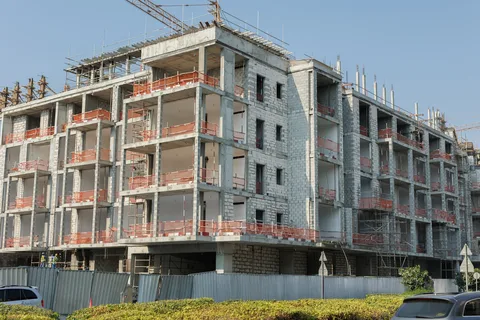
Heavy cream-brick and masonry commercial stock, including former breweries and multi-story industrial buildings, much of it converted to office, retail and mixed use.
Dense downtown core with historic warehouse districts, radiating streetcar-era commercial corridors and postwar suburban strip and campus development.
What the weather and the ground do here
Cold-climate freeze and snow-load exposure with lake-influenced winter weather; summer hail and straight-line wind add convective loss potential.
The awkward half of owning here arrives after a loss rather than before one. The pale brick these walls are faced in is a local historic material, and a lost face in it is permanent — there is no substitute to order by the pallet — so losing part of an elevation is a matching problem before it is a construction problem: an honest partial repair still leaves the wall reading as patched, and the argument about whether the insurer owes the rest of the elevation is an argument about wording, not about workmanship. Vintage compounds it, because the district name is an unreliable guide to age in this city. The fire that emptied the Third Ward means what stands there now went up afterwards, as masonry warehousing built to serve the river trade, while Walker’s Point was never burned and still holds the older layer underneath the same skyline. So the questions arrive in that order — what the wall is actually made of, when it actually went up, and what putting it back would have to involve.
Rows read across in pairs, each naming something a Milwaukee owner takes on with the building and then the part of the wording that picks it up. Named first, in order: ground the city assembled out of dredge spoil and refuse where a marsh used to be; whatever was buried in that fill before anyone was keeping account of it; a facade brick whose lost face no substitution will match; a district name that misleads about the age of what stands inside it; and a single floor of an otherwise working building stripped back and sitting idle. Set opposite them, in the same order: movement that standard property wording was never written to pay for, an environmental condition a property policy is not built to absorb, how far the matching provision actually extends, construction and age priced off the wall rather than off the map, and the definition in an owner’s own form of a structure that has gone out of use.
What Milwaukee hands the owner along with the deed
Where the wording picks it up
Ground the city assembled out of dredge spoil and refuse
Movement the property wording was never written to pay for
Whatever went into that fill before anyone kept account
An environmental condition a property policy will not absorb
A facade brick that substitution will not match
How far the matching provision actually extends
A district name that misstates its own vintage
Construction and age priced off the wall, not off the map
One floor of a working building stripped back and idle
Your own form’s definition of a structure out of use
The fill is older than the building and outlasts every tenancy.
The ground and the brick are the parts an owner cannot substitute.
The local law that binds you
Neither passage below is a coverage requirement, and the penalty is not the reason to read them. What a municipal duty does to an owner is fix what that owner is presumed to have known. Once the city has put a class of building on a schedule, nobody has to prove you were ever told about the condition of your own wall or your own idle floor — the duty is published, it binds by category, and awareness of it is assumed rather than demonstrated. That matters because serious losses are usually argued over knowledge rather than over physics: what the owner knew, when the condition started, and what happened in between. An owner who complied has a dated answer to all three. An owner who did not has the identical building and nothing to say.
Facade Inspection Ordinance
The City of Milwaukee has adopted an ordinance, effective August 18, 2001 (sec. 275-32-13 Milw Code of Ordinances Vol. II) that requires owners of buildings that are five stories or greater to have a critical exam completed to determine if the façade of their building is in a safe condition.
This reaches buildings of five stories or greater. The words quoted come from the City’s own Department of Neighborhood Services page describing the ordinance rather than from the codified text — they are the City’s summary of its own law.
The VBR ordinance requires owner(s) of residential and commercial property left vacant for 30 days or more to register the property with the Department of Neighborhood Services (DNS) and take steps toward assuring the property is secure, properly maintained and not creating a hazard for the surrounding community.
The words quoted come from the City’s program page rather than the codified text. That page expressly names commercial property.
A Milwaukee building rarely goes dark all at once. A converted industrial block empties a floor at a time, so the ordinary situation is a structure partly working and partly not: the ground floor trading, an upper floor stripped back and waiting on a build-out, a rear section nobody has opened since the last occupant handed the keys over. Wisconsin leaves the consequence of that to the document rather than to the code, which puts the entire weight on how one word in your own form is defined and on how much of a structure has to stop being used before the definition reaches it. Owners tend to assume the test is whether the address looks abandoned. It is generally not.
We did not find a standard fire policy printed in Wisconsin’s insurance
code. That is a limit on what we searched, not a finding that no such
provision exists — so treat your own policy’s vacancy condition as the
operative text, and read it before a unit goes dark between tenants.
The statute and the exact words where there are any, together with whatever the
research recorded, are on the
Wisconsin page.
In a converted Milwaukee industrial building the property type is often a floor rather than a building. One shell can trade at street level, hold professional tenants across the middle floors and carry a habitational component under the roof, so the exposures stack vertically instead of sitting side by side — a cooking line beneath an office, an office beneath people who are asleep. Retail, office and mixed use are separated below because the markets separate them, not because Milwaukee buildings do.
Every line below does one job and only one. One pays to put the structure back; one replaces the rent while the space cannot be let; one stands behind a claim brought by somebody hurt on the property; one sits above the others once the number gets large; and one deals with how tenants are chosen and treated. The Milwaukee facts above decide which of them gets tested first, not what any of them says:
Why would an underwriter ask what my building is standing on?
The heavy industrial part of the city occupies a valley that was marsh until it was filled in, over a span of years, with dredge spoil, gravel and municipal and industrial waste. Fill assembled that way is not uniform — it holds different material at different depths and some of it is organic, so it compresses at different rates under one slab. That makes bearing a live question rather than a settled one, and it is the question no photograph of a roof will ever answer.
My slab has separated and the door frames are out of square. Is that a claim?
This is where an owner meets the wording rather than the adjuster. Property forms are written to pay for events, and ground moving under a building is generally treated as something other than an event: settling, cracking and shrinkage sit among the exclusions in most standard forms regardless of what the ground did. The damage is real, the repair is expensive, and it may still not be an insured loss. What helps is establishing when the movement started, which is what a structural report and dated photographs are for.
A contractor digging for a tenant build-out hit something in the soil. Who pays?
The property policy is the wrong place to look, which catches owners out. Material used to fill the valley included municipal and industrial waste, so breaking ground can turn up something that has to be handled and disposed of under environmental rules rather than repaired under an insurance policy. Standard commercial property forms carry a pollution exclusion. The remediation cost, the delay to the fit-out and the rent not collected while work stops all sit with the owner unless something separate was bought for it.
Half of one elevation came down. Will the insurer redo the whole wall?
That argument turns on the matching provision, and in this city it has unusual force. The material these elevations are built in is local and historic, and face loss in it cannot be made good by substitution — so the realistic options are salvage, a modern product that will always read as a modern product, or the whole elevation. Some forms address mismatched cladding directly and many say nothing, leaving it to negotiation. Establish which yours is while nothing has happened.
My building sits in a historic district. What does an underwriter take from that?
Less than the phrase suggests, and in Milwaukee it can point the wrong way. The Third Ward reads as old and is largely the opposite: the ward burned, and what replaced it went up afterwards as masonry warehousing for the river trade, so the stock there is younger and heavier than the district name implies. Walker’s Point escaped the same fire and holds the genuinely older layer. Construction class and actual year of build are what get priced, read off the building rather than off the boundary line.
A floor has been stripped back and empty since the tenant left. Am I still covered?
Not in the way most owners assume. Your own form defines a structure out of use, and the definition usually turns on how much of the building is being occupied for its customary purpose rather than on whether the address looks abandoned. A partly let conversion can cross that line while the ground floor is still trading and the sign is still lit. The municipal duty printed further up this page runs on its own timetable and does nothing about the policy side. Raise it with your broker while the floor is still let.
Sources
Both Milwaukee passages above come from the city department that administers them, which is also where the scope of each duty is set out:
Ownership here turns on things nobody photographs — what the foundation is sitting on, whether a structural report has ever been pulled, what the facade has already been repaired with, and how much of the building is genuinely occupied this season. Put those in front of us and we can say which markets will look at the risk and where the wording is likely to bite.