
Lessors risk insurance by city
Commercial Property Insurance in Tacoma, Washington
Tacoma’s commercial core was built to move freight rather than to lease suites, and the buildings still behave that way: deep, heavy, and sitting on flats that were filled in to make room for them. The regional earthquake most owners here still measure against was a deep one that treated this city more gently than its neighbors, which makes it a poor rehearsal for the shallow fault that runs beneath it. A placement here is largely settled by those two things, what the building was laid out to do and what it was set down on. A third runs under both and gets raised last, because it never produces a date: the climate does not really let an envelope dry out.

The building stock
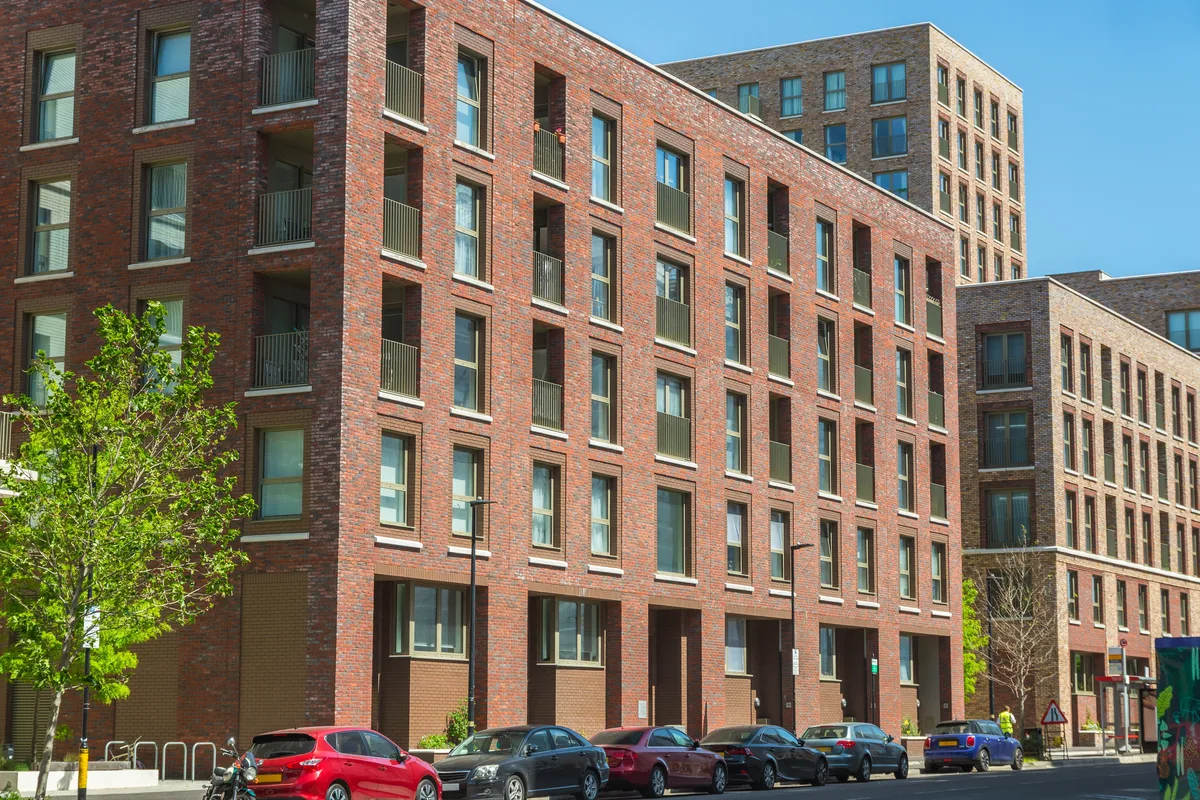
Pre-war masonry and timber commercial blocks near the waterfront, mixed with port and tideflats industrial structures.
Historic downtown and waterfront districts with arterial commercial corridors and a large industrial port area.
What the weather and the ground do here
Cascadia and Tacoma-fault seismic exposure, liquefaction-prone tideflats soils, and persistent wet-weather envelope stress.
The working problem is one of scale. The warehouse blocks were laid out with two working faces, a public elevation on Pacific Avenue and a freight elevation on the rail side where the goods actually moved, and the deep plates, dock-high thresholds and post-and-beam bays behind them resist every attempt to cut the space into modern tenancies. That is why so much of the reinvestment arrives as adaptive reuse, campus buildings, museums, offices and lofts inserted into shells never drawn for them. The underwriting consequence is that the building being priced and the building your rent roll describes are often not the same object, and the tenant-improvement work sitting between them is where the awkward questions collect. Underneath all of it the floor slab is doing more work than the walls: wide, lightly loaded, and bearing on ground made of layers that do not act as one material. Over the top of it the roof is doing something comparable. A deep plate puts an enormous area of low-slope covering over very little wall, and its drainage runs a long way inside the building before it reaches an outfall. That was tolerable over pallets. Over a fitted-out floor it is a different arrangement, because the same water lands on tenant improvements rather than on goods somebody insured separately, and a slow leak has a long wet season to work in before a tenant notices it.
An accessible description of the Tacoma matching panel. Each row sets a local condition against the part of an insurance program that carries it. The conditions, in order: layered ground beneath a wide warehouse slab; postwar tilt-up construction that reads as modern; a debris-flow path running down to the port flats; a deep floor plate that empties as a single unit; and a tenant whose business runs through the port. The responses follow in the same order, and a closing line observes that a building here can be earning on one elevation while the other stands idle.
What a Tacoma building is standing in
The part of the program that carries it
A building here can be earning on one face and idle on the other.
What Washington law adds on top
Washington’s half of this reaches the policy rather than the building. Once a space is no longer in use the wording starts to matter, and in this stock that moment arrives in an unusual shape. One tenant frequently occupies most of a building’s leasable volume, so a single departure does not thin the occupancy, it changes what the property is. A warehouse floor, an industrial bay, a whole converted plate: these empty as units rather than as suites, and a building can move from fully let to substantially idle inside one lease cycle. The two-faced plan makes it easier to overlook, because the Pacific Avenue elevation can be busy while the freight side behind it has been shut for months. What that does to your coverage is decided by the wording in your own file, which is a good argument for reading it during a lease rather than after one. The other half of an idle volume is the plant. A converted plate carries heat, sprinkler protection and ventilation sized for the whole building, and the first economy an owner makes when a floor goes quiet is to turn some of it down. In this climate that has consequences of its own: an unheated, unventilated volume through a wet winter is a condensation and corrosion problem first of all, and protection in a space nobody visits is protection nobody would notice had failed. Go there deliberately, and write down what was left running.
We did not find a standard fire policy printed in Washington’s insurance code. That is a limit on what we searched, not a finding that no such provision exists — so treat your own policy’s vacancy condition as the operative text, and read it before a unit goes dark between tenants.
The statute and the exact words where there are any, together with whatever the research recorded, are on the Washington page.
What a building costs to insure across the whole state is covered in How Much Does Commercial Property Insurance Cost in Washington?
By what you own in Tacoma
The three property types read differently in a freight town. Mixed-use here is most often a habitational component inserted into a converted warehouse, or set above a storefront in the Lincoln District or on Sixth Avenue. Retail is the neighborhood run, Proctor, Hilltop along Martin Luther King Junior Way, the long auto-oriented stretch of South Tacoma Way, rather than a mall pad; and where such a run is a continuous pre- war block, the parapet and the covering over your unit may be shared with addresses you do not own. Office is frequently a floor plate carved out of a shell that was drawn for pallets, so the equipment serving it is newer than the structure by decades and the two wear out on unrelated schedules.
The coverage lines behind all of this
Here is the same machinery without the map: what each line covers, what it deliberately leaves out, and which of them matters more here than owners expect. The thing worth carrying into them is that they do not share a trigger. One answers to physical damage, one to income that stopped, one to a duty you owe somebody hurt on your property, and an event can satisfy one while leaving the others untouched:
Tacoma commercial property insurance FAQs
Why does the ground under a Tacoma warehouse floor decide so much?
Because it behaves in layers rather than as one material. State geologists assign high liquefaction susceptibility to the fill covering the former tide flats of Commencement Bay, and to the valley alluvium and the abandoned channels of the Puyallup and Wapato Creek, which have liquefied more than once. Peat cannot liquefy but loses strength and takes permanent displacement, while sand layers between it can. Under a wide, lightly loaded slab that surfaces as a floor no longer flat, and a floor no longer flat carries neither racking nor a lift truck while the building itself is still standing.
My building on the flats is concrete rather than brick. Does that help?
Less than owners assume. The state’s own scenario for the fault beneath this city expects severe damage in unreinforced masonry and in tilt-up concrete built without ductile detailing, which describes a great deal of the postwar warehouse and block construction through the industrial areas. Age is not the useful question. How the walls are tied to the roof diaphragm is, and so is what the slab is bearing on. Expect an underwriter to ask what the building is rather than what era it came from.
The city has been surveying unreinforced masonry buildings. What does that mean for me?
It means the construction type of a great many older buildings here is being written down. The city is running the survey alongside state emergency-management and historic-preservation partners, and the resulting record is bound for an archive the state maintains. The practical effect for an owner is that what your building is made of becomes documented rather than described. If you hold drawings, an engineer’s report, or evidence of structural work done before you owned it, keep it where you can reach it. That is the material a survey cannot supply for you.
Does a policy on my building deal with a lahar?
That deserves an explicit answer rather than an assumption. Federal geologists name the port among the places a large debris flow off the mountain could destroy all or part of, and Washington’s own mitigation planning treats the port as critical infrastructure sitting inside a volcano hazard area. A flow like that arrives as moving ground and moving water at once, which is precisely the seam between the earth-movement and the flood exclusions on a standard property form. Ask which one your form would apply, and get the answer before you need it.
My tenants ship through the port. Does that reach me as the landlord?
It can, from a direction owners rarely plan for. Your property policy answers for physical damage to your building. If a tenant’s operation runs through the port and the port is interrupted, the rent can stop while your building sits untouched, and nothing in the property section of the policy has been triggered at all. Whether anything responds turns on dependent-property or contingent time-element terms, which are not standard on a landlord’s policy and have to be asked for. That is a renewal conversation, not a claim conversation.
Is the loading side of my building an exposure in its own right?
It usually is, and it is the part owners walk past. A freight elevation built for rail and truck has dock-high thresholds, an apron, and a level change at every opening, and it gets used by delivery drivers and contractors who never signed your lease. Who maintains that side, who lights it, and who controls access after hours are lease questions with liability consequences, and they are worth settling in writing. A claim from that face of a building rarely turns on the policy. It turns on who owned the surface.
Sources
The policy side of this page traces back to Washington’s insurance regulator, which also publishes the license record of anyone offering to sell you one. That office is the authority on what a company may write in this state and on who may place it, a narrower remit than owners tend to assume:
- Washington State Office of the Insurance Commissioner — the Washington regulator, and where to verify any producer’s license
Quote a Tacoma building, both faces of it
Send the address, the shell’s original purpose, its present use, and how much of the floor area is earning this month. Add the age of the roof covering and when its drainage was last cleared, whether anybody holds drawings or an engineer’s report on the structure, and what is still running on a floor that has gone quiet. That will tell us which markets to approach and what is going to decide the price.