Commercial Property Insurance in Norfolk, Virginia
A Norfolk placement is decided lower down the building than most. What settles it is what the ground floor is finished with, how often that finish has been pulled out and put back, and which name on the lease paid for it last time — questions that read as maintenance trivia in most cities and read as loss history in this one. The structure above can be in excellent order and change none of it.
Nate Jones is a CPCU-designated insurance broker and the founder of Wexford Insurance, LLC and Lessors Risk Guard Insurance. He places lessors risk and
commercial property coverage for owners who lease buildings to commercial tenants,
through a specialty panel writing in 48 states.
Reach him through the quote form or call 317-942-0549.
Last updated · Reviewed by Nate Jones, CPCU
The building stock
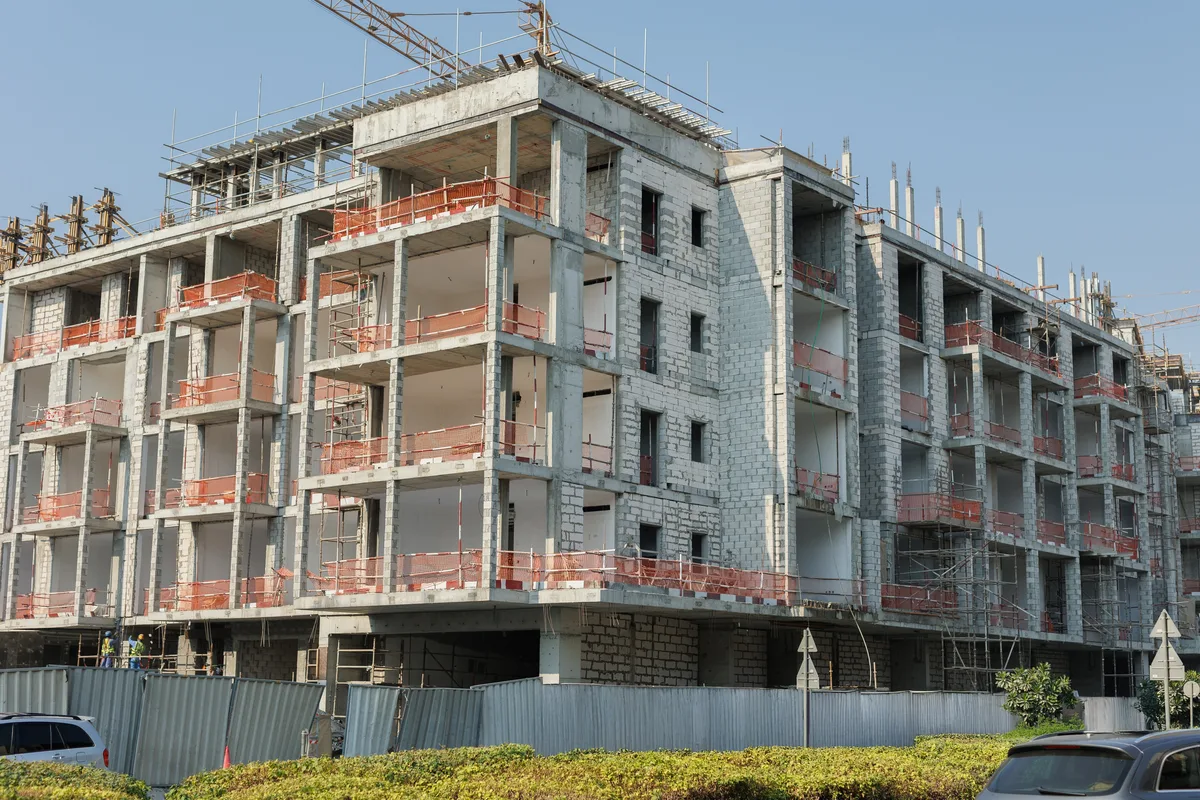
Historic downtown masonry and mid-rise office stock beside waterfront industrial and naval-support buildings, with brick commercial rows in older neighborhoods.
Waterfront downtown core with radial commercial corridors and highway-oriented retail toward the city’s outer edges.
What the weather and the ground do here
Tidal flooding, hurricane wind and storm surge define the exposure; low elevation makes recurrent nuisance flooding routine.
Ask when the building next door went up and the answer tells you very little about yours. Downtown here was not thinned by fire or by weather. It was cleared on purpose, in a mid-century redevelopment program that took out whole runs of much older commercial building along with the street lines they stood on, and what survived survived in pockets. So the shorthand that usually travels with an old waterfront downtown — an unbroken commercial row, shared walls end to end, a fire in one unit standing on everybody’s — holds in one street and not in the next. Ghent is the counterweight, an early streetcar-era business district that was never taken apart that way and still reads continuously. What an underwriter does with that is stop reasoning outward: what stands on either side of you and how close, whether anything structural is shared with it, what the ground floor is built on, and what at grade has been replaced since the building went up.
Who puts the ground-floor finishes back after they come out is decided in a lease, and that decides in turn whose policy stands behind improvements and betterments. How repairs are split between a tenant and an owner decides which losses are small enough never to reach a deductible and so never to appear anywhere except in the building itself. A clause on whether a tenant may raise its own equipment decides whether an insurable value has moved without anyone restating it. How rent behaves while a floor is out of use decides what has to be proved before rent coverage pays anything. Which layer of a stacked building is standing empty decides how a provision written about floors reads a single address. And what a torn-up street outside does to trade decides whether access wording, which still wants a covered cause, is any use at all. A closing line records that the lease is written first and the policy inherits what it says.
What the lease already decided
What the policy inherits
Who puts the ground-floor finishes back
Whose policy stands behind improvements and betterments
Which repairs are the tenant’s and which are yours
Losses too small to ever reach a deductible
Whether a tenant may raise its own equipment
An insurable value nobody has restated
How rent behaves while a floor is out of use
What has to be proved before rent coverage pays
Which layer of a stacked building is standing empty
A provision that reads floors, not addresses
What a torn-up street outside does to trade
Access wording that still wants a covered cause
The lease is written first; the policy inherits what it says.
Most of this was settled in a lease before any policy existed.
The local law that binds you
The fact an owner is least likely to be able to produce on request is the day a space actually stopped being used. It gets reconstructed afterwards out of a key handover, a last rent receipt and a contractor who remembers roughly when — and it is the fact everything downstream is measured from, because an empty building is judged in elapsed time by everyone with an interest in it. This city is one of those parties. The form you are already paying for is another, running a clock of its own on the same building, and nothing synchronizes the two. An owner who lets a space go quiet without writing down the date is running both of them blind.
Vacant Building Registration
Section 11.1-16 of the City Code states that it shall be unlawful for any owner or owners of buildings or structures which have been vacant for a continuous period of twelve (12) months or more to fail to register on an annual basis the vacant buildings or structures with the Bureau of Property Maintenance.
Quoted from the City’s own registration form rather than the codified text; the form states the section’s requirement directly.
Older commercial buildings in Norfolk are stacked and let in layers — trade at the sidewalk, something quite different above it, on leases with nothing in common and different end dates. The habit that costs owners here is counting the building instead of counting the space. One address, one policy and one mortgage make the thing feel like a single object, so an owner can be fully let and paying upstairs while the layer at street level is precisely the situation Virginia wrote about. What that changes in practice is unglamorous and expensive: heat, power, alarm and sprinkler serve the whole structure, they stay the owner’s cost whichever layer is earning, and shutting them down in the half nobody is paying for is the economy that turns a slow season into an argument.
Virginia prints a vacancy provision in its own code, and it runs on the
building’s occupancy rather than on your conduct.
The statute and the exact words where there are any, together with whatever the
research recorded, are on the
Virginia page.
The three types part company on one question, which is who paid for what is inside. A Granby Street storefront is usually let as a shell to a tenant who fits it out to suit a trade, so the most damageable and most frequently replaced part of the building was bought by somebody who does not own it. An office floor runs the other way: the improvements were built by the landlord, capitalized into the rent and carried on the owner’s schedule of values, which is where they belong and where they are most often understated. Mixed use holds both arrangements at once, plus a habitational component over commercial space and a fire separation between them that somebody has to maintain and nobody wants to own.
Every line here is a separate promise with its own trigger, its own limit and its own argument, and they are never met in the order they are bought. What these pages set out is what each one pays for, what it will contest first, and the ones owners most often find they never held at all:
Water got into my ground-floor tenant space. Who pays to put the fit-out back?
Read the lease before you read the policy, since the lease decides it first in most buildings. Commercial leases routinely split a building into shell and fit-out and hand the second one to the tenant, so the flooring, the base cabinetry, the lower run of wall and the outlets set at whatever height somebody chose years ago may not be your property at all. Whose insurance responds follows from that split, and improvements and betterments are where an owner and a tenant most often discover each assumed the other had it covered.
The same space has been damaged more than once and I never claimed. Is that invisible?
It shows up, just not where an owner goes looking for it. A loss run records claims, so a repair you absorbed yourself is genuinely absent from it, and the building is not. Repeated damage at grade leaves a signature an inspection reads immediately: patched base, a floor laid over a floor, new trim against old work, a service run that has been moved up a wall. Condition gets asked about separately from claims history, and a condition you describe yourself is a different conversation from one an inspector turns up.
The building beside mine looks a century newer. Is it any guide to what I own?
It is no guide at all, and that is on the record rather than accidental. Whole runs of the older downtown were cleared and rebuilt under a mid-century redevelopment program, so what stands today is survivors and their much newer replacements sharing frontage, and there is no era you can infer from the corner you happen to be standing on. Construction class, wall assembly and roof generation get established for your building by somebody looking at it. A survey done properly here is worth more than it is in a city that was built once and left alone.
The ground floor is standing empty and the offices above it are full. Is the building empty or not?
The building is not the unit the question gets asked about. A provision of that kind is written about space in use, so a busy upper floor does not carry a dark one at street level. What lengthens the exposure here is the re-letting rather than the rule. A deep older storefront was fitted out for a particular trade, the next tenant is rarely in the same one, and a fit-out that suits nobody has to come out before the space shows well. Owners budget for a search and get a demolition first.
The city is building coastal protection work along my street and my tenants say trade has fallen off. Is any of that insured?
Almost certainly not under the property program, and the reason is worth knowing before you go looking. The grants that reach lost trade caused by something off your own site — access obstructed, an order keeping people out of an area, utility service failing away from the building — are keyed to a covered cause of loss, and public works are not one. Where that argument actually lives is the lease: whether rent abates, on what trigger, and for how long. That clause is worth finding before the site fencing goes up.
My tenant wants to pay for raising its own equipment and sealing the base of the space. Whose property is the work afterwards?
Yours under most leases, on the day the term ends, and sometimes on the day the work is finished. That is a good outcome for the exposure and an awkward one for the numbers, because an improvement that reverts to the owner is an addition to what has to be insured and almost nobody restates a value after a tenant has paid for something. Agree the reversion language and the scope of work in writing, and put the cost into your own building figure while anyone still remembers what it was.
Sources
Two authorities sit behind this page and they hold different things. The city document is where the quoted passage lives and where a change to it would surface. The Virginia entry is the state office that licenses anyone offering you a policy:
Norfolk City Code § 11.1-16 — the Vacant Building Registration duty quoted above, in the municipality’s own words
Bureau of Insurance — the Virginia regulator, and where to verify any producer’s license
What does your Norfolk lease actually leave with you?
The fastest way through a Norfolk placement is the lease and the fit-out rather than a description of the business: which repairs sit with you, who paid for what is inside each space, whether anything at grade has been replaced and how recently, and which layer of the building is currently earning. The one item worth settling before a renewal rather than after it is who owns the fit-out; the rest can be assembled while a submission is already out.