
Lessors risk insurance by city
Commercial Property Insurance in Lubbock, Texas
A building still standing in Lubbock is not thereby a building that has been tested. The storm that rewrote this city took the commercial fabric it reached and left the rest of the grid alone, so what survived in the older parts of town survived a track rather than a design load — and an owner offering a long quiet history is often describing geography. An underwriter opening a file here starts with the assembly, because the history is the least reliable thing in it.
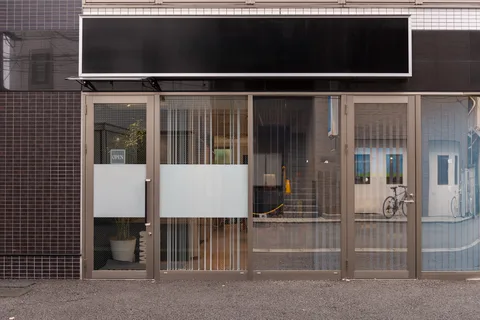

The building stock
Low-rise masonry and metal-frame commercial buildings, warehouses and agricultural processing facilities spread across a flat grid.
Auto-oriented arterial strip corridors and suburban commercial nodes surrounding a modest downtown core.
What the weather and the ground do here
Severe convective storm country; hail, straight-line wind and tornado exposure dominate the loss picture.
Age here does not run as a gradient. A block in the old core holds survivor masonry with load-bearing walls and openings cut for a trade that has moved on; further out, the ordinary rentable building is a light rigid frame with a metal roof screwed or seamed to it and a slab underneath. Those are not early and late versions of one idea, and an underwriter cannot reason from either to the other. So the questions run to the assembly rather than to the year: what the roof covering is made of and how much life its coating has left, how a wide door is held shut when the wind is across the opening rather than into it, what the grit in that wind has been doing to the sealant joints and the glazing since anyone last looked, and which side of the lease owns the skin of the building as distinct from the frame inside it. Wind literacy is unusually available in this city — the survey of what that storm did fed, in part, the scale these events are still graded on, and the engineering work that grew out of it stayed here — but availability is not application, and whether any of it reached your building is a question about your building.
Read as pairs. A loss run with nothing in it can mean a building that held or a building the track missed, so what has to be described is the assembly rather than the record. Hail that dents a metal roof panel and fractures its coating leaves a roof still keeping water out, which turns the claim into an argument over whether a dent counts as damage at all. A wide door standing open on the windward face lets wind inside the building, where it works against the roof and walls from a side nobody designed them to be pushed from. Grit carried in that wind takes the surface off sealant joints and glazing continuously rather than in an event, which is a maintenance interval rather than a loss. Flat ground with nowhere to send water turns a parking field into the basin it drains toward, so the loss is measured by how long water stood against the slab rather than how fast it arrived. And a bay whose custom arrives and leaves with the year is in use for part of it and not for the rest, a condition an owner has to record because nothing else in the transaction records it. A closing line puts survival and performance on opposite sides of the same question.
What a Lubbock file is tempted to take on trust
What an owner is left to prove
Survival is a fact about the track as much as about the building
What we checked locally
What was run here was a phrase search of the code this city publishes, for the terms a vacant-building or dangerous-structure duty would have to use somewhere in its own text. It came back with nothing under either. The reason that is worth writing down rather than skipping is the control: the same search, run the same way against the same corpus, finds an ordinary occupancy term readily and returns a long run of places the code uses it — so the instrument demonstrably reaches the code, and an empty result is not the search quietly failing to run. That establishes something about the search and not a verdict about the city. A phrase search finds phrases, and a duty written in other words, or held somewhere other than the published code, would not answer to it. Where the point is load-bearing on a deal, put it to the city and to your own counsel rather than to this page.
What Texas law adds on top
The wording that decides an empty-space claim is in the form you already signed, and in Lubbock the difficulty is that emptiness is frequently scheduled. A service suite or a retail bay drawing its custom from the university district loses that custom in a predictable stretch of the year and gets it back. Other space here runs to a season rather than to a month, busy while the work is on and quiet once it is finished, with the same tenant on the same lease throughout. None of that looks like trouble from the street and none of it feels like a change in the risk, because it is the year doing what the year does here. The form is not reading the year, though. It is reading whether business is being carried on inside the space, and a stretch the whole town treats as ordinary is still a stretch as far as the wording is concerned.
We did not find a standard fire policy printed in Texas’s insurance code. That is a limit on what we searched, not a finding that no such provision exists — so treat your own policy’s vacancy condition as the operative text, and read it before a unit goes dark between tenants.
The statute and the exact words where there are any, together with whatever the research recorded, are on the Texas page.
What a building costs to insure across the whole state is covered in How Much Does Commercial Property Insurance Cost in Texas?
By what you own in Lubbock
Retail sits mostly on the newer side of that break: masonry-veneer centers and freestanding pads out along the loop, on Milwaukee Avenue and through the far-south runs, with a thinner band of original storefront frontage left on Broadway and the downtown avenues. Office is rarely a tower and often a bay — small professional and medical suites leased near the university and its health sciences campus, where what a tenant does inside the suite matters more to the file than the address does. Mixed use is the newest thing in the city and the least like the rest of it, ground-floor commercial under residential floors in North Overton, which puts a habitational component, a shared roof and a separation question into buildings whose neighbors carry none of those.
The coverage lines behind all of this
Each line below has a job that does not change with the weather: what it will pay for, on what basis it pays, and what it is willing to treat as damage in the first place. That last one is where a file from this city turns more often than owners expect, which makes it worth knowing how each is written before a loss makes it urgent:
Lubbock commercial property insurance FAQs
My building came through untouched. Is a quiet loss history worth anything?
It is worth something, and it is worth less than an owner hopes. A commercial building standing here after the storm that rewrote this city may have held, or may simply have sat outside the track it cut — and nothing in a loss run separates those. The file that places well is the one describing what the building is made of and how the pieces are fastened together, because that describes performance. A record of not having been hit describes geography.
Hail dented my metal roof and nothing has leaked. Is that damage or appearance?
The dents themselves may be the loss, which is why this argument starts early rather than at the leak. A steel panel takes an impact by deforming, and what breaks first is the coating that keeps the steel from rusting — so a roof still shedding water is on a shorter clock than it was the day before. Your form decides whether that reads as damage or as appearance, and forms differ. Get the panel profile, the coating and the fastening system into the file while the marks are fresh.
Grit in the wind has hazed my glazing and opened the sealant joints. Who pays?
You do, most likely, and the useful move is to stop treating it as a loss. Blowing dust works on a building continuously rather than in an event, and a property form is built around a sudden identifiable occurrence rather than around the slow removal of a surface. What it really changes is your maintenance interval: joints and glazing are consumables in this climate, on a shorter cycle than the same building would run anywhere sheltered. The exposure worth insuring is what gets in once a joint has failed, not the joint.
No river runs through this city. Where would a water loss even come from?
From ground that refuses to take it away. This is a flat high-plains surface with no through-channel, so rain falling faster than the soil can absorb it collects in shallow basins and low draws instead of running off somewhere else. A parking field graded to drain toward one corner becomes that basin, and a storm system with nowhere to discharge backs up into whatever sits lowest. Duration is what does the damage here rather than velocity, for the reason given above, and that changes what is worth photographing.
My tenants near the campus go quiet for a stretch every year. Is that vacancy?
It can be, and the fact that everyone expects it changes nothing about the wording. A space that empties on a calendar is still a space nobody is working in, and the condition in your form is reading use rather than the reason for it. What makes this awkward locally is that a seasonal lull looks like the year behaving normally, so no date gets written down and nobody treats it as a change. Keep your own record of which weeks a space was genuinely occupied. Nothing else in the transaction is keeping one.
My tenant runs with the overhead door open all day. Why would that reach me?
Because the door is part of your envelope, and its failure is a structural event rather than a tenant inconvenience. A large opening on the windward face lets pressure inside the building, and once it is inside it pushes up on the roof and out on the walls at the same moment the wind outside is pulling on them. Light frames are engineered around that opening staying shut. Who maintains the door, who is meant to close it in weather, and what condition its hardware is in are owner questions written into a lease.
Sources
Below is a state record rather than a municipal one. The department that regulates insurers in Texas keeps a public register of who holds a license to place coverage here, and that register is the authority standing behind the licensing statement on this page:
- Texas Department of Insurance — the Texas regulator, and where to verify any producer’s license
What would a real test do to your Lubbock building?
The facts that matter are the ones a loss run does not contain: what the roof covering is made of and what its coating has left, how the large openings are held shut in weather, where the site puts its water when there is nowhere to send it, and which stretches of the year the space is genuinely being used. Bring those and the hard part of the placement is identified before anybody quotes anything.