
Lessors risk insurance by state
Lessors Risk Insurance in Minnesota
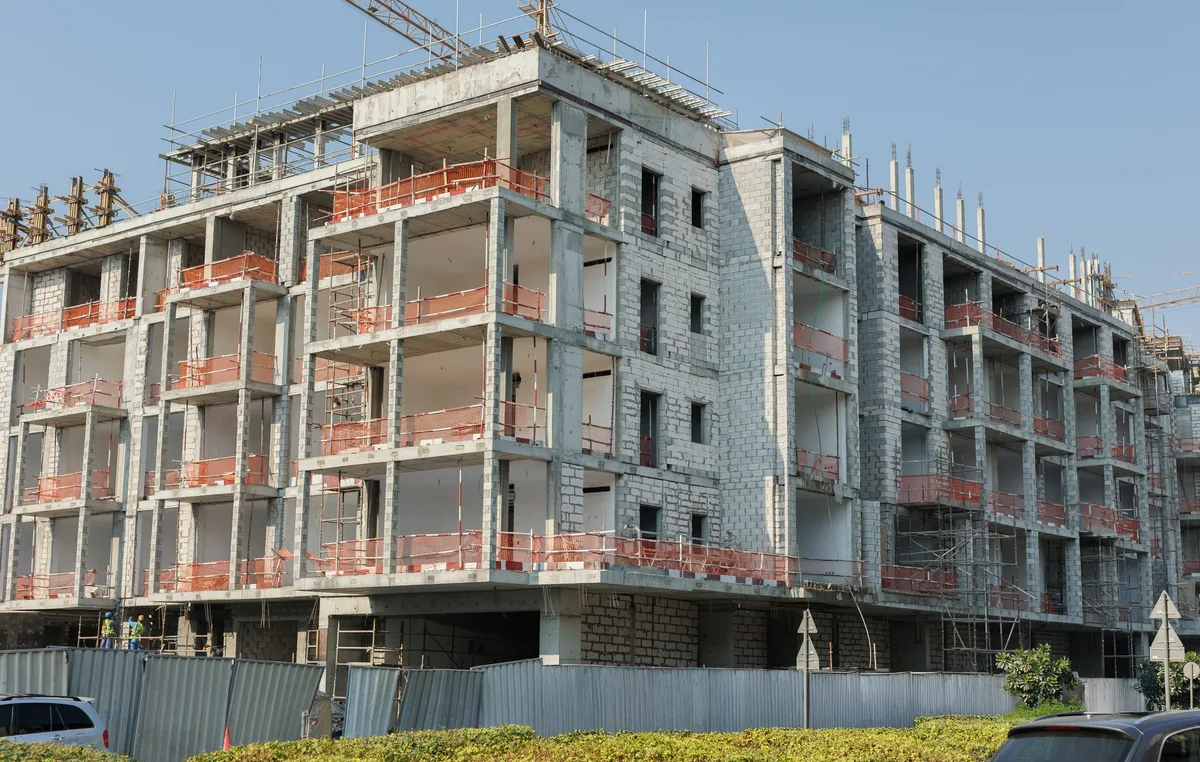
Minnesota tests a leased building from both directions in the same calendar: a long freeze that finds every line nobody insulated and every low-slope roof nobody drained, then a convective season that runs hail and straight-line wind across those same rooftops. The stock absorbing it is unusually varied — downtown retail and office floors reached by enclosed skyway rather than off the sidewalk, river-district warehouse and grain-era buildings recut into leasable space, and service and trade property strung out along the highway corridors. What the state itself puts in writing about an empty building is set out below, and it is the sentence owners here are least likely to have read.

What Minnesota law says
The vacancy provision
Minnesota prints a standard fire policy in its own code, and that policy
carries a vacancy condition. The words that matter are these — the
provision suspends coverage
while the described premises, whether intended for occupancy by owner or tenant, are vacant or unoccupied beyond a period of 60 consecutive days
.
The words quoted above ask a single question about your property — is anybody in there — and they do not ask why not. That is harder to answer in Minnesota than it sounds, because leased space here tends to empty in pieces rather than all at once. A tenant gives back the rear of a shell, the front keeps trading, and you are now holding an unlet volume with water lines running through it into a Minnesota winter. That moment starts a clock in the statute and another in the building, and only the statutory one is written down anywhere: the provision decides what your policy will do about a loss, while the heating plant decides whether there is a building left to argue over, and the cold has never once waited for the wording to run. So treat the day a space comes back to you as the day both conversations open. Tell your broker what is genuinely out of use, and settle at the same time who is keeping heat in it, who walks it, and what is supposed to happen when the power drops in a cold snap.
Source: Minn. Stat. § 65A.01, subd. 3
If the standard market declines the building
Minnesota maintains a residual-market mechanism for property that cannot be placed conventionally: Minnesota FAIR Plan, Minn. Stat. §§ 65A.31 to 65A.42.
Minnesota’s insurance regulator is the Minnesota Department of Commerce, which is where to verify any producer’s license before you buy.
A matching panel for a commercial building leased to tenants in Minnesota. Every item on the left is something that genuinely happens to a building in this state; set opposite it on the right is what an owner has to be able to answer when it does. A suite handed back while the rest of the shell keeps trading is set against whose duty the heat was and where that duty is recorded. A water line letting go in the unlet end is set against whether heat was kept on or the system was drained down. Drifted snow loading a long warehouse span is set against what the property form calls collapse and at what point it says so. Ice damming at the edge of a low-slope roof is set against whether water entering that way is a covered cause of loss or a maintenance argument. Hail off a summer storm line crossing a membrane is set against how the roof is valued at the moment it gets replaced. Rent that stops while the shell is dried out is set against whether the rents limit was ever built from the actual rent roll. A note beneath the panel records that a heating or cooling plant failure is answered by equipment breakdown coverage instead.
What Minnesota actually does to it
What you must be able to answer
A boiler or chiller failure needs equipment breakdown coverage.
Where we write in Minnesota
We write lessors risk across Minnesota statewide. What changes building to building here is use, construction and tenancy rather than the municipal line the building sits inside — so start with the property type, or send the building and we will read it against the wording above.
By property type
What answers each of these in the policy
The exposures above are Minnesota law and Minnesota geography. These are the coverage lines that respond to them, explained without the state attached:
- Business Income & Loss of Rents
- Commercial Property
- General Liability
- Commercial Umbrella
- Tenant Discrimination
What all of that costs in Minnesota, and which of the drivers you control: How Much Does Commercial Property Insurance Cost in Minnesota?
Minnesota lessors risk insurance FAQs
Half my building is let and the other half is dark. Where does that leave the vacancy condition?
Exposed on the dark half. The words quoted above are written about the described premises, not about your rent roll, so a shell that is partly trading and partly idle is precisely the file an adjuster reads slowly. Do not assume a paying tenant at the front carries the empty rear. Tell your broker exactly which space is out of use, ask what your own form says about a partly occupied building, and get the endorsement position in writing before that end goes through a winter.
What does an insurer expect me to do about heat in space nobody is renting?
Keep it on, or drain the system down, and be able to prove which you chose. Property wordings routinely cut off freeze losses in space nobody occupies unless heat was maintained or the water was shut off and drained, and a Minnesota winter turns that condition from boilerplate into the entire claim. Settle it in the fall: who holds the utility account for unlet space, who walks the building and at what interval, and what is supposed to happen the night the power goes out. Put the answers on paper.
Water is coming in where ice dams at the roof edge. Who owns that problem?
You do, as the building owner, and whether the policy shares it turns on how the water got in and what condition the roof was already in. Ice damming builds slowly and leaves a visible history, so an insurer seeing no record of clearing, insulation work or drainage repair will read the damage as deterioration rather than as a sudden event. Keep the maintenance file current. Then ask your broker specifically how your form handles water entering beneath an ice buildup, because that wording varies more than owners expect.
Hail went through my roof in a summer storm. What happens at renewal?
Plan for both halves of it. The valuation clause comes first: a great many commercial forms now settle a hail-damaged roof on an actual cash value or scheduled basis rather than at replacement cost, and that term is decided at binding rather than at the loss. Appetite comes next, because repeated storm damage on one shell can cost you the standard market, and the residual property mechanism cited on this page is what stands behind you if it does. Read the roof clause before renewal, not after.
If a Minnesota building is a total loss, does state law change how it settles?
Minnesota carries a valued policy law and it is cited in the Sources block below, but understand what kind of rule it is. It governs settlement, not coverage: it speaks to what gets paid on a covered total loss against the amount the building was insured for, and it says nothing about whether the cause of loss was covered or about the vacancy condition quoted above. Whether it reaches your building and your loss belongs to the section itself, so read it and have your broker apply it to your schedule.
Minnesota has no department of insurance. Which office licenses the people selling me this policy?
The Minnesota Department of Commerce, which regulates insurance here alongside the other industries it licenses rather than through a standalone insurance department. It licenses the companies writing in the state and the producers selling their policies, it publishes the lookup you ought to run on anybody quoting you, ourselves included, and it receives complaints against an admitted company. The authority list at the foot of this page carries the address. Save it while nothing is going wrong, because that is not when you will want to go hunting.
Sources
Nothing on this page asks you to take our reading of Minnesota law on trust — here is the material it was built from, in the state’s own words:
- Minn. Stat. § 65A.01, subd. 3 — the vacancy provision quoted above, in Minnesota’s own statutory text
- Minnesota — the state’s own source for the residual-market mechanism — the residual market named above, where the standard market declines a building
- Minnesota Department of Commerce — the state regulator named above, and where to verify any producer’s license
- Minn. Stat. § 65A.08, subd. 2 — Minnesota’s valued policy law, which governs how a total loss settles rather than what is covered
Which part of your Minnesota building is sitting empty?
Send the address, what your tenants actually do in the space, how the roof is built, and which part is unlet this winter along with how that part is being kept warm. What comes back is an honest read on the placement: the wordings we would push on, and what is still missing before anyone can bind it.