Commercial Property Insurance in Worcester, Massachusetts
What gets leased in Worcester is often not a building but a works — brick structures added on to one another as an operation grew, sharing walls, a yard, and in places one service running through all of them. An underwriter opening that file starts on something the address cannot answer: where one insured building stops and the next one starts. The roof load, the low ground and the floor that emptied last spring all hang off how that gets settled.
Nate Jones is a CPCU-designated insurance broker and the founder of Wexford Insurance, LLC and Lessors Risk Guard Insurance. He places lessors risk and
commercial property coverage for owners who lease buildings to commercial tenants,
through a specialty panel writing in 48 states.
Reach him through the quote form or call 317-942-0549.
Last updated · Reviewed by Nate Jones, CPCU
The building stock
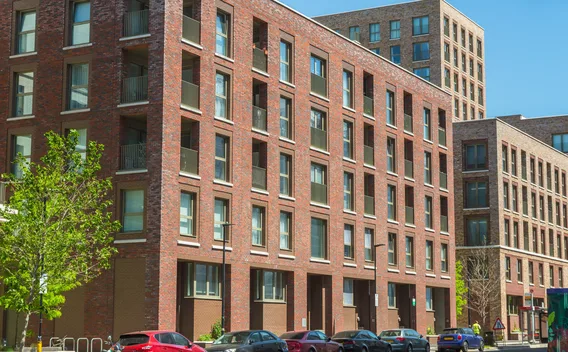
Dense pre-war brick mill and masonry downtown stock, much of it converted to office, retail and mixed commercial use.
Compact hilly downtown core with older commercial corridors, mill districts, and suburban-style retail toward the periphery.
What the weather and the ground do here
Northeast snow and ice loading, nor’easter wind, and fire exposure in older mill and party-wall construction.
Ownership at that scale changes what a submission is about. A single address is read structure by structure; a works has to be read as a site — which roofs were recovered in the same season, whether fire can travel through a connector or a common attic, whether one heating plant or one sprinkler main serves structures otherwise independent, and which parts of the lot hold tenants this year. The modest brick corner blocks downtown pose the opposite problem: they are self-contained, and almost everything that decides them happens at the street — the front, the frontage, and whoever is trading behind it. Plenty of owners hold both kinds, and only one of them can be underwritten in an afternoon.
Five conditions that come with a Worcester commercial property, each set beside where it lands on an insurance program. Structures joined as the operation grew go with the question of where your form draws the edge of a single building. Sleet settling into a deep snowpack goes with roof load being carried on weight rather than on anything visible from the yard. Low ground the hills drain toward goes with whether backed-up water is a peril you bought. A conversion still under way goes with occupancy classes changing inside the policy term. One emptied structure among let ones goes with unoccupancy wording tested structure by structure. A closing line records that weight rather than depth is what a roof here carries.
What a Worcester site hands the owner
Where it lands on the placement
Structures joined as the operation grew, under one deed
Where your form draws the edge of a single building
Sleet settling into a snowpack that is already deep
Roof load carried on weight, not on what you can see
Low ground the surrounding hills drain toward by design
Whether backed-up water is a peril you actually bought
A conversion still under way while tenants trade around it
Occupancy classes changing inside the policy term
One structure on the lot emptied, the rest still let
The unoccupancy wording tested structure by structure
Weight rather than depth is what a roof here is carrying.
Where a joined mill site stops behaving like one building
The local law that binds you
Both duties quoted below are registration duties, and registration behaves differently from a maintenance rule. It produces a dated public record with a responsible name on it, held by the city rather than by you. That record is the cheapest evidence you will ever have that somebody was managing the property, and it is also the first thing pulled by anyone who suspects nobody was. The awkward part on a Worcester site is that the trigger for one register can arrive while an owner is still thinking about the other: a floor leaves commercial use for residential letting, or a structure at the back of the lot stops being used while the front stays busy. Neither announces itself.
Registration of abandoned and/or foreclosed properties
all owners of abandoned and/or foreclosed properties, including lenders, trustees, and service companies to register such properties
The duty is stated on the City’s own page, but the codified provision could not be located — so it cannot be cited chapter and verse here, and its commercial reach is unestablished.
owners of all rental properties to register each property within the City. All rental properties must be registered annually to provide up-to-date owner and property manager contact information.
Whether this registry covers commercial property is unconfirmed. A secondary source claims it reaches commercial and industrial property; that claim is uncorroborated and is not carried here.
A municipal register turns on what a property is doing. The Commonwealth reaches something narrower and harder to see: the words inside your own fire policy that decide whether it still responds once part of the property stops being used. Those words are fixed rather than drafted afresh by each insurer, so an owner who reads them once has largely read them for the market. What is left to argue here is where they draw their edges. Wording written around an unused building assumes there is an obvious building to point at, and on a site assembled in stages that is exactly what is missing. Your site plan tells you where it lands.
Massachusetts prints a vacancy provision in its own code, and it runs on the
building’s occupancy rather than on your conduct.
The statute and the exact words where there are any, together with whatever the
research recorded, are on the
Massachusetts page.
The three types below sit unusually close together here, and frequently inside one envelope. Mixed use is mostly what conversion produced: a habitational component let at market rate above floors still doing commercial work, in a structure drawn for neither. Retail is a storefront in an older block — the Canal District triangle running from Kelley Square down Green Street and Harding Street, the restaurant corridor on Shrewsbury Street, the corner blocks around Water and Harrison. Office is a downtown floor plate near Front Street, or a reworked mill floor with professional tenants in it. An owner of a mill site can be all three of those landlords at once, under one era of roofing.
Geography decides what happens to the building; the lines below decide what happens to you afterward, and a coverage part does not change its wording at the county line. Each is set out on its own terms — what it covers, where its edge falls, and the join where owners assume one line picks up where another stops:
My property is a group of brick buildings on one lot. How many buildings is that for insurance?
It is whatever your form says it is, and that is worth settling before a loss rather than during one. Structures added on as a works expanded can share a wall, a stair tower, an enclosed connector, a sprinkler main or a heating plant, so the boundary an underwriter needs is not obvious from the deed. It decides how the deductible applies, how limits sit against each structure, and how far an unused floor reaches. Get the answer written down while everything is still leased.
The snow on my roof is no deeper than it was, but it rained overnight. Is that a problem?
That sequence is what actually brings roofs down here, and it is the one that looks like nothing at all. Sleet or freezing rain landing on a settled pack adds no depth; it saturates what is already up there and multiplies the weight. Flat and low-pitched decks, the shape sitting over most industrial floor plates, are the ones at greatest risk of buckling under that accumulation, and this city and its neighbors have had close calls on it. Judge the roof by weight, not by how deep the snow looks.
Why would an underwriter ask what my lowest floor drains into?
Because of where the mills were put. They went on the low ground for water power, the hills around the valley still deliver runoff to that same ground, and stormwater and sanitary flow travel together in this part of the system. When wet weather exceeds what the system can carry, the overflow goes out to the river — and the same overload comes back up through fixtures and floor drains in the lowest occupied space. Water arriving that way is a grant an owner has to buy, not part of the standard property wording.
Part of my mill is finished residential letting and part of it is raw floor. How is that read?
As more than one risk under one roofline, which is the ordinary Worcester version of the question. Conversion here was unlocked by a change in what these areas are permitted to hold, so floors that could once only be industrial can now carry residents — and that works through a property at its own pace. Expect questions about the fire separation between the habitational component and everything else, who controls the unfinished floors, whether hot work is running, and what the sprinkler protection reaches today.
The street layout outside my storefront was rebuilt. Is that an insurance question?
It is a rent question first, and rent is insurable. Reworking the junction at the head of the Canal District changed how traffic moves through it, and with that what a ground-floor frontage is worth to the tenant standing behind it. If a lease was signed against the old pattern and the tenant now wants out, you are holding a re-letting rather than a physical loss. Business income responds to damage, not to a change in foot traffic, and rent that stops for a non-physical reason is on you.
One building on my lot is empty and the others are leased. What happens to my coverage?
This is where owners here are most often caught. The unoccupancy wording in your policy is written around a building, and on a joined site it is genuinely unclear which structure that word picks out — the empty one, the run it is attached to, or the whole property under the deed. Massachusetts fixes the wording; your site plan decides where it bites. Speak to your broker before the space goes dark, and keep dated evidence of what you secured.
Sources
Each passage above is attributed to the body that published it, and the links go to those bodies rather than to any copy kept on this page:
Published by the City of Worcester — the Registration of abandoned and/or foreclosed properties duty quoted above, in the municipality’s own words
Division of Insurance — the Massachusetts regulator, and where to verify any producer’s license
How many buildings is your Worcester property?
A site plan and a note of what each structure is doing this year gets us further than a full submission does. From that we can say which market will look at the property, whether it places as one risk or several, and what the wording will do the first time part of it goes quiet.