Commercial Property Insurance in Chicago, Illinois
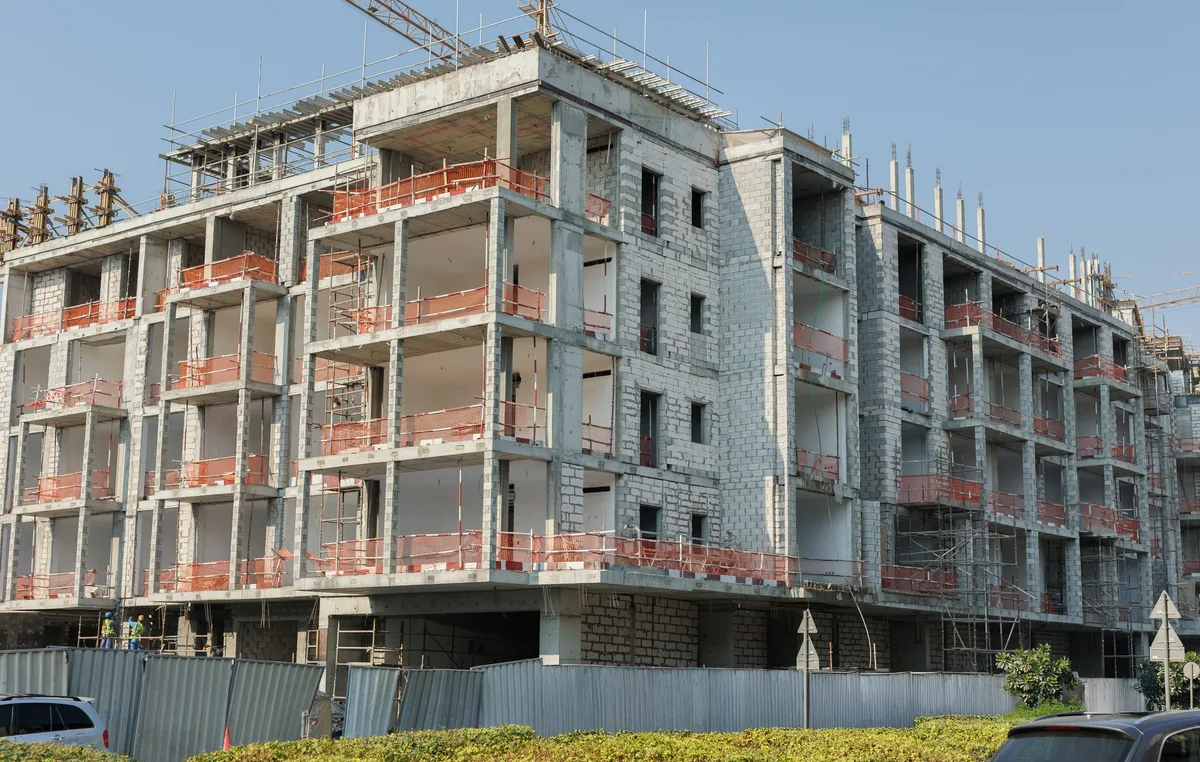
The question that moves a Chicago file is usually not the roof — it is the wall, and what has been done to that wall since it went up. Repointing history, parapet condition and whatever steel is buried behind the face tell an underwriter more here than the year on the deed. The duties further down come with the building whatever the lease says. And the wall is the one part of a building here that can injure somebody who never came inside it, which is why what you can show about it is read differently from anything else you hold.
Nate Jones is a CPCU-designated insurance broker and the founder of Wexford Insurance, LLC and Lessors Risk Guard Insurance. He places lessors risk and
commercial property coverage for owners who lease buildings to commercial tenants,
through a specialty panel writing in 48 states.
Reach him through the quote form or call 317-942-0549.
Last updated · Reviewed by Nate Jones, CPCU
The building stock
Masonry loft, warehouse and courtyard commercial stock plus a dense Loop core of steel-frame and terra cotta towers.
Dominant downtown Loop core with dense gridded neighborhood commercial streets and outlying industrial corridors.
What the weather and the ground do here
Freeze-thaw facade deterioration, lake-effect winter loading, and severe thunderstorm wind and hail exposure.
Put those together and the deterioration is a chemistry problem before it is a weather problem. Older walls here were laid up in a soft lime mortar, and repointing with something harder and less breathable stops the joint doing its job — moisture leaves through the fired face of the brick instead, and the freeze cycle takes that face off. Parapets go first, wetted from both sides and from above. From above is the part owners look at least. A roof enclosed by parapets on every side drains inward, through outlets and pipework running down inside the heated building, so one blocked or frozen outlet does not spill over an eave the way it would on a pitched roof: the water stands, works into the joint at the base of the parapet, and turns up inside a floor you are letting. Snow drifting against a taller neighbor’s wall sits there for the season and puts all of that in one place.
An accessibility description of the panel: two stacked columns, read across in pairs. On the left, four conditions a Chicago owner inherits with the building — brick repointed in a mortar harder than itself, steel corroding out of sight behind the facade, owner duties that survive every change of tenant, and a leased floor sitting idle between build-outs. On the right, the insurance consequence each one produces, in the same order.
What the city and the wall hand you
Where it lands on the insurance side
Soft brick repointed with a harder modern mortar
The condition an underwriter prices first
Steel buried behind the facade, quietly expanding
A structural repair on your side of the lease
Owner duties that outlive every tenancy
Paper you can produce after the loss
A leased floor sitting idle between build-outs
What your policy does once it goes dark
Repair history is underwriting evidence long before it is compliance.
How a Chicago wall becomes an insurance question.
The local law that binds you
Both passages below are addressed to the owner of the building, and neither is an insurance requirement — which is precisely why they reach a claim. Each generates paper: work done or deferred, filings made or missed. When masonry comes off a wall above a public sidewalk, that paper is the first thing anyone asks to see, and a gap in it is argued against the owner rather than the occupant. The awkward part is where the paper lives, because almost none of it is generated by you. A repointing job survives as an invoice in a contractor’s books and a photograph on a foreman’s phone; a permit sits with the city under an address somebody may have entered more than one way. All of that can be retrieved on an ordinary Tuesday and none of it in the week after your building is photographed with brick on the ground in front of it.
Maintenance of Exterior Walls and Enclosures — Critical Examinations and Ongoing Inspection and Repair Program
13-196-033 ... (a) The owner of every building 80 feet or more in height above grade shall, at intervals designated in rules and regulations: (1) arrange for periodic critical examinations of the building; and (2) submit the critical examination report to the commissioner. ... (d) The owner shall perform the necessary repairs and remedial work set forth in the critical examination report.
The critical-examination and ongoing-inspection duties reach buildings 80 feet or more in height. A separate subsection, § 13-196-037(a), places a maintenance duty on the owner of every building regardless of height, so a shorter building is not unregulated — the two duties are distinct and the height threshold governs only the first.
(a) (1) The owner of any building that has become vacant shall within 30 days after the building becomes vacant or within 30 days after assuming ownership of the building, whichever is later, file a registration statement for each such building with the department of buildings ... The registration shall remain valid for six months from the date of registration. The owner shall be required to renew the registration for successive six-month periods as long as the building remains vacant.
Emptiness is ordinary in a city with this much stock mid-transition — a corridor building between industrial occupants, a converted upper floor waiting on a build-out, a storefront on a gridded neighborhood street dark from one season to the next. Chicago tells you what to do about the building when that happens, in the words quoted above. Something quieter decides the rest of it: what your own policy form is entitled to do about the same fact, in wording you already signed. The gap is rarely short, either. A storefront turning over from one trade to the next is re-cut for it, so how long it stands empty is set by drawings, permits and a contractor’s calendar rather than by whether anybody wants it. Your form does not measure the reason, which is why the reason is worth recording as it happens.
We did not find a standard fire policy printed in Illinois’s insurance
code. That is a limit on what we searched, not a finding that no such
provision exists — so treat your own policy’s vacancy condition as the
operative text, and read it before a unit goes dark between tenants.
The statute and the exact words where there are any, together with whatever the
research recorded, are on the
Illinois page.
Chicago holds all three of the types below, and rarely keeps them cleanly separated inside one building. What each changes is who else is standing inside your risk. Retail puts a stranger on a public surface at your door in every month of the year. Office leaves you holding the plant, and an interior somebody else installed that a lease may already have made yours. Mixed use puts people asleep behind the same wall a business trades in front of.
Those are the exposures the city supplies. The pages below are about the instruments that answer them, wherever the building happens to stand. One of them does more work on this stock than owners expect: the line that meets the extra cost of putting a wall back the way the current code insists rather than the way it was built:
Why would an underwriter ask how my building was repointed?
Because the repair can do more damage than the weather. Older brick here was laid in a soft lime mortar, and repointing it with a harder, less breathable one closes the joint the wall used to dry through. Moisture leaves through the face of the brick instead, and the freeze cycle spalls that face off. The wall loses section from the outside in, and the parapet shows it first.
There is rust staining above my storefront windows. Is that cosmetic?
Usually it is the opposite of cosmetic. Steel lintels and shelf angles sit inside the wall carrying masonry over each opening, and when water reaches them they corrode and swell. That expansion lifts the courses above and cracks the wall around the opening. Rust weeping down the face is that process announcing itself, and the flashing meant to keep water off the steel has usually failed already.
I own a converted loft with retail underneath. Which type page applies?
Read the mixed-use page first, then retail. Once a building carries a habitational component the fire-separation question, the tenant-caused-loss question and the set of markets willing to write it all change, even where the ground floor looks like ordinary storefront retail. Chicago has a great deal of this stock because high-ceiling printing and warehouse buildings converted well. The conversion is the underwriting fact, not the address.
My whole building is leased to one industrial tenant. What if they leave?
A single-occupant building empties completely rather than partially, and that is the case owners get caught by. The city has its own expectation for a building in that state, quoted above with its source. Your policy has a separate and much less visible response to the same fact, written into the form rather than the code. Tell your broker while the space is still occupied.
Does a Chicago landmark district designation change my insurance?
It changes the repair, and the repair is what the policy pays for. Inside a designated district the facade you put back after a loss is the one the designation protects, so materials and detailing are not a matter of choosing the nearest available match. That is an ordinance-or-law and valuation conversation rather than a rate conversation, and it belongs in the limit-setting.
I bought the building from someone else. Does their history follow me?
The duties quoted above attach to whoever owns the building now, so yes. Deferred repointing, an examination cycle nobody kept up with, a filing that was never made — none of it resets at closing, and all of it lands in your file rather than the seller’s. Ask for the reports and the repair invoices the same way you would ask for the rent roll.
Sources
Every municipal passage quoted above links to the text it was taken from, which is the city’s published code itself and not a description of it. The last entry is the Illinois insurance department, which is where a license is checked rather than taken on trust:
Send the address, the occupancy and how the lease splits the repair obligations. Add whatever exists on the wall itself: when it was last repointed and by whom, any engineer’s report together with the items still outstanding on it, and current photographs instead of the ones sitting in the purchase file. What comes back is a reply about where a building like this places and which document gets asked for first.