Where a hurricane comes ashore tells you less about a Tampa building than the shape of the bay does. Tampa Bay is shallow and it narrows as it runs inland, so water piles into it from systems whose centers pass well up the coast — the highest water in the bay’s longest tide-gauge record arrived exactly that way. Underwriting here starts with that decoupling, and then with a second mechanism that has no weather in it at all.
Nate Jones is a CPCU-designated insurance broker and the founder of Wexford Insurance, LLC and Lessors Risk Guard Insurance. He places lessors risk and
commercial property coverage for owners who lease buildings to commercial tenants,
through a specialty panel writing in 48 states.
Reach him through the quote form or call 317-942-0549.
Last updated · Reviewed by Nate Jones, CPCU
The building stock
Mix of masonry and concrete mid-rise downtown offices, historic brick cigar-factory buildings in Ybor, and low-rise stucco commercial along corridors.
Downtown and channel-district core with extensive suburban strip corridors and outlying office and industrial parks.
What the weather and the ground do here
Hurricane wind and storm surge dominate; flat terrain and heavy rainfall add flood exposure, and the season drives underwriting timing.
Read together, that is not one inventory but three, and they do not answer the same questions. A load-bearing brick shell in Ybor went up for cigar work, which is why the exterior was built against fire and why the floor plates were left long and unobstructed; what fills them now is trade nobody drew those walls around. A stucco corridor bay is a different conversation — cladding, roof edge, storefront glazing and what the parking field does with rain. The purpose-built office district out by the airport is a third: buildings of one construction era, aging on one clock. Expect to be asked about your building rather than about the city.
A paired panel for Tampa, read across in rows. Down the left are the things an owner meets here: surge arriving from a storm whose center came ashore well away, cavities in the rock beneath the county together with the freeze-driven pumping that can set them off, a brick factory shell now holding kitchens and late trade, an office district whose buildings share a single construction era, and space emptied by a repair queue rather than by a lease running out. Down the right, in the same order, is the part of an insurance program that answers each one.
Exposure that comes with the address
The part of the program that answers
Surge from a storm whose center never came ashore here
Surge and flood, bought outside the property form
Cavities in the rock, and a freeze that starts the pumps
Sinkhole and subsidence terms, read before you sign
A brick factory shell now holding kitchens and late trade
What the tenants actually do, priced above the shell
An office district whose buildings share one construction era
Roof, glazing and plant questions asked as a cohort
Space emptied by a repair queue, not by a lease running out
The rent stream, and what the form calls unoccupied
Two of these begin with weather. The rest do not wait for it.
Tampa: the exposure on the left, the instrument that answers it.
The local law that binds you
The duty quoted below is not a commercial owner’s duty, and the scope note under it says precisely whose it is — read that note first. It earns its place here for two reasons. The first is about the block rather than your building: a property standing empty and unattended nearby is an exposure to yours, through fire, forced entry and water that nobody finds for a month, and a public register is where an answerable party for such a property gets named. The second is about you. A city that keeps a register of buildings standing empty has decided that emptiness is a condition worth tracking; your policy reached the same conclusion in its own language, and acts on it.
Registration of Mortgaged Real Property — Foreclosure Registry
This is an ordinance which requires the registration of vacant properties that are in foreclosure or have been foreclosed to register annually with the City of Tampa. See City of Tampa Code of Ordinances 19-133 and 19-135. ... The registration process will require mortgagees to provide the City with the most up to date accurate data and information for contacting a responsible party to bring the property into compliance with this ordinance.
This duty runs to mortgagees rather than to commercial owners generally, and only on vacant property in or after foreclosure.
The wording that decides this sits in your own policy rather than in a rule you can look up once and file, which makes it a question about your paperwork more than about this city. What is a Tampa question is how a building gets there. Space here can stop being used for reasons that have nothing to do with a lease running out — water pushed in at floor level, a fit-out stripped back to the shell, a permit and a contractor queued behind everybody else’s. The building changes state on that schedule, and your policy reads the state of the building rather than the reason for it.
We did not find a standard fire policy printed in Florida’s insurance
code. That is a limit on what we searched, not a finding that no such
provision exists — so treat your own policy’s vacancy condition as the
operative text, and read it before a unit goes dark between tenants.
The statute and the exact words where there are any, together with whatever the
research recorded, are on the
Florida page.
What this city holds makes the three type pages read differently: a stucco retail row on an arterial, a multi-tenant floor plate in a purpose-built office district, and a converted shell with a ground-floor trade and a habitational component over it. Take whichever describes what you own.
Set the geography aside for a moment. Each page below takes one coverage line and explains what it does and where it stops, on a building standing anywhere:
The storm came ashore well up the coast. Why did my building take water?
Because surge here is a property of the bay more than of the track. The shape of the bay described above does the work: a wind field turning over open water can push water in and hold it there while the center of the storm passes well to the north. For a placement that means distance to landfall is a weak proxy for what your ground floor sees. Finished floor elevation, and what stands between you and open water, carry more weight.
Do I actually need to think about sinkholes on a commercial building here?
It is a real mechanism in this county, and the honest version has a limit in it. Ground can fail two ways: the roof of a cavity gives out abruptly, or overburden migrates down into fissures and the surface sags. The slow one is what cracks a slab, racks a door and opens a masonry joint without ever making the news. The documented clustering in this county sat out on agricultural land east of the city rather than in the urban core, and the two should not be read as the same risk.
Why does a hard freeze come up in a conversation about ground movement?
Because the trigger in this county’s best-documented episode was not a storm. A run of freezing nights sent growers to the aquifer to protect their crops, the water table beneath the area was drawn sharply down, and sinkholes and failed wells followed within days. The lesson for an owner is not an agricultural one. Ground movement here can arrive from a chain of events with no weather peril anywhere in it, which is exactly the category a property form handles apart from wind and water.
My Ybor building is a cigar-factory shell with food and drink tenants. What gets asked?
The walls and the occupancy get asked about separately. The brick went up for cigar manufacture, so the exterior was built against fire in a building full of tobacco, and the floors were left long and open because the work needed the span. What sits on those floors now brings ignition sources, cooking exhaust and occupant loads the shell was never drawn around. Expect questions about hood and suppression, about where the fire separations actually run, and about who maintains which of them.
Most of what I own is a suburban office floor plate. What is different about that here?
The district it sits in was purpose-built for offices across a fairly narrow stretch of construction history, which means your neighbors tend to share your envelope: sealed glazing, a low-slope membrane above it, and mechanical plant that reached the end of its service life at roughly the same time as theirs. Underwriting reads that as a cohort rather than as one address. Expect questions on roof age, on what has been replaced since the building went up, and on how much of the plate is let.
Part of a floor is dark while repairs run. Is that vacancy?
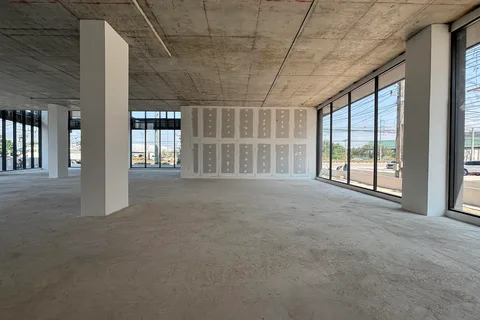
Possibly, and the trigger is worth knowing before it arrives. Vacancy and unoccupancy are defined in the form rather than by how the building feels to walk through, and the clock can start for reasons that have nothing to do with leasing — a space stripped back after water came in, a permit waiting its turn, a contractor booked out for weeks. Tell your broker while the work is still being scoped, and read what your own form says about a building under repair.
Sources
The hazard and ground-condition material above traces to federal and state agency publications, and the municipal duty to the city’s own code. The links go to the originals:
Give us the address, the era the building went up in, the tenants and their trades, and anything that has moved or cracked. We come back with which markets fit and what they will want to see.