Two things work on a Miami building, and only one of them arrives as an event. Wind takes the attention, but the ground under this county is porous limestone, so water reaches slabs and below-grade space on a tidal calendar rather than a storm calendar. A policy answers those two in very different places. One of them can be prepared for on a date somebody announces; the other cannot be prepared for at all, only built for, maintained against and written down. Most of what decides how a building here places is the second kind — the slow condition nobody had to react to, put on paper while it was still ordinary.
Nate Jones is a CPCU-designated insurance broker and the founder of Wexford Insurance, LLC and Lessors Risk Guard Insurance. He places lessors risk and
commercial property coverage for owners who lease buildings to commercial tenants,
through a specialty panel writing in 48 states.
Reach him through the quote form or call 317-942-0549.
Last updated · Reviewed by Nate Jones, CPCU
The building stock
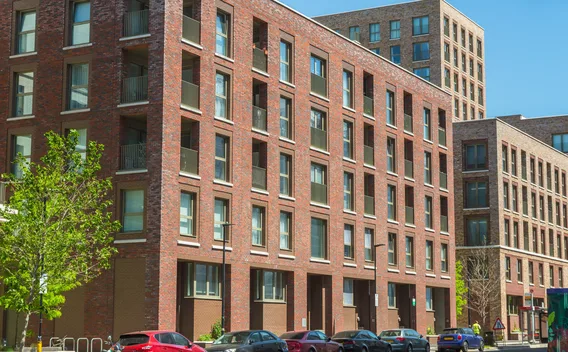
Concrete-frame and masonry commercial stock ranging from older low-rise buildings to modern towers, much of it near the coast.
Dense downtown and Brickell tower districts with commercial corridors and suburban retail spreading inland.
What the weather and the ground do here
Hurricane windstorm, storm surge and flood exposure; salt air accelerates concrete and reinforcement deterioration.
That stock raises one question first: which rule set the building went up under, and which one it would be repaired under. Miami-Dade sits inside Florida’s high-velocity hurricane zone, with its own product approvals for roofs, windows and doors, so a shell built before those rules were folded into one statewide code can be sound and still carry openings no approval would accept today. That is a rebuild-cost question, not an inspection finding. It is also a records question, and that is where buildings here separate from one another. A concrete or masonry shell outlives several generations of everything fixed into it, so the build year an owner quotes usually describes the oldest part of the property and nothing else: a re-roof, a replaced storefront system, a later addition, each arriving under whatever was current in its own year. An approval is a document rather than a property of the wall, and nothing about a sale moves that paperwork into a new owner’s hands unless the buyer asks for it. An owner who cannot produce it is quoted on the older answer, because it is the only one left standing.
A paired panel for Miami. Down the left are five conditions that come with owning commercial property here: water reaching the slab from the ground, openings approved under an older rule set, an inspection calendar imposed by county law, a storefront sitting dark between tenants, and tenant trades that work with heat and solvent. Down the right, in the same order, is what answers each on the insurance side.
What this ground and this county impose
What the coverage does about it
Water arriving through the ground, not off the roof
Flood and water-damage wording, read line by line
Openings approved under an older rule set
Ordinance or law when the county recertifies
An inspection calendar set by county law
Maintenance records the underwriter asks for
A storefront dark between tenants
Loss of rents and the vacancy clause
Tenant trades that work with heat and solvent
Tenant operations in the underwriting file
The left column arrives on its own schedule; the right is purchased.
Each Miami condition on the left, what answers it on the right.
The local law that binds you
What follows is county law, reaching inside the city limits along with the rest of Miami-Dade. It puts a capital calendar on the building that nobody negotiated, arriving on the building’s own clock rather than when reserves are ready, and whether any of it moves to a tenant is a lease question the ordinance does not answer. It also leaves a document that outlives the inspection: what it lists as deferred is in the file if a loss later turns on that element. Two things follow that the text does not say. You engage and pay the professional who writes it, which makes the scope of that engagement the one part of the exercise an owner has a hand in, and an owner commissioning it with months in front of them scopes it differently from one meeting a date. And the position itself is unusual. A building does not ordinarily acquire a written professional opinion of itself until somebody buys it, lends against it or argues about it. Here one exists because a calendar produced it, so a file is accumulating on your property whether or not anything has happened to it.
Building Recertification (structural and electrical recertification of existing buildings)
Under Section 8-11(f) of the Miami-Dade County Code, the owner of a building ... is required to have the building inspected for the purpose of determining the general structural condition of the building and the general condition of its electrical systems ... you must submit a written Recertification Report to the Building Official, prepared by a Florida registered professional engineer or architect
This is Miami-Dade County law rather than a municipal ordinance, so it applies countywide, including inside the city limits. Small buildings are excluded by occupant load and floor area, and single-family homes and duplexes sit outside it entirely.
Empty space is where an owner meets a part of the policy nobody reads at signing, and here it arrives in an ordinary way — a storefront goes dark between tenants while the floors above stay leased. What your policy does at that moment is a state and policy- form question, not a Miami one, and the time to learn the answer is while the space is still occupied. There is a physical half owners notice late. Somebody trading out of a unit does small work no lease ever mentions: moving stock up off a slab before a hard afternoon of rain, saying the rear door has stopped seating in its frame, mentioning that the floor was damp again on Tuesday. All of it reverts to you the day the unit goes dark, which is the day the space stops paying anyone to do it.
We did not find a standard fire policy printed in Florida’s insurance
code. That is a limit on what we searched, not a finding that no such
provision exists — so treat your own policy’s vacancy condition as the
operative text, and read it before a unit goes dark between tenants.
The statute and the exact words where there are any, together with whatever the
research recorded, are on the
Florida page.
Miami holds all three close together — a masonry warehouse shell leased to retail, a tower floor plate, a storefront row with residential above it. What you own decides which conversation you are in. Retail sets your building against a sidewalk and against people who never signed anything with you, so the exposure runs outward from the wall rather than inward. Office makes you the owner of machinery, running to a schedule this climate sets rather than the leasing, and of an interior whose ownership was settled floor by floor in leases signed years apart. Mixed use puts residents in the property, which changes who has to be looked after while a repair runs.
Everything above is Miami. These pages are the other half — what each line of coverage does, whatever ground the building happens to stand on. One of them reads differently on a building in this county: water arriving from the ground is a separate contract rather than a clause in the property form:
Water pushes up through my ground floor on the highest tides. Is that a property claim?
Usually not by itself. The mechanism here is groundwater moving through porous limestone, not rain coming through the roof, and most property forms treat water that rises from the ground as flood or surface water — excluded or sublimited, and a separate placement. Because it recurs on a tidal schedule, repeated wetting also starts to read as a maintenance condition.
Can I pass recertification work through to my tenants?
That is a lease question before it is an insurance one — a net structure may reach the cost, a gross lease will not. Insurance does not pay for it: compliance work on an aging building is maintenance, and no property form pays for maintenance. Ordinance or law coverage responds to a costlier rebuild after a covered loss, not to an order to bring the building current.
What does sitting inside the high-velocity hurricane zone actually change for me?
It is a design and approval regime for this county rather than something you buy, but it reaches you anyway. Submissions ask what the roof, windows and doors are and whether the opening protection carries approval for this zone, and holding that paperwork moves a placement faster. A repair after a loss is done to current rules, which is the gap ordinance or law coverage closes.
My Wynwood building is a converted warehouse with a mural on the wall. How is that handled?
Two things, separately. The shell is older low-rise masonry in a district whose overlay rewards keeping warehouses rather than replacing them, so you are insuring old construction while the area densifies around it. The artwork is the other half: the overlay expects murals or glass treatments on the facades of new work, but a property form values the wall, not the commissioned painting on it.
One tenant does upholstery and another repairs boats on the river. Does that change the placement?
Considerably, and it is an ordinary shape near the river and along the Allapattah trades row. Lessors risk insures your building, but the underwriter is reacting to what happens inside it — hot work, spray finishing and marine repair each raise their own questions about fire separation, where flammables are kept and how a space is left overnight.
The ground floor has been empty for months while the offices above are full. Is the building vacant?
Probably not the whole building, which is less reassuring than it sounds. Vacancy provisions run on the building, on a leased unit, or on a defined share of it, and which one applies is a question about your form rather than about Miami. Tell the carrier while the space is empty, not afterwards.
Sources
The duty quoted above links to the county page that publishes it, and that page is the one to read against your own building rather than any summary of it, this one included. The second entry is Florida’s insurance regulator, where a company’s authority to write here is confirmed:
Code of Miami-Dade County § 8-11(f) — the Building Recertification (structural and electrical recertification of existing buildings) duty quoted above, in the municipality’s own words
Send the address, who occupies each space, and what the ground floor does. Four further details decide more of a Miami file than the rest of the description put together: whether any unit is currently dark and the date its last tenant stopped trading; what is in the openings today and whether you hold the approval paperwork for it; where the building stands in its recertification cycle and whether a report exists with items still open; and what happens on your site when a hard rain lands on it.