
Lessors risk insurance by state
Lessors Risk Insurance in Delaware
Delaware leases out along a single north-south run: office and service floors at the top of the state, roadside retail through the middle of the peninsula, and resort-block storefronts at the bottom that take most of a year’s trade in warm weather and stand quiet through the rest. That last pattern is why an owner here reads the unoccupied-building wording more closely than the size of the state would suggest. What follows is the Delaware law we can source directly, and what it leaves to the policy on your own building.

What Delaware law says
The vacancy provision
We did not find a standard fire policy printed in Delaware’s insurance code. That is a limit on what we searched, not a finding that no such provision exists — so treat your own policy’s vacancy condition as the operative text and read it before a building sits empty.
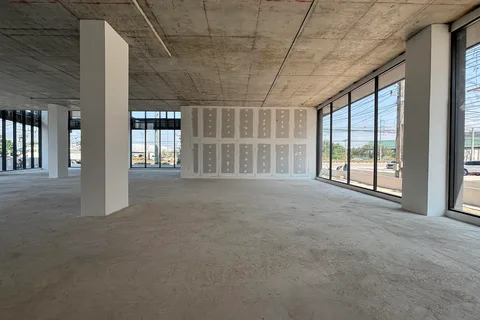
The provision was not found, and that is a report on our search rather than a conclusion about Delaware — so the wording on your own building is the text that decides this. Here it matters for a particular reason: a great deal of leased space in this state goes quiet on the calendar rather than on a lease event. A resort-block storefront closes when the season turns. A service bay off the highway keeps winter hours. An office suite at the northern end sits dark between fit-outs. Wording built around an unoccupied building does not ask why the lights are off, and it does not care that you planned it that way. Read the clause in a month when the building is being worked, then ask your broker what the carrier expects of a space nobody walks through — heat, water shut down or left running, alarms, and who is on the hook for looking.
If the standard market declines the building
Delaware maintains a residual-market mechanism for property that cannot be placed conventionally: Basic Property Protection Plan — industry placement facility, 18 Del. C. §§ 4103-4113.
One more thing a Delaware landlord should know
Delaware’s wind/hail and hurricane deductible notice protection does not reach commercial property at all — the statute defines 'residential property insurance' then expressly excludes commercial forms. A commercial landlord on a CMP or commercial property form receives no statutory notice of a separate hurricane or wind/hail deductible trigger.
Delaware’s insurance regulator is the Delaware Department of Insurance, which is where to verify any producer’s license before you buy.
A paired-row panel for a leased Delaware building. The left column holds questions an owner should raise before binding; the right column holds the document or clause that will actually settle each one. Reading down the left: whether a named storm carries a deductible of its own, how the wording counts a shop that closes for the season, what tidal water does to a ground floor, who is responsible when someone falls in the lot, and how a rents limit was sized on income that arrives unevenly. Reading down the right, in the same order: the wind and hail deductible line on the declarations, what your own wording calls an unoccupied building, flood written on paper of its own, premises liability read together with the lease that assigns the ground, and business income built from a full trading year. A note under the panel records that a building closed on purpose is still judged by the same wording.
Ask about this before you bind
Because this is the thing that decides it
A building closed on purpose is still judged by the same wording.
Where we write in Delaware
We write lessors risk across Delaware statewide. What changes building to building here is use, construction and tenancy rather than the municipal line the building sits inside — so start with the property type, or send the building and we will read it against the wording above.
By property type
What answers each of these in the policy
The exposures above are Delaware law and Delaware geography. These are the coverage lines that respond to them, explained without the state attached:
- Business Income & Loss of Rents
- Commercial Property
- General Liability
- Commercial Umbrella
- Tenant Discrimination
What all of that costs in Delaware, and which of the drivers you control: How Much Does Commercial Property Insurance Cost in Delaware?
Delaware lessors risk insurance FAQs
My declarations show a separate deductible for a named storm. Is that usual on a Delaware building?
It is common enough to expect, and it deserves a closer read than the flat deductible on the rest of the form. Ask what trips it — a declared hurricane, any named system, or wind of a stated strength — and ask what it is worked out against, because a deductible calculated from the insured value of the building lands somewhere very different from the one you are used to. Get that answer in writing before you bind, not at the first claim.
The shops in my building shut down once the season turns. Does that make it vacant?
Your own policy wording decides it, and the time to find out is now. Look at whether the clause measures the whole building or the leased unit, how much of the space has to be in use for the business it was built for, and whether a tenant’s fixtures sitting behind a locked door count as use at all. Then tell your broker which months the building actually trades. A closure that was planned and disclosed is a different conversation from one an adjuster discovers.
Heavy rain and a high tide arrive together and the lot goes under. What pays for that?
Not the commercial property form, where the water reached the building by rising. Surface and tidal water is bought separately, through the federal flood program or a surplus-lines placement written over it. Delaware sits low and flat and much of its commercial ground drains slowly toward tidal water, so being outside a mapped zone answers your lender rather than your risk. Rain driven through a roof the storm has already opened is a different question — put both to your broker early.
How should a rents limit be set when the building earns unevenly across the year?
Build it from a whole trading year rather than a strong month carried outward, then ask honestly how long a repair would take on a resort-block building where trades are booked solid ahead of the season. The measure is the period of restoration written into your policy, not whatever remains on the lease. If the space would miss an entire trading season while it is put back, say so out loud: that is the scenario the limit has to fund, and it is the one owners most often leave short.
Nobody in the standard market will quote an older block I own. What happens then?
There is a state placement facility for property the standard market declines, named above with a link to the act behind it. Treat it as a floor rather than a bargain — narrower terms, priced for a building nobody else wanted. Before you go that route, find out what the decline was really about. An old electrical panel, a roof past its service life or an unresolved fire inspection are all fixable, and a building that clears them often draws standard quotes again at renewal.
Which office in Delaware would hear a complaint about the company insuring my building?
The Delaware Department of Insurance. It licenses the carriers and producers writing commercial property in the state, it takes complaints against admitted carriers, and it is where you confirm that whoever is selling you a policy is licensed to do it — us included. The link sits in the Sources block below. Run that check before money moves rather than after, and ask your broker up front whether the placement is admitted, because a surplus-lines policy sits in a different posture.
Sources
Nothing above rests on our summary of it. Here is the Delaware material itself, so you can read the wording and decide what it means for your building:
- Delaware — the state’s own source for the residual-market mechanism — the residual market named above, where the standard market declines a building
- Delaware Department of Insurance — the state regulator named above, and where to verify any producer’s license
- Delaware — primary source — the state-specific point noted above
Have a Delaware building read against its own wording
Send the address, what the tenants do there, which months the doors are actually open, and what the declarations say about wind. You get back the placement we would build, the clauses worth arguing over, and whatever is still missing.