
Lessors risk insurance by city
Commercial Property Insurance in San Jose, California
What decides a San Jose building is usually a comparison rather than a feature: how one level is built relative to the level sitting on top of it, and what a leased shell is being used for this year rather than what it was drawn to hold. None of that is visible from the front elevation, and none of it stays put. An underwriter opening a file here is trying to establish the building as it stands today, not the building the deed describes.
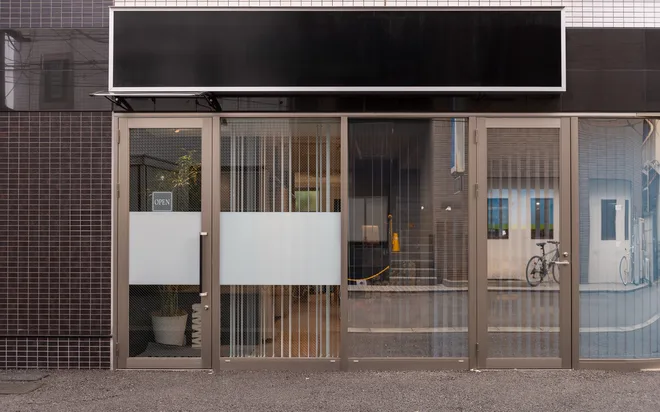

The building stock
Post-war tilt-up and wood-frame commercial buildings with sprawling office and industrial campuses around a smaller older downtown.
Low-rise suburban campus and business-park development with arterial retail corridors around a compact downtown.
What the weather and the ground do here
Active-fault seismic exposure with soft-story and older masonry vulnerability; wildland-urban interface risk along the hills.
A weak level is not a storefront. In the way this city writes the idea down, the level that matters is the one built markedly lighter than the level bearing down on it — a relative condition between neighbors, not a hole in a wall you can photograph from the street. Two things follow from that for an owner. The weak level need not be at the sidewalk at all, and on a site that falls away it can be a below-grade level that emerges above ground at one corner only. And the age line runs later than the phrase “older building” suggests, so a building that went up well after the era people picture is not outside the vintage conversation on appearances alone. What gets asked here, therefore, is rarely how old it is. It is what the framing does level to level, whether anyone has ever put an engineer on it, and what the permit file shows was done and when. The buildings that place easily are not the young ones; they are the ones whose owners can produce that answer without going to look.
Each condition set out here is followed by what it turns into once somebody has to price the building. A level built lighter than the one above it becomes a question about framing read level by level rather than about the front elevation. An exemption granted long ago for what a building was being used for becomes a status that a change of tenant can quietly unsettle. A shell let to whichever process arrives becomes an occupancy imported by the lease rather than fixed by the structure. A tenant fit-out that reverts to the owner at the end of a term becomes an insurable value that moves on a date nobody re-rates. Ground at the low northern end of the city becomes a water question with nothing to do with shaking. And a suite standing full of somebody else’s equipment while no business is carried on in it becomes the hardest kind of empty to describe honestly. A closing note records that the building an owner describes and the building a form is asking about are seldom the same object.
Conditions a walk-through does not settle
What has to be established instead
The building described and the building asked about seldom match.
What we checked locally
The instrument we read is the seismic retrofit chapter the City Council adopted for wood-frame buildings with a weak level, and we read the codified text rather than a summary of it. Its own definition of a covered building is where a commercial owner drops out: alongside the framing test and the vintage bound, that definition requires the building to contain residential units above a stated minimum, and a shell let entirely to commercial tenants cannot satisfy it. The retrofit obligation in that chapter is therefore not one a purely commercial owner carries. Two things sit beside that finding and neither collapses into it. The same definition has a second limb — an owner who is sent notification or screening instructions is inside the process until the building is screened out — so a letter can create a task where the retrofit obligation itself never attaches. And the effective date attached to the chapter has been moved since Council adopted it, while the City’s own program pages refused every automated read we attempted, so the current calendar is a question for the City and not one this page settles. Where a building of yours carries a habitational component, none of the above is your answer and the chapter has to be read against that building.
What California law adds on top
Where California’s rule bites in this inventory is on a floor that is out of use without ever being empty. A research or light-industrial tenant who leaves rarely takes everything: benching, extract, compressed air, power distribution and process equipment stay where they are, sometimes because the next occupier is expected to want them and sometimes because removing them was cheaper to argue about later. An owner walking that floor sees a room full of plant and does not describe it as unused. The wording is not asking whether the room is full. It is asking whether anybody is carrying on business inside it, and the distance between those two readings is where owners here are caught — with the added sting that the plant left behind is now, under most leases, the owner’s to insure and the owner’s to remove.
California prints a vacancy provision in its own code, and it runs on the building’s occupancy rather than on your conduct.
The statute and the exact words where there are any, together with whatever the research recorded, are on the California page.
What a building costs to insure across the whole state is covered in How Much Does Commercial Property Insurance Cost in California?
By what you own in San Jose
Mixed use here is mostly newer infill: shops and restaurants at grade under residential units along The Alameda, around Japantown and on the Willow Glen stretch of Lincoln Avenue, where a habitational component sits directly over a commercial kitchen or a grocery. Retail splits into two unlike inventories — the managed centers at Santana Row and Valley Fair, and the independent runs out along Alum Rock Avenue, Story Road, King Road and the Monterey Road corridor, which turn over tenant by tenant on nobody’s schedule. Office is the odd one, because a great deal of what is leased under that label in North San Jose, Berryessa and Edenvale is flex: a shell with a dock door at the back and a reception at the front, let this year to a design team and next year to something that needs heavy power and an exhaust stack.
The coverage lines behind all of this
The lines below are the parts of a policy that decide how much of a loss actually returns to you, and each of them fails in its own particular way. Knowing what each is built to do, and the point at which it stops, is the difference between an owner who bought coverage and an owner who bought a certificate:
San Jose commercial property insurance FAQs
Nothing about my building looks like the soft-story pictures. Am I clear of it?
Those pictures show an open storefront, which is one instance of the idea rather than the definition of it. What makes a level weak is how it compares with the level immediately above: walls markedly more vulnerable than the ones bearing down on them qualify, whether or not anything is open to the street. A below-grade level rising above ground at one corner of a sloping site counts on the same logic. The levels reliably outside it are the topmost one, and a difference caused by a penthouse or a pitched attic above.
My file has a note saying the building was exempt. Is that still worth anything?
Read what the exemption was granted for. When this city worked through its older masonry inventory decades ago, the handful of buildings let off were let off on the basis of how they were being used at the time — warehousing, in the cases recorded — rather than because of anything about the walls themselves. A status granted for a use is only as durable as the use. If that building now holds a retail tenant, a gym or a light-manufacturing operation, the ground the exemption stood on has shifted underneath it.
A letter arrived from the City about screening. What am I actually on the hook for?
The letter creates an obligation of its own, and it is not the one owners assume. Being sent notification or screening instructions puts a building inside the process until it is screened out, so what is owed at that point is an answer rather than construction, and the two get confused by owners who then do nothing at all. Worth knowing where those letters go: to the owner of record on the county assessment roll, which for property held in an entity is often an agent or an address nobody has checked in years.
The building has not changed since we bought it. Why is the renewal asking new questions?
Because in this kind of space the building is rarely the thing being rated. A flex shell is close to a neutral box; the occupancy walks in with whoever signs the lease, and it can move from a design office to a battery bench or a small production line without one alteration to the structure. Power density, what is stored, what is exhausted and what is worked on all change with the tenant. An underwriter who priced a quiet suite is not being difficult by asking what is in it now.
My tenant moved out but left the equipment behind. Is that space empty or not?
That is the question your own form is answering, and it does not answer it by looking at the contents. The wording cares whether business is being carried on in the space, not whether the room has things standing in it, so a suite full of another company’s benching and process equipment can still fall the wrong side of it. A second problem stacks on the first. Once the term ends, that abandoned plant is generally yours — yours to insure while it sits there, and yours to pay to remove.
A long tenancy is ending and the fit-out stays with the building. Has my sum insured moved?
It has, and it moved without anyone telling your broker that it had. Improvements that were the tenant’s problem for the length of the term become the owner’s asset at the end of it, and in research and light-industrial space that work runs deep: services, benching, specialist ventilation, reinforced floors. The building you insured when the lease was signed and the building you own when it expires are not the same object, and a schedule that quietly falls short is found by a loss rather than by a review.
Sources
One authority is listed below, and it settles a single question — whether the person quoting your building holds a current license in this state. It is the regulator’s own register rather than a summary of one:
- California Department of Insurance — the California regulator, and where to verify any producer’s license
Establish what your San Jose building actually is
Most placements here turn on two facts that appear on no listing sheet: what the framing does from one level to the next, and what the people inside the building are doing this year. Where those two have drifted apart, the gap between them is the whole placement — and it is far cheaper to find it in an intake call than to have an adjuster find it in a hallway after a loss.