

Lessors risk insurance by city

Commercial Property Insurance in Los Angeles, California

In Los Angeles the first thing that matters about a building you lease out is not who is renting it — it is how the building was framed and how its ground floor is put together. The city has written particular kinds of older construction into its own code as work an owner owes, and that obligation stays with the property. What follows is what that means for your placement, and where California picks up after the city stops.

Get a Free Quote Call 317-942-0549

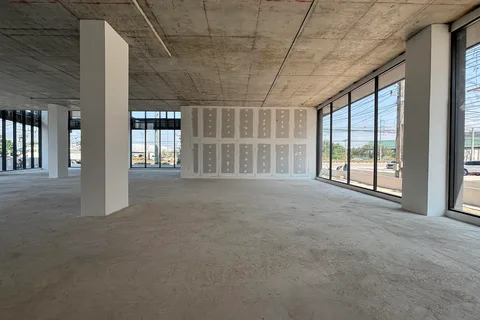
An unfinished open-plan floor with a bare concrete soffit and floor-to-ceiling glazing on two sides.

The building stock

Vast and varied stock including pre-war unreinforced masonry, older non-ductile concrete, soft-story wood-frame buildings, and modern steel and concrete towers.

Polycentric, with a dense downtown, many commercial corridors, and low-rise strip and industrial districts across a wide basin.

What the weather and the ground do here

Earthquake dominates underwriting, with wildfire at the urban-wildland edge and periodic mudslide and drought stress.

The consequence for an owner is that two buildings a block apart can belong to entirely different regulatory generations, and none of that is visible from the sidewalk. A glazed storefront sitting over an open ground floor and a concrete frame built to an earlier standard are not two versions of one risk; they are separate placements that happen to share a city. The ground compounds it: a wide basin holds shaking longer than harder ground does, which is rougher on tall flexible structures than on low stiff ones. So the opening question here is which building you actually own, never what the city as a whole looks like.

A two-column matching panel for Los Angeles. The left column names what an older building here brings with it: an open ground floor under occupied space, a concrete frame built to an earlier standard, a retrofit order on its own schedule, work that empties the space it is fixing, a dark storefront between leases, and corridors that behave nothing alike. The right column gives what answers each one on the insurance side, from construction and geometry in the rating through to the vacancy condition. A footnote records that the ordinance follows the building while the coverage follows the owner.

What a Los Angeles building brings with it

What answers it on the policy side

An open ground floor under occupied space
Construction and geometry in the rating
A concrete frame from an earlier standard
Earth movement bought, or knowingly declined
A retrofit order with a compliance clock
Ordinance or law coverage on the rebuild
Work that empties the space it is fixing
The lease allocates it; the policy does not
A dark storefront waiting on the next lease
The vacancy condition on your own policy
One owner, corridors that behave differently
Each address rated on what it actually is

The ordinance follows the building; coverage follows the owner.

Los Angeles: what the building brings, and what answers for it.

The local law that binds you

These are duties the city places on whoever owns the building. They do not shift to a tenant and they do not evaporate at a sale — they travel with the property. Two things make them worth your attention before you are asked. The compliance clock starts when an order is served on the owner, not when you decide to start work. And the department is still identifying part of the affected stock, so a building can sit inside the rules well before anyone tells its owner so.

Mandatory Earthquake Hazard Reduction in Existing Wood-Frame Buildings with Soft, Weak or Open-Front Walls (LAMC Art. 1, Div. 93)

The provisions of this division shall apply to all existing buildings of wood-frame construction, or wood-frame portions thereof, where: 1. A permit for construction of a new building was applied for before January 1, 1978, or, if no permit can be located, the structure is determined by the Department to have been built under building code standards enacted before January 1, 1978; and 2. The ground floor portion of the structure contains parking or other similar open floor space that causes soft, weak or open-front wall lines, and there exists one or more stories above.

Wood-frame buildings of pre-1978 vintage whose ground floor is open (parking or similar) with stories above. Scope is defined by construction type and ground-floor geometry rather than by occupancy, so a qualifying mixed-use building is reached.

Los Angeles Municipal Code § 91.9302 (Scope), added by Ordinance No. 183893

Mandatory Earthquake Hazard Reduction in Existing Non-Ductile Concrete Buildings (LAMC Art. 1, Div. 95)

The provisions of this division shall apply to any existing concrete building built pursuant to a permit application for a new building that was submitted before January 13, 1977, or, if no permit can be located, the structure is determined by the Department to have been built under building code standards enacted before January 13, 1977. EXCEPTIONS: This division shall not apply to detached single-family dwellings or detached duplexes.

Los Angeles Municipal Code § 91.9502 (Scope), added by Ordinance No. 183893

What California law adds on top

Los Angeles regulates the building itself. California regulates the contract you hold on it, and what that contract reacts to is an unoccupied space. It lands oddly here, because the structural work the city requires is frequently the very thing that clears a storefront out.

California prints a vacancy provision in its own code, and it runs on the building’s occupancy rather than on your conduct.

The statute and the exact words where there are any, together with whatever the research recorded, are on the California page.

By what you own in Los Angeles

What you own decides which of the pages below is yours. Shops on the ground floor with residential space above, a corridor strip leased to independent operators, and a tower floor plate raise different questions inside the same city limits.

The coverage lines behind all of this

Set the city aside for a moment. These are the lines themselves — what each one is for, and where each one stops:

Los Angeles commercial property insurance FAQs

My ground floor is open and there is occupied space above it. Does that change anything?

It changes the conversation before insurance enters it. An open ground floor carrying occupied space above is the geometry Los Angeles singled out for structural work, and an underwriter reads it the way the city does — a known weakness with a known remedy. What helps is showing where you are in that remedy. Finished work is a fact; unstarted work is an open item.

Does a standard property policy answer for earthquake damage here?

Not on its own. The standard commercial property form treats earth movement as a separate question, so shake coverage is something you buy deliberately or decline deliberately. There is no default that quietly protects you. For a building already inside one of the city’s retrofit programs the two decisions sit together: one is about whether the building stands, the other about who pays if it does not.

Who pays for a mandatory retrofit — me or my tenant?

The lease answers that, not the policy. Insurance does not fund a code obligation — planned construction is not a covered cause of loss, and rent lost while the work happens is not a claim. What matters is how your lease treats compliance with law and capital work, and whether the tenants in place when an order arrives are on terms that let any of it pass through.

I own a boulevard storefront and a valley industrial building. Why do they quote so differently?

Because Los Angeles is not one risk. A storefront on Ventura Boulevard, a converted loft in the Arts District and a metal building out in Pacoima share a city government and very little else an underwriter cares about — framing, ground, ground-floor geometry, tenant mix, and how close the nearest hillside edge sits. Each address is rated on what it is.

The city has not sent me anything. Does that mean my building is outside the rules?

Not necessarily. Being reached by an ordinance and being told you are reached by it are separate events, and the department is still working through which buildings qualify under part of this. Silence is a scheduling fact rather than a finding about your building. The better move is to establish what you own from its framing and its permit record.

My storefront sits empty while the retrofit is done. Does the policy care?

More than owners expect. An empty space is the change a policy reacts to most sharply, and California puts its own words to that — the wording and its source sit on the California page rather than here. What is particular in this city is that the work you are required to do can itself be what clears the space out. Tell your broker before it goes dark.

Sources

The municipal text above is quoted from the city’s own code, and the regulator below is the state’s. Read both for yourself:

Quote a Los Angeles building you lease out

Send the address, what the building is, and who occupies it. We come back with where the placement sits and what would move it.

Get a quote